

Cutting boards are important in every kitchen. They help us cut food safely. But how thick should they be? This is a common question. Let’s find the answer.
Why Thickness Matters
Thickness matters for cutting boards. It affects durability and performance. A thicker board is strong. It can handle heavy use. A thin board may warp or crack. Thickness also impacts stability. A thick board stays in place better. It does not slide around.
Standard Thicknesses
Cutting boards come in different thicknesses. Here are some standard sizes:
- 1/2 inch thick: Lightweight and easy to store.
- 3/4 inch thick: Common and versatile.
- 1 inch thick: Durable and stable.
- 1.5 inch thick: Heavy duty for tough jobs.
Choosing the Right Thickness
Choose the thickness based on your needs. Think about how you use your board. If you cut small items, a thin board is fine. If you chop heavy items, choose a thick board. Also, consider your kitchen space. Thin boards are easy to store. Thick boards need more room.
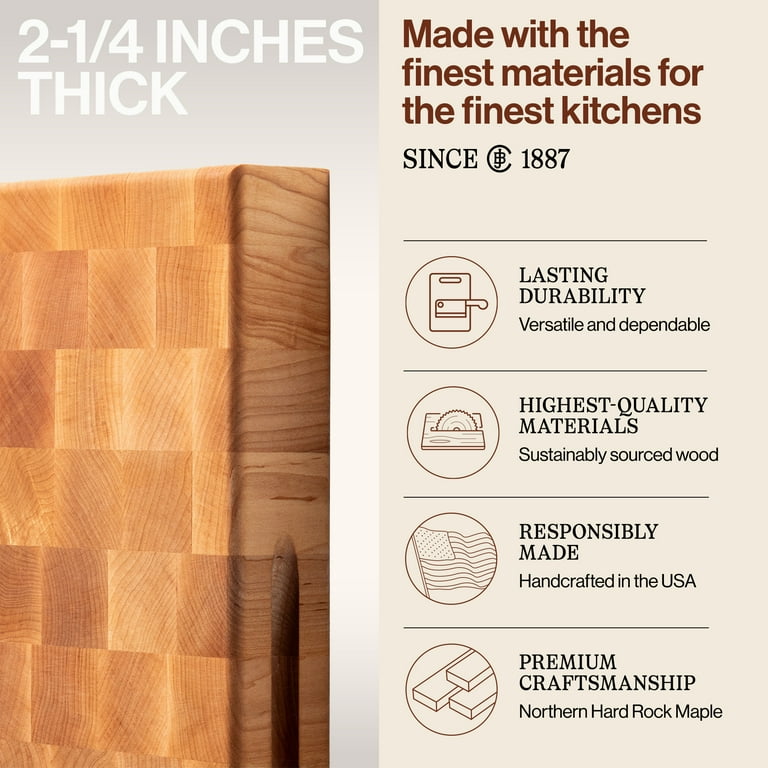
Credit: www.walmart.com
Material Matters
Material affects board thickness too. Wooden boards are thick. Plastic boards are thinner. Wooden boards are durable. Plastic boards are light and easy to clean. Choose based on your preference.
Table of Common Materials and Thickness
| Material | Common Thickness |
|---|---|
| Wood | 1 to 2 inches |
| Plastic | 1/2 to 1 inch |
| Bamboo | 3/4 to 1 inch |
| Composite | 1/2 to 1 inch |
Caring for Your Cutting Board
Take care of your cutting board. Clean it after each use. Dry it well to prevent warping. Oil wooden boards to keep them strong. Store them flat to avoid bending.
Pros and Cons of Thick Boards
Thick boards have pros and cons. They are strong and stable. They last a long time. But they are heavy. They are harder to move. They take up more space. Think about these factors when choosing.
Pros and Cons of Thin Boards
Thin boards are light. They are easy to store. They are cheaper. But they may warp. They may not last as long. They can slide around. Consider these points too.
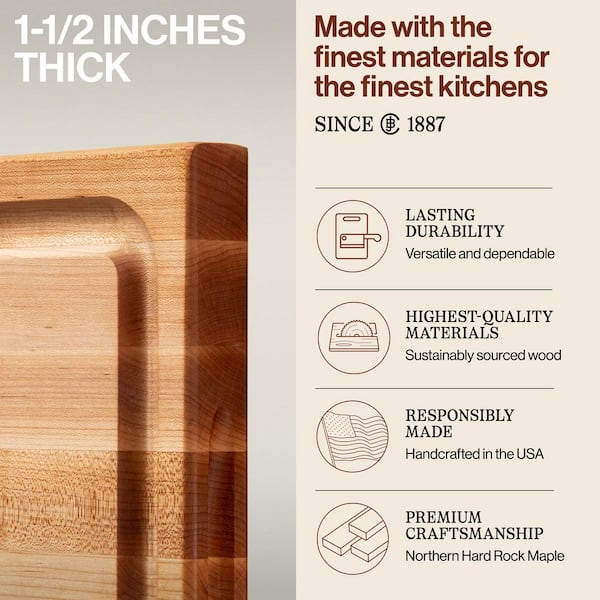
Credit: www.homedepot.com



