

Imagine this: someone at your workplace suddenly gets a cut or a burn. Do you know exactly what to do?
Having the right first aid kit at work isn’t just a good idea—it could make all the difference between a minor injury and a serious problem. Your safety and the safety of your coworkers depend on being prepared. You’ll discover what essential items your work first aid kit needs and how to keep it ready for any emergency.
Keep reading to make sure you’re fully equipped to handle unexpected accidents with confidence.

Credit: www.amazon.co.uk
Importance Of First Aid Kits At Work
Having a first aid kit at work is crucial. It ensures immediate care during emergencies. Quick access to first aid can save lives and prevent serious injuries.
Legal Requirements And Regulations
Workplaces must comply with safety laws. These laws mandate having first aid kits. Kits should be accessible and stocked with essential supplies. Regulatory bodies set standards for kit contents. Compliance avoids legal penalties. It also promotes a safe work environment.
Benefits For Employee Safety
First aid kits enhance safety. Employees feel secure knowing help is available. This assurance boosts morale and productivity. Quick response reduces injury severity. It leads to faster recovery and less time off work.
Reducing Workplace Injuries
Prompt first aid minimizes injury impact. Immediate care can prevent complications. It reduces the need for extensive medical treatment. Workplace accidents can happen anytime. Being prepared is key. Having a kit reduces injury rates. It promotes a proactive safety culture.
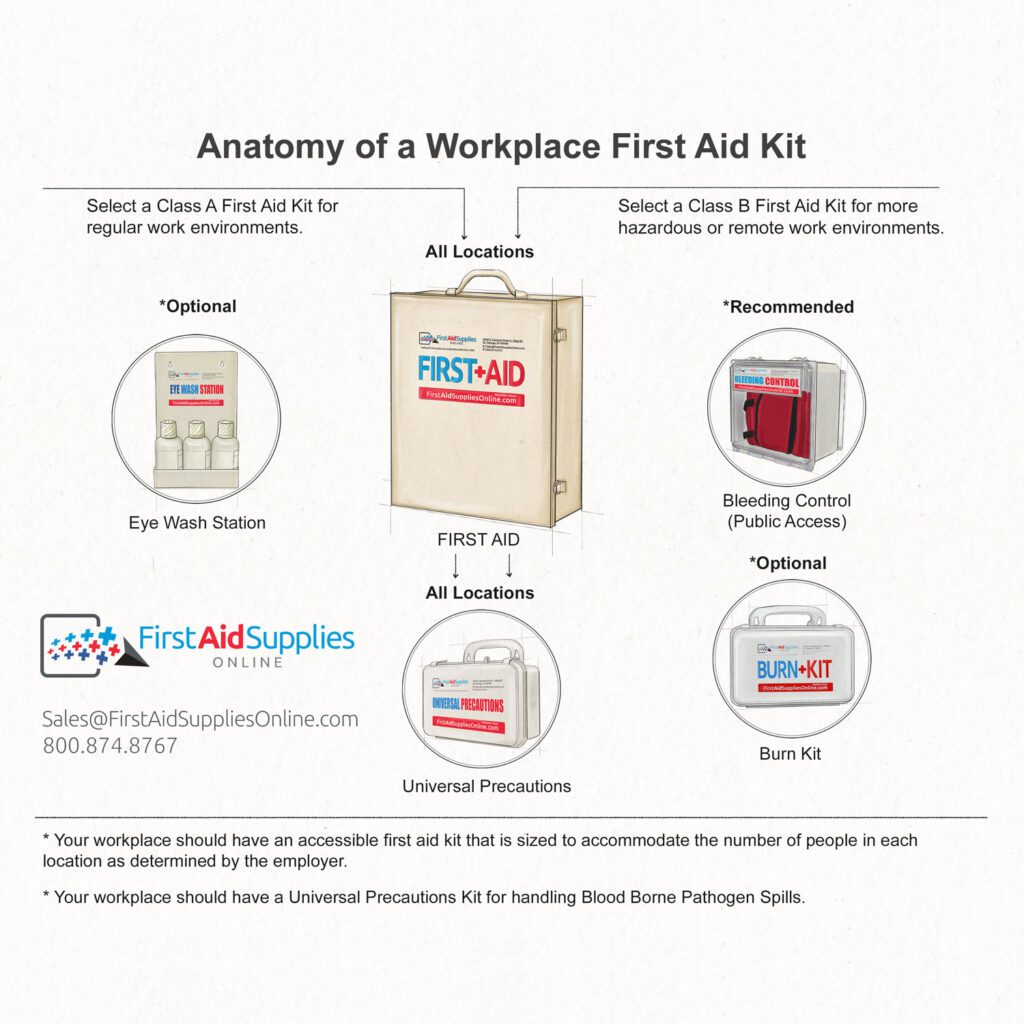
Credit: firstaidsuppliesonline.com
Must-have Items In Work First Aid Kits
Work first aid kits must contain essential items for quick response. These kits help manage injuries and prevent complications. Choosing the right supplies ensures safety in the workplace. Each item has a specific role in treating common work-related injuries.
Basic Supplies For Minor Injuries
Basic supplies handle cuts, scrapes, and burns effectively. Include:
- Adhesive bandages in various sizes
- Sterile gauze pads and adhesive tape
- Antiseptic wipes and antibiotic ointment
- Hydrogen peroxide or similar disinfectants
- Elastic bandages for sprains and strains
- Scissors and tweezers for removing debris
These items provide quick relief and keep wounds clean.
Specialized Tools For Specific Hazards
Some workplaces need items for unique risks. Specialized tools may include:
- Burn dressings and cold packs for heat injuries
- Eye wash solution for chemical splashes
- CPR masks or shields for resuscitation
- Finger splints for fractures or breaks
- Emergency thermal blankets to prevent shock
Such tools address particular dangers found in certain jobs.
Personal Protective Equipment
Protective gear keeps both the injured and helper safe. Essential PPE includes:
- Disposable gloves to avoid contamination
- Face masks to reduce infection risks
- Safety goggles for eye protection
- Hand sanitizers for hygiene before and after aid
PPE supports safe and clean first aid practices.
Choosing The Right First Aid Kit
Choosing the right first aid kit for your workplace is crucial for safety. The kit must match the specific needs of your work environment. A well-chosen kit helps in quick response to injuries and emergencies.
Assessing Workplace Risks
Start by identifying common hazards at your workplace. Consider the type of work, number of employees, and potential injuries. Different workplaces face different risks. For example, offices have fewer physical injuries than construction sites. This assessment guides what supplies the kit should include.
Kit Size And Portability
Choose a kit size based on the number of employees and workspace area. Small teams need smaller kits with essential items. Large teams require bigger kits with more supplies. Portability matters for workplaces with multiple locations or moving workers. Portable kits allow fast access to first aid anywhere on site.
Quality And Certification Standards
Ensure the kit meets recognized safety standards. Certified kits contain approved, reliable materials. Quality items prevent infections and help proper wound care. Low-quality kits may lack important supplies or contain expired products. Check certifications like ANSI or OSHA to confirm safety compliance.
Maintaining And Restocking Kits
Maintaining and restocking first aid kits at work ensures readiness for emergencies. A well-kept kit saves time and reduces risks. Regular care keeps supplies fresh and available when needed.
Regular Inspections
Check kits at least once a month. Look for damaged or missing items. Confirm that everything is clean and organized. Use a checklist to track what is inside. Mark any items that need replacement or replenishing.
Replacing Expired Items
Expired items lose effectiveness. Medicines, ointments, and sterile supplies must be fresh. Remove old items immediately. Replace them with new ones of the same type. Keep expiration dates visible to avoid mistakes.
Training Staff On Kit Use
Teach employees how to use kit items correctly. Practice common first aid procedures regularly. Make sure everyone knows where kits are located. Encourage questions and refresh skills often. Confident staff respond faster and safer in emergencies.
First Aid Training For Employees
First aid training for employees is vital for workplace safety. It equips workers with essential skills to handle emergencies. This training helps reduce injury severity and promotes a safe work environment.
Basic Life-saving Skills
Employees learn how to perform CPR and use an AED. They understand how to clear airways and assist someone who is choking. These skills can save lives before professional help arrives.
Handling Common Workplace Injuries
Training covers treatment for cuts, burns, and sprains. Workers learn to clean wounds and apply bandages properly. They also know how to manage minor fractures and eye injuries safely.
Emergency Response Procedures
Employees get familiar with workplace emergency plans. They learn how to alert emergency services quickly. Training includes safe evacuation and communication during crises.

Credit: www.amazon.com
Integrating First Aid Kits Into Safety Plans
Integrating first aid kits into your workplace safety plans is more than just placing a box on the wall. It’s about making sure these kits are a functional part of how your team responds to emergencies. When done right, first aid kits can significantly reduce injury severity and improve recovery times.
Emergency Action Plans
Your emergency action plan should clearly outline where first aid kits are located and who is responsible for them. Assigning this responsibility ensures kits are checked regularly and restocked when needed.
Think about how your team will react if someone gets hurt. Does everyone know where the nearest first aid kit is? Including a quick reference in your plan can save precious minutes during an emergency.
Communication And Reporting
Effective communication is key to making first aid efforts successful. Make sure your safety plan includes a process for reporting incidents immediately after administering aid.
This helps in two ways: it alerts others to potential hazards and ensures that injured employees receive proper follow-up care. You might consider simple tools like incident report forms or digital apps to streamline this process.
Continuous Improvement
First aid kits and safety plans should evolve based on real experiences and changing workplace needs. After any incident, review how the first aid response went and identify ways to improve.
Ask yourself: Were the right supplies available? Did the team respond quickly and correctly? Use these insights to update your kits and training regularly.
Frequently Asked Questions
What Should A Basic Work First Aid Kit Include?
A basic work first aid kit should include bandages, antiseptic wipes, adhesive tape, scissors, gloves, and pain relievers. It must also contain burn cream, sterile gauze, and a CPR mask for emergencies. These supplies help treat minor injuries and stabilize serious ones until professional help arrives.
How Often Should Workplace First Aid Kits Be Checked?
Workplace first aid kits should be checked monthly to ensure supplies are complete and unexpired. Regular inspections help replace used or outdated items, keeping the kit ready for emergencies. This practice ensures immediate access to essential medical supplies when needed most.
Are First Aid Kits Required By Law At Work?
Yes, many countries legally require employers to provide first aid kits at work. Regulations vary by location and industry but generally mandate accessible, stocked kits to ensure employee safety. Compliance helps reduce workplace injuries and meets occupational health standards.
Where Is The Best Place To Keep A Work First Aid Kit?
The best place for a work first aid kit is a central, visible, and easily accessible location. It should be near high-risk areas and known to all employees. Proper placement ensures quick access during emergencies, minimizing response time and injury severity.
Conclusion
Having a first aid kit at work can save lives and reduce injuries. It helps respond quickly to accidents and keeps everyone safer. Choose a kit with the right supplies for your workplace needs. Check and restock it regularly to stay prepared.
Teach your team how to use it properly. Staying ready means less panic and faster help when needed. A good first aid kit is a simple step toward a safer work environment.

I’m Abby Lu, a passionate home cook who loves simplifying everyday meals. At PlugChef.com, I share product reviews and cooking guides to help you find the best tools for your kitchen.
Related posts:
 What Type of Cooking Utensils are Safe: Expert Picks
 What Innovations Could Blenders Make: Unleashing Future Tech
 Smart Strategies to Organize a Small Kitchen: Maximize Space
 How to Organize a Kitchen Cabinet: Expert Tips & Tricks
 How to Organize Kitchen Drawers: Expert Tips and Tricks
 How to Organize a Corner Kitchen Cupboard: Expert Tips

