

Imagine a sudden cut, a burn, or a minor injury happening right at your workplace. Would you know exactly what to do?
Having a well-stocked first aid kit for work isn’t just a smart idea—it could be the difference between a small problem and a serious one. You’ll discover what essentials your kit must have, why it matters for your safety, and how being prepared can give you peace of mind every single day.
Keep reading, because your health and safety at work depend on it.
Workplace Safety Basics
Ensuring safety in the workplace is not just about following rules; it’s about creating an environment where everyone feels secure and protected. Workplace safety basics go beyond mere compliance—they foster a culture of care and responsibility. A crucial part of this is understanding the potential hazards and being equipped to handle them effectively. This is where a well-stocked first aid kit becomes invaluable.
Common Workplace Injuries
Workplaces, whether offices or construction sites, can harbor unexpected dangers. Cuts, burns, and sprains are among the most common injuries employees face. You might recall a colleague who slipped on a wet floor or someone who hurt their hand while handling machinery. Even minor injuries can escalate if not promptly addressed. Recognizing these risks is the first step toward maintaining a safer work environment.
Have you ever been caught off guard by a sudden accident at work? It’s a stark reminder of how quickly things can go wrong. The more aware you are of common injuries, the better prepared you will be to prevent them.
Importance Of First Aid Kits
A first aid kit is your first line of defense against workplace injuries. It’s not just a box of bandages—it’s a symbol of preparedness and care. Consider the peace of mind knowing you can offer immediate help during an emergency. First aid kits should be easily accessible, clearly marked, and regularly checked for expired items.
Imagine the relief of a colleague who’s been promptly helped with a kit during a minor accident. It’s not only about physical recovery but also emotional reassurance. Does your workplace have a kit that’s up to date and ready to use?
- Ensure kits are stocked with essentials like antiseptic wipes, gauze, and adhesive bandages.
- Regularly train staff on how to use the kit efficiently.
- Review and replenish the contents to keep them in prime condition.
Being proactive with first aid kits can make the difference between a minor incident and a major accident. Are you confident in your workplace’s readiness to handle emergencies? Taking steps today could save lives tomorrow.
Essential First Aid Items
A well-stocked first aid kit at work ensures quick action during emergencies. It helps treat minor injuries and prevents conditions from worsening. Essential items focus on common workplace injuries like cuts, burns, and breathing issues. Every item has a clear purpose, making it easy to find and use under stress.
Wound Care Supplies
- Sterile gauze pads to cover wounds
- Adhesive bandages in various sizes
- Antiseptic wipes to clean cuts
- Medical tape to secure dressings
- Elastic bandages for sprains
- Scissors and tweezers for precision
Burn Treatment
- Burn gel or cream to soothe skin
- Non-stick dressings for burn wounds
- Cool packs to reduce pain and swelling
- Disposable gloves to prevent infection
Cpr And Breathing Aids
- CPR face shield for safe resuscitation
- Resuscitation mask with one-way valve
- Disposable gloves for hygiene
- Emergency blanket to maintain body temperature
Pain Relief And Medication
- Over-the-counter painkillers like ibuprofen
- Antihistamines for allergic reactions
- Antacid tablets for stomach discomfort
- Cold packs to ease swelling
Tools And Accessories
- Instant cold packs for injuries
- Thermometer to check body temperature
- Flashlight for low-light situations
- Emergency contact list for quick access
- Instruction manual for first aid steps
Customizing Kits For Your Workplace
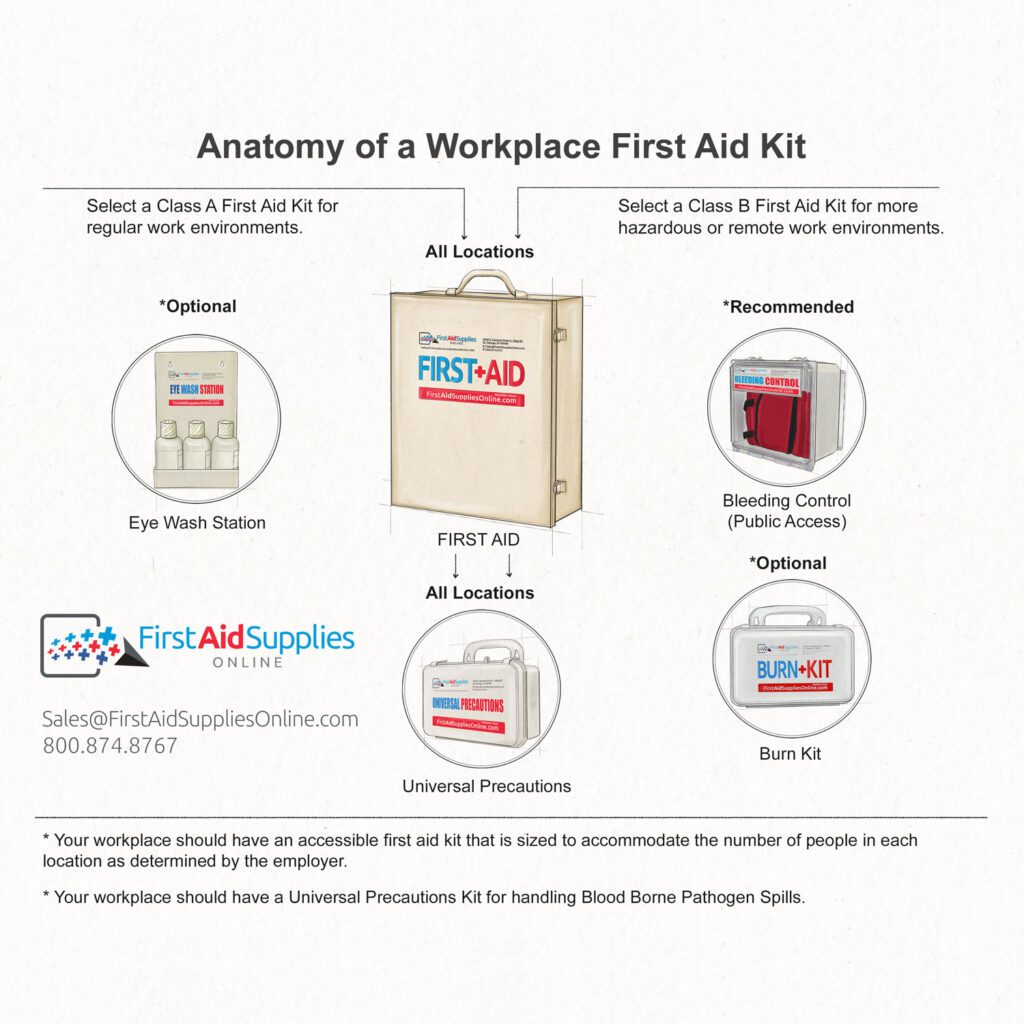
Customizing a first aid kit for your workplace is essential to ensure it truly meets the needs of your team. A one-size-fits-all approach can leave you unprepared during emergencies. Tailoring the kit based on your specific work conditions and team dynamics makes all the difference in response effectiveness.
Assessing Workplace Risks
Start by identifying the types of injuries most likely to happen in your workplace. Are employees handling chemicals, working with heavy machinery, or spending time outdoors? Knowing these risks helps you choose the right supplies, like burn cream for chemical exposure or cold packs for strains.
Think about past incidents or near misses. What caused them? This insight guides you on what to add or remove from your kit to better protect your team.
Adjusting For Work Environment
Your work setting dictates the kind of first aid supplies needed. For example, an office environment may require more items for cuts and headaches, while a construction site demands supplies for fractures and severe wounds.
Consider storage conditions too. If your workplace is outdoors or humid, choose kits with waterproof containers and durable packaging to keep items usable when needed.
Stocking For Team Size
The number of employees influences the quantity of supplies. A small team might manage with a compact kit, but larger groups need multiple kits or larger containers with extra bandages, gloves, and antiseptics.
It’s also wise to have kits placed in several locations, so everyone has quick access. Have you checked if your kit’s contents match your team size recently?
Credit: firstaidsuppliesonline.com
Maintaining Your First Aid Kit
Maintaining your first aid kit at work is essential to ensure it is always ready when you need it most. A well-kept kit can make a significant difference during emergencies, helping you act quickly and confidently. Neglecting your kit might leave you unprepared, which could turn a minor injury into a bigger problem.
Regular Inspection
Check your first aid kit at least once a month. Look for missing supplies, damaged packaging, or anything that seems worn out. Keeping a checklist nearby helps you track what’s inside and what needs attention.
Think about the last time you opened your kit—did everything look complete and clean? If you haven’t checked it recently, now is the time. Even small tears in packaging can contaminate supplies.
Replacing Expired Items
Expired items lose their effectiveness and can even be unsafe to use. Bandages, antiseptic wipes, and medications all come with expiration dates. Toss out anything past its date and replace it promptly.
Don’t wait for an emergency to discover your ointment has dried up or your painkillers are outdated. Keep a reminder on your calendar to swap out items regularly. This simple habit could save lives.
Proper Storage Tips
Store your first aid kit in a cool, dry place where it’s easy to reach. Avoid areas exposed to extreme heat or moisture, as these conditions can damage your supplies. Clear labeling and organization inside the kit help you find items quickly.
Consider placing your kit near common work areas but away from heavy foot traffic to prevent accidental damage. Ask yourself: if you had to grab it right now, would you know exactly where it is and what’s inside?
Training And Preparedness
Training and preparedness are the backbone of an effective first aid kit at work. Having the right supplies is important, but knowing how to use them can make all the difference in an emergency. Your team’s confidence and readiness can turn a scary situation into a manageable one.
First Aid Training For Employees
Giving your employees first aid training builds skills and reduces panic. Training sessions can cover basic life support, CPR, wound care, and how to use items in the first aid kit properly.
Try to make training hands-on and interactive. People remember better when they practice rather than just listen. Have you noticed how much easier it is to stay calm when you’ve actually done something before?
Emergency Response Plans
Creating a clear emergency response plan keeps everyone on the same page. Your plan should define roles, communication steps, and the location of first aid kits.
Make sure the plan is easy to find and understand. Test it regularly with drills so your team knows what to do without hesitation. Could your workplace handle a sudden injury or health crisis smoothly?
Encouraging Safety Culture
Promote a safety culture where everyone feels responsible for health and first aid readiness. Encourage employees to speak up about hazards and suggest improvements.
Recognize those who follow safety protocols and participate in training. When safety becomes a shared value, your workplace becomes a safer place for everyone.

Credit: www.amazon.co.uk

Credit: www.amazon.com
Frequently Asked Questions
What Essential Items Are In A Work First Aid Kit?
A work first aid kit typically includes bandages, antiseptic wipes, adhesive tape, scissors, gloves, and pain relievers. It may also have burn cream, tweezers, and a CPR mask. These items help treat minor injuries and provide immediate care before professional help arrives.
How Often Should I Check My Work First Aid Kit?
Check your work first aid kit every three to six months. Replace expired or used items promptly. Regular checks ensure the kit is fully stocked and ready for emergencies. This practice helps maintain workplace safety and compliance with health regulations.
Where Should A First Aid Kit Be Placed At Work?
Place the first aid kit in a visible, easily accessible location at work. Common spots include break rooms, near exits, or main work areas. Clear labeling and unobstructed access ensure quick response during emergencies, improving workplace safety.
Who Should Maintain The Work First Aid Kit?
A designated employee or safety officer should maintain the work first aid kit. They ensure it is stocked, clean, and checked regularly. This responsibility helps keep the kit ready and supports a safer work environment.
Conclusion
A well-stocked first aid kit keeps your workplace safe and ready. It helps treat small injuries quickly. Everyone should know where the kit is. Regular checks keep supplies fresh and useful. A simple kit can prevent bigger problems later. Safety at work starts with being prepared.
Take action today to protect yourself and others.

I’m Abby Lu, a passionate home cook who loves simplifying everyday meals. At PlugChef.com, I share product reviews and cooking guides to help you find the best tools for your kitchen.
Related posts:
 What Type of Cooking Utensils are Safe: Expert Picks
 What Innovations Could Blenders Make: Unleashing Future Tech
 Smart Strategies to Organize a Small Kitchen: Maximize Space
 How to Organize a Kitchen Cabinet: Expert Tips & Tricks
 How to Organize Kitchen Drawers: Expert Tips and Tricks
 How to Organize a Corner Kitchen Cupboard: Expert Tips

