

Imagine being able to unlock the secrets of life itself right from your desk. By understanding how mitosis works, you gain insight into one of the most fundamental processes that enable life to flourish.
You’re not just delving into biology; you’re exploring the very mechanism that transforms a single cell into a complex, multicellular organism. Picture this: a single cell starting its journey, dividing and multiplying, paving the path for growth, development, and repair.
It’s a fascinating process that’s happening in your body right now. Grasping how mitosis leads to the formation of a multicellular organism can empower you with knowledge that feels almost magical. Your curiosity is the key to unlocking this mystery. Ready to dive deeper and visualize this incredible process through diagrams? Understanding these concepts can change the way you view the world around you, making you appreciate the intricate dance of life within every living being. Stay with us as we draw a clear, simple diagram that breaks down mitosis step-by-step, making it easy for you to grasp how this biological marvel unfolds.
Mitosis And Cell Division
Mitosis is a fundamental process for growth and development. It enables cells to divide and multiply. This results in the formation of a multicellular organism. Understanding mitosis and cell division helps us grasp how life begins and flourishes. Let’s explore the basic structures involved and the purpose of this essential biological process.
Basic Cell Structure
Cells are the building blocks of life. Each cell has important parts. The nucleus is the control center. It holds the DNA, which is the genetic blueprint. The cytoplasm is the jelly-like fluid. It surrounds the nucleus and contains organelles. Organelles are tiny structures that perform specific functions. The cell membrane is the outer layer. It protects the cell and regulates what enters and exits. These components work together, enabling cells to function and divide.
Purpose Of Mitosis
Mitosis is crucial for growth and repair. It creates identical cells from a single parent cell. This ensures the new cells have the same genetic material. Mitosis helps replace old or damaged cells. It supports tissue growth and development. Multicellular organisms depend on this process for survival. During mitosis, a cell divides into two daughter cells. Each daughter cell is identical to the parent. This maintains the organism’s genetic consistency.
Credit: kcl.digimat.in
Stages Of Mitosis
Mitosis transforms a single cell into a multicellular organism through distinct stages. Begin with prophase, where chromosomes condense. Progress to metaphase as chromosomes align in the center. Move to anaphase with sister chromatids separating. Finally, telophase completes division, forming new cells.
Draw a diagram to visualize this cellular process.
The stages of mitosis are vital in forming multicellular organisms. Mitosis is a process where a single cell divides into two identical daughter cells. This process is key for growth and repair in the body. Understanding each stage helps grasp how cells replicate and form tissues. Let’s explore the stages of mitosis.Prophase
During prophase, chromosomes condense and become visible. The nuclear membrane begins to break down. Spindle fibers start to form, preparing for the next stage.Metaphase
In metaphase, chromosomes align at the cell’s center. This alignment ensures that each new cell receives an identical set of chromosomes. Spindle fibers attach to the chromosomes, securing them in place.Anaphase
Anaphase is when the chromosomes separate. The spindle fibers pull the chromosomes to opposite poles of the cell. This ensures each new cell will have a full set of chromosomes.Telophase
During telophase, the chromosomes reach the cell poles. The nuclear membrane reforms around the chromosomes, creating two separate nuclei. The cell begins to split, leading to the formation of two new cells.Illustrating Mitosis
Illustrating mitosis involves drawing a detailed diagram. It shows how a single cell divides to form a multicellular organism. Each stage, from prophase to cytokinesis, highlights the process of cell division.
Illustrating Mitosis Creating a diagram to show how mitosis produces a multicellular organism is like capturing a complex dance in a single snapshot. This process is not just a scientific concept; it’s the reason we grow, heal, and thrive. By breaking it down into visual components, you gain a clearer understanding of how life’s building blocks multiply and organize themselves. Understanding mitosis through diagrams can transform your perspective on biology. You might recall the thrill of seeing a cell divide under a microscope in school. Now, imagine being able to recreate that wonder on paper or screen, helping others grasp the magic behind cell division. Your diagram can serve as a powerful teaching tool, making abstract concepts tangible. It can also be a creative expression, showcasing your unique approach to visualizing science. But how do you begin crafting this intricate illustration?Tools For Diagramming
To start, you’ll need the right tools to bring your diagram to life. Online platforms like Canva or Lucidchart offer user-friendly interfaces for creating detailed diagrams. These tools often provide templates that can save you time and effort. If you prefer traditional methods, grab some colored pencils and a large sheet of paper. Drawing by hand can be a rewarding experience, allowing more personal touch and flexibility. Remember, the goal is clarity, so choose tools that suit your style and comfort. Digital drawing tablets can also enhance your precision and creativity. They combine the tactile satisfaction of hand drawing with the versatility of digital tools. Whether digital or analog, the right tools will set a solid foundation for your diagram.Step-by-step Diagram Creation
Start by outlining the key phases of mitosis: prophase, metaphase, anaphase, and telophase. Each phase has distinct characteristics that your diagram should highlight. By breaking it down into steps, you make the process more digestible. Use simple shapes to represent different cellular components. For example, circles can depict chromosomes, while lines can illustrate spindle fibers. This simplicity ensures that anyone viewing your diagram can easily follow along. Label each part clearly, using arrows to indicate movement and changes. This adds a dynamic element, showing the progression from one stage to the next. Consider adding a brief description for each phase to enhance understanding. Incorporate color to differentiate components and stages. Color not only makes your diagram visually appealing but also aids in distinguishing complex parts. Be mindful of color choice to maintain readability and focus. Ask yourself: Does this diagram convey the mitosis process effectively? This question will guide you in refining your work. Your diagram should be as informative as it is engaging, offering a window into the fascinating world of cell division.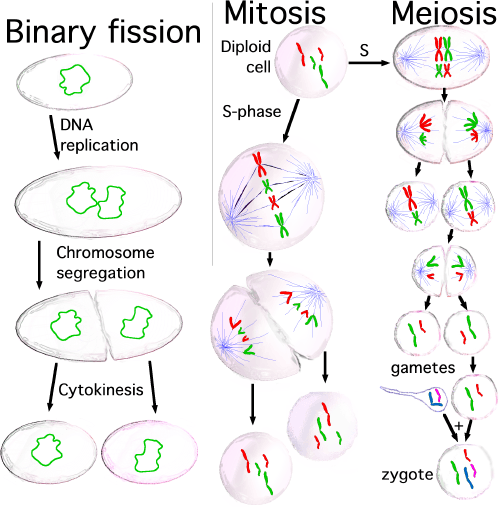
Credit: owlcation.com
Life Stages Through Mitosis
Life Stages Through Mitosis Mitosis is essential for creating multicellular organisms. Draw a diagram to show the cell division process. This visual helps illustrate how single cells replicate to form complex life forms.
Life Stages Through Mitosis Mitosis is the cellular process that fuels the growth and development of multicellular organisms. It plays a crucial role in various life stages, from the earliest beginnings in the womb to the ongoing maintenance and repair throughout life. Understanding these stages can help you appreciate how essential this process is to life itself.Embryonic Development
During embryonic development, mitosis is like the engine driving the creation of life. It transforms a single fertilized egg into a complex multicellular organism. Cells rapidly divide, each one contributing to forming different tissues and organs. This stage is where life’s blueprint is first set in motion. Have you ever wondered how a tiny embryo evolves into a fully formed baby? Mitosis is the answer, ensuring every cell knows its job.Growth And Maintenance
As you grow from a child to an adult, mitosis ensures your body maintains its functions. It’s responsible for the increase in size and the replacement of old cells. Think about how your skin renews itself or how your hair grows—mitosis is at work. It’s fascinating how a simple process can manage such complex tasks, isn’t it?Cellular Repair And Regeneration
Mitosis is not only about growth but also about keeping you healthy. When you get a cut or a bruise, mitosis works to repair the damage. Cells divide to replace those that are damaged or dead, ensuring your body heals. Have you ever noticed how your body seems to bounce back after minor injuries? That’s mitosis taking charge, proving its importance in everyday life. How incredible is it that your body has built-in mechanisms to fix itself?Mitosis In Different Organisms
Understanding how mitosis contributes to the creation of multicellular organisms opens up a fascinating world of biological diversity. This process, pivotal for growth and repair, varies intriguingly across different organisms. Whether you’re comparing plant and animal cells or exploring unique features in various species, the nuances of mitosis reveal the intricate dance of life.
Plant Vs Animal Cells
Plant and animal cells approach mitosis with their unique flair. In plant cells, the rigid cell wall necessitates the formation of a cell plate during cytokinesis. This structure acts like a divider, eventually developing into separate cell walls for daughter cells. Animal cells, with their flexible membranes, use a cleavage furrow that pinches the cell into two.
Consider the impact of these differences. The cell plate in plants ensures a stable structure for growth, vital for reaching towards sunlight. In contrast, the flexibility of animal cells allows for dynamic changes and movements, essential for functions like muscle contraction.
Unique Features In Various Species
Across species, mitosis exhibits intriguing variations. Some fungi, for example, undergo mitosis without the breakdown of the nuclear envelope, a distinct deviation from the norm. This quirky trait offers insights into cellular efficiency and adaptation.
In certain insects, polyploidy—having more than two sets of chromosomes—results from unique mitotic processes. Imagine how this genetic diversity aids survival in challenging environments, providing resilience and adaptability.
Have you ever wondered how these differences impact the ecosystem? Each variation in mitosis, tailored to specific needs, plays a role in the organism’s ability to thrive and adapt. Reflect on the balance of nature and the interconnectedness of life forms.
Impact Of Mitosis On Health
Draw a Diagram Showing How Mitosis Produces a Multicellular Organism Mitosis plays a crucial role in creating multicellular organisms by allowing cells to divide and multiply. This process ensures healthy growth, development, and tissue repair, maintaining overall body health. Understanding mitosis helps in comprehending how our bodies develop from a single cell.
The process of mitosis is vital to your health, playing a key role in growth, development, and tissue repair. It ensures that cells divide correctly and maintain the body’s function. However, when this process goes awry, it can lead to significant health issues, including cancer. Understanding the impact of mitosis on health can help you appreciate its complexity and significance.Cancer And Uncontrolled Mitosis
Cancer is a prime example of what happens when mitosis gets out of control. Cells begin to divide uncontrollably, forming tumors and potentially spreading throughout the body. This disruption in normal cell division can be triggered by genetic mutations or environmental factors. The unchecked cell growth in cancer disrupts normal bodily functions. It not only affects the area where it originates but can also metastasize, complicating treatment efforts. Have you ever wondered why early detection is so crucial in cancer treatment? It’s because catching it early can prevent further uncontrolled mitosis.Therapeutic Applications
Mitosis is not just a villain in the story of health; it also holds therapeutic potential. Scientists are exploring ways to harness controlled cell division to regenerate damaged tissues. This could revolutionize treatments for conditions like spinal cord injuries or organ damage. One fascinating avenue is stem cell therapy, where mitosis plays a crucial role. Stem cells can divide and differentiate into various cell types, offering hope for curing diseases previously thought to be untreatable. What if the same process that creates cancer could also heal your body? Understanding mitosis’s dual nature highlights its importance in health and disease. As research progresses, you might find new treatments emerging from this fundamental biological process. How will you stay informed and proactive about these advancements?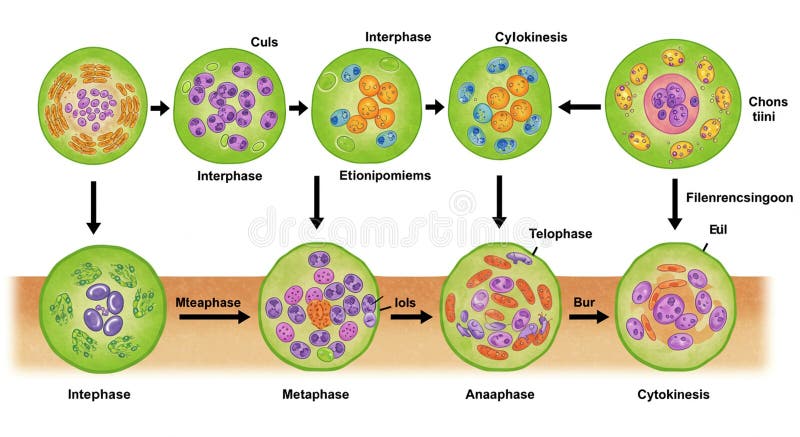
Credit: www.dreamstime.com
Frequently Asked Questions
How Does Mitosis Contribute To A Multicellular Organism?
Mitosis allows cells to divide, enabling growth and repair in multicellular organisms. It maintains genetic consistency across cells. This process supports tissue development and regeneration, ensuring the organism’s healthy function. Efficient cell division through mitosis is crucial for sustaining life and promoting balanced organismal growth.
How To Draw A Mitosis Diagram Step By Step?
Begin by sketching a cell outline. Draw chromosomes dividing into two sets. Illustrate spindle fibers and centrioles. Label phases: prophase, metaphase, anaphase, telophase. Use arrows to show chromosome movement. Add color for clarity and detail. Ensure accuracy by comparing with textbook diagrams.
What Is A Mitosis Diagram?
A mitosis diagram illustrates the stages of cell division, showing how one cell splits into two identical cells. It includes phases like prophase, metaphase, anaphase, and telophase. These diagrams help visualize the process of genetic material distribution during cell division.
How Do Organisms Reproduce By Mitosis?
Organisms reproduce by mitosis through cell division. The parent cell duplicates its DNA. It then divides into two identical daughter cells. Each daughter cell has the same genetic material as the parent. This process ensures growth, repair, and asexual reproduction in organisms.
Mitosis is essential for maintaining genetic consistency.
Conclusion
Mitosis is vital for creating multicellular organisms. Each cell divides and grows. This division produces more cells. They form tissues and organs. The process ensures healthy development. Cells work together in harmony. Mitosis allows complex life to thrive. Understanding it helps grasp life’s basics.
You see how organisms develop. It’s fascinating how nature works. Mitosis is a simple yet powerful process. It enables life to flourish. It shows the beauty of biology. Studying it enriches our knowledge. It is foundational to life itself. Explore more to deepen your understanding.

I’m Abby Lu, a passionate home cook who loves simplifying everyday meals. At PlugChef.com, I share product reviews and cooking guides to help you find the best tools for your kitchen.
Related posts:
 What Type of Cooking Utensils are Safe: Expert Picks
 What Innovations Could Blenders Make: Unleashing Future Tech
 Smart Strategies to Organize a Small Kitchen: Maximize Space
 How to Organize a Kitchen Cabinet: Expert Tips & Tricks
 How to Organize Kitchen Drawers: Expert Tips and Tricks
 How to Organize a Corner Kitchen Cupboard: Expert Tips

