

Are you confused about the difference between braising and stewing? You’re not alone.
Both methods involve cooking meat slowly in liquid, but they create very different flavors and textures. Understanding these differences can help you choose the right technique for your next meal and impress everyone at the table. Keep reading to discover how braising and stewing each bring out the best in your ingredients—and how you can use them to make delicious, tender dishes every time.
Braising Basics
Braising is a classic cooking technique that combines dry and moist heat to tenderize meat and develop rich flavors. It involves slow cooking tougher cuts of meat in a small amount of liquid. This method helps break down connective tissues, making the meat soft and juicy. Braising is perfect for hearty dishes that need time to cook gently and absorb flavors deeply.
Cooking Method
Braising starts by searing meat at high heat until browned. Then, the meat cooks slowly in a covered pot with a bit of liquid. The liquid usually covers only part of the meat. The pot stays covered during cooking to trap steam and keep moisture inside. The temperature remains low, often simmering on the stove or in the oven. This slow process tenderizes the meat and blends flavors well.
Typical Ingredients
- Meat or vegetables as the main ingredient
- Small amount of broth, wine, or water
- Aromatics like onions, garlic, and herbs
- Seasonings such as salt, pepper, and spices
The liquid base adds flavor but does not fully cover the ingredients. It creates a concentrated sauce after cooking.
Ideal Cuts Of Meat
Braising works best with tougher, less expensive meat cuts. These cuts have more connective tissue that softens with slow cooking.
- Beef chuck
- Pork shoulder
- Lamb shanks
- Short ribs
- Chicken thighs
These cuts become tender and flavorful through the braising process.

Credit: food52.com
Stewing Essentials
Stewing is a comforting cooking technique that transforms simple ingredients into deeply flavorful dishes. It involves slowly cooking small pieces of meat and vegetables in liquid, allowing flavors to meld and textures to become tender. Understanding the essentials of stewing can help you create meals that are rich, hearty, and satisfying every time.
Cooking Process
Stewing starts by cutting meat into small, uniform pieces to ensure even cooking. You brown the meat first to develop flavor, then add liquid like broth, wine, or water. The pot is covered and the ingredients simmer gently over low heat for an extended time, usually one to three hours.
This slow simmering breaks down connective tissues in the meat, making it tender without drying it out. Unlike braising, stewing completely submerges the ingredients in liquid. Have you noticed how a slow, steady simmer changes the taste and texture compared to quick cooking?
Common Ingredients
- Meat: Beef, lamb, chicken, or pork cut into bite-sized pieces
- Vegetables: Carrots, potatoes, onions, celery, and sometimes peas or beans
- Liquid: Stock, broth, wine, or a combination to add depth of flavor
- Seasonings: Garlic, bay leaves, thyme, rosemary, salt, and pepper
Adding acidic ingredients like tomatoes or vinegar can brighten the dish and help tenderize the meat further. Vegetables not only add taste but also absorb the juices, making every bite delightful.
Best Meat Choices
Meat with enough connective tissue works best for stewing because it becomes meltingly tender after slow cooking. Cuts like chuck beef, pork shoulder, lamb shanks, and chicken thighs are ideal. These tougher cuts benefit from slow cooking, turning chewy textures into soft, flavorful morsels.
Lean meats tend to dry out or get stringy, so avoid them for stews. Choosing the right cut can make a huge difference in your stew’s final texture and taste. What cuts have you found work best in your stews?
Heat And Liquid Differences
Understanding the heat and liquid differences is crucial in cooking. Braising and stewing are similar, yet distinct techniques. Both involve slow cooking with liquid, but vary in heat and liquid use. Let’s explore these differences to enhance your culinary skills.
Temperature Control
Braising typically uses low to moderate heat. The goal is to cook slowly. This method allows flavors to develop deeply. Stewing uses consistent low heat throughout. This ensures even cooking of all ingredients.
Amount Of Liquid Used
Braising uses less liquid, just enough to cover the food partially. The liquid should not submerge the ingredients. This allows for concentrated flavors. Stewing involves more liquid, fully covering the ingredients. The result is a thicker, richer sauce.
Cooking Duration
Braising usually takes longer to cook. The slow process tenderizes tougher cuts of meat. It enhances flavor as ingredients meld together. Stewing, though similar, can be quicker with smaller cuts. The even heat helps break down ingredients faster.

Credit: www.reluctantgourmet.com
Flavor And Texture Outcomes
Flavor and texture are key in braising and stewing. Both methods use slow cooking, but they create different results. Understanding these differences helps you choose the right technique for your dish.
Taste Profiles
Braising offers a rich, deep flavor. It uses less liquid, concentrating the taste. The meat absorbs the sauce’s spices and herbs slowly.
Stewing mixes flavors more fully. The meat and vegetables cook together in a larger amount of liquid. This creates a balanced, hearty taste throughout the dish.
Meat Tenderness
Braising makes meat tender but keeps some texture. It cooks larger pieces slowly, breaking down tough fibers gently.
Stewing breaks down meat completely. Smaller pieces become very soft and can almost melt in your mouth.
Sauce Consistency
Braising produces a thicker, more concentrated sauce. The cooking liquid reduces and clings to the meat.
Stewing results in a thinner, soup-like broth. It has more liquid, ideal for soaking bread or serving over rice.
Equipment And Techniques
Understanding the equipment and techniques helps to cook braising and stewing dishes properly. Both methods use slow cooking but differ in how much liquid and cookware are used. Proper tools ensure even cooking and bring out rich flavors in the food.
Cookware Options
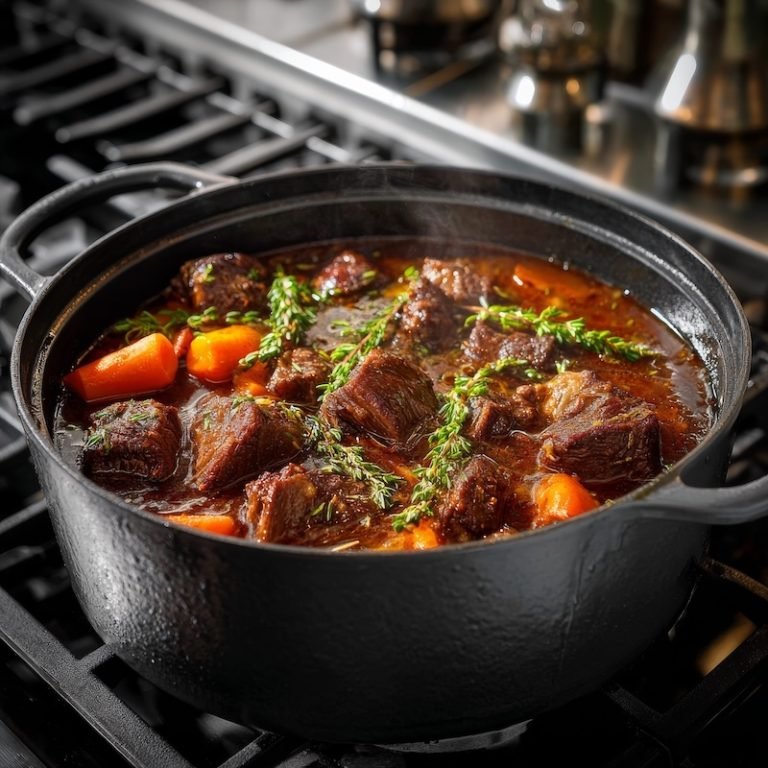
- Braising works best with wide, shallow pans like Dutch ovens or heavy skillets.
- Stewing needs deeper pots or large saucepans to hold more liquid.
- Both require tight-fitting lids to keep moisture inside during cooking.
- Oven-safe cookware is preferred for braising to allow finishing in the oven.
- Stove-top pots are common for stewing to simmer food gently.
Preparation Tips
- Brown the meat first to add flavor and color in both methods.
- Cut ingredients into larger pieces for braising, smaller for stewing.
- Use enough liquid to cover meat halfway in braising; fully cover in stewing.
- Cook food slowly over low heat to break down tough fibers.
- Skim fat or foam from the surface to keep the dish clear.
Serving Suggestions
- Braised dishes pair well with mashed potatoes or crusty bread.
- Stews go nicely with rice, noodles, or thick slices of bread.
- Serve braised meals with simple vegetables to balance richness.
- Stews are often hearty enough to be a full meal on their own.
- Garnish with fresh herbs to brighten flavors before serving.
Common Dishes For Each Method
Braising and stewing create rich, flavorful dishes by cooking food slowly in liquid. Both methods use low heat to tenderize tough cuts of meat and develop deep flavors. Yet, each technique suits different recipes and results in unique textures and tastes.
Common dishes for braising often feature larger pieces of meat or whole vegetables. Stewing usually involves smaller, bite-sized ingredients cooked fully in liquid. Understanding popular dishes helps choose the right cooking style.
Popular Braised Recipes
- Beef brisket braised with onions and red wine
- Coq au vin, chicken slow-cooked in wine and mushrooms
- Pork shoulder braised with garlic and herbs
- Braised short ribs simmered in a rich sauce
- Osso buco, veal shanks cooked with tomatoes and vegetables
Famous Stewed Meals
- Beef stew with potatoes, carrots, and celery
- Chicken stew with tomatoes and bell peppers
- Lamb stew with root vegetables and herbs
- Irish stew made from lamb, potatoes, and onions
- Vegetable stew with beans, zucchini, and tomatoes
Choosing Between Braising And Stewing
Choosing between braising and stewing can shape the outcome of your dish in surprising ways. Both methods use slow cooking and liquid, but the choice depends on the ingredients, desired texture, and your kitchen schedule. Understanding when and why to pick one over the other will help you cook smarter and enjoy richer flavors.
When To Use Each Method
Braising works best when you have larger cuts of meat or vegetables that need gentle cooking to become tender. It involves partially submerging food in liquid, allowing the heat to soften it slowly while keeping the texture intact.
Stewing is ideal for smaller, uniform pieces that cook evenly in a fully covered pot with enough liquid to immerse them completely. This method breaks down tougher fibers, creating a thick, hearty sauce.
Ask yourself: Do you want a dish with distinct chunks and a thinner sauce, or something more uniform and saucy? Your answer guides the choice.
Time And Effort Considerations
Braising usually takes longer but requires less active attention. You can set it on the stove or in the oven and check it occasionally, making it perfect for busy days when you want hands-off cooking.
Stewing, while also slow, often demands more stirring to prevent sticking and to help flavors blend. It’s great when you want to engage with your cooking and adjust seasoning throughout.
Think about your available time and how much you want to be involved during cooking. Which fits better into your routine?
Health And Nutritional Aspects
Both methods retain nutrients better than high-heat cooking because the slow process prevents vitamin loss. However, stewing can sometimes result in a richer sauce that includes all the nutrients leached from the ingredients.
Braising often uses less liquid, which can mean fewer calories if you discard the cooking juices. But if you enjoy the flavorful sauce, it might add calories depending on the ingredients.
Consider your health goals: Do you prefer a lighter meal or one packed with concentrated flavors and nutrients?
Credit: www.reluctantgourmet.com
Frequently Asked Questions
What Is The Main Difference Between Braising And Stewing?
Braising uses larger meat cuts partially submerged in liquid, while stewing involves smaller pieces fully covered. Braising is slower, yielding tender, flavorful results. Stewing cooks faster and creates a thick, hearty sauce. Both methods use low heat to break down tough fibers.
How Long Does Braising Take Compared To Stewing?
Braising typically takes 2 to 3 hours due to larger meat cuts and partial liquid. Stewing usually takes 1 to 2 hours since smaller pieces cook faster. Both methods require low heat to tenderize meat and develop rich flavors, but braising is generally slower.
Which Method Is Healthier: Braising Or Stewing?
Both braising and stewing are healthy as they use minimal added fat and retain nutrients. Stewing often involves more vegetables and liquid, boosting vitamin content. Braising’s slower cooking may reduce some nutrients but enhances flavor. Both methods are excellent for balanced meals.
Can I Use The Same Cuts Of Meat For Braising And Stewing?
Tough, fatty cuts like chuck, brisket, or shanks work well for both braising and stewing. Larger cuts suit braising, while smaller, cubed pieces are ideal for stewing. Both methods break down collagen and fat, making meat tender and flavorful regardless of the cut size.
Conclusion
Braising and stewing both cook food slowly to make it tender. Braising uses less liquid and often cooks larger pieces of meat. Stewing uses more liquid and cuts food into smaller pieces. Both methods bring out deep flavors and soften tough ingredients.
Choose braising for a rich sauce and stewing for a hearty, thick broth. Understanding these differences helps you pick the right cooking style. Enjoy experimenting with both to find your favorite taste and texture. Simple techniques, big results.

Hi, I’m Daniel Brooks—a food lover and kitchen gear enthusiast. I enjoy testing cookware, utensils, and gadgets to see what really works in everyday cooking. At PlugChef.com, I share honest reviews, comparisons, and simple guides to help you choose the best tools for a safer, smarter, and more enjoyable kitchen.
Related posts:
 What Type of Cooking Utensils are Safe: Expert Picks
 What Innovations Could Blenders Make: Unleashing Future Tech
 Smart Strategies to Organize a Small Kitchen: Maximize Space
 How to Organize a Kitchen Cabinet: Expert Tips & Tricks
 How to Organize Kitchen Drawers: Expert Tips and Tricks
 How to Organize a Corner Kitchen Cupboard: Expert Tips

