
When it comes to safety, having a well-stocked first aid kit is essential. But did you know that not all first aid kits meet the same standards?
Understanding the ANSI requirements for first aid kits can make a huge difference in how prepared you really are during an emergency. You want to be sure your kit has everything it needs to handle common injuries quickly and effectively.
Keep reading to discover what these standards mean for you and how to choose a first aid kit that truly protects you and those around you.
Ansi Standards For First Aid Kits
Understanding ANSI standards for first aid kits is crucial. ANSI, short for American National Standards Institute, sets the guidelines. These standards ensure kits are effective and reliable in emergencies. They help businesses comply with safety regulations. Knowing these standards aids in choosing the right kit for any environment.
Key Ansi Regulations
ANSI regulations define the contents and design of first aid kits. They specify minimum requirements for various workplace settings. Kits must contain items tailored to potential risks in the environment. Regular updates to these standards reflect new safety practices. Compliance with ANSI regulations promotes workplace safety and preparedness.
Classification Of First Aid Kits
ANSI classifies first aid kits into two main types. Type I kits are for indoor use, suitable for offices and schools. Type II kits are designed for outdoor environments, like construction sites. Each type includes specific items based on potential injuries. Classification ensures that kits meet the unique needs of different workplaces.
Contents Required By Ansi
The ANSI (American National Standards Institute) sets clear rules for first aid kit contents. These rules help ensure kits are ready to handle common injuries safely. First aid kits must contain items that cover basic treatment needs. The contents vary based on the environment where the kit is used. This ensures safety measures fit specific risks and situations.
Basic Supplies List
- Adhesive bandages in various sizes
- Sterile gauze pads for wound care
- Adhesive tape to secure dressings
- Antiseptic wipes for cleaning wounds
- Scissors for cutting tape and gauze
- Tweezers to remove small debris
- Disposable gloves to prevent infection
- Elastic bandages for sprains and strains
- CPR face shield for rescue breathing
- First aid instruction booklet
Specialized Items For Various Environments
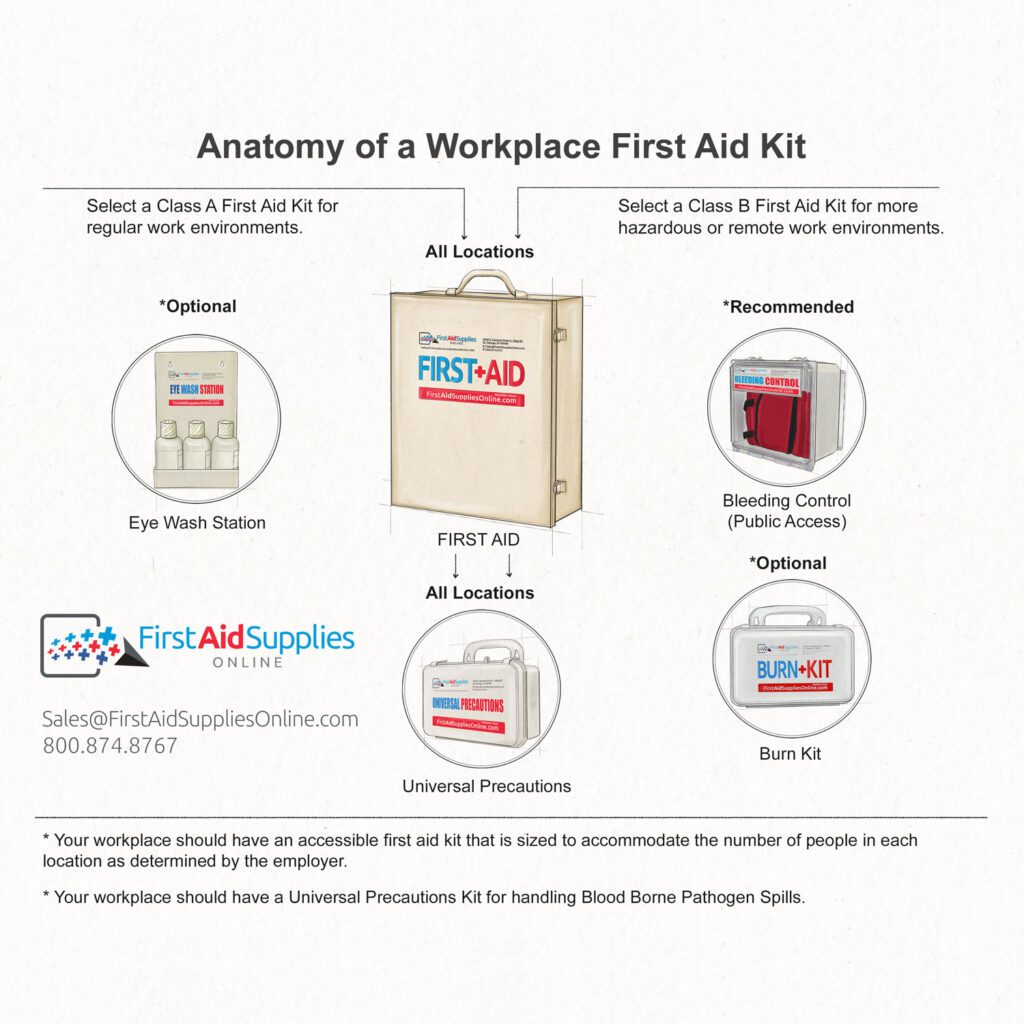
First aid kits in different workplaces need extra items. These depend on hazards workers face daily. For example, construction sites may require burn dressings and eye wash.
Office settings often add cold packs and instant heat packs. Outdoor kits might include insect sting relief and blister treatment supplies.
- Burn dressings for heat and chemical burns
- Eye wash solution for eye injuries
- Cold packs to reduce swelling
- Instant heat packs for muscle pain
- Insect sting relief pads or creams
- Blister treatment supplies for foot care
- Emergency thermal blankets for shock
Kit Size And Quantity Guidelines
Choosing the right size and number of first aid kits is essential for workplace safety. The ANSI requirements help businesses decide this based on the type of hazards and the number of employees. Properly sized kits ensure quick access to needed supplies during emergencies.
Determining Kit Size
ANSI classifies first aid kits by size: Class A and Class B. Class A kits contain basic supplies for common workplace injuries. Class B kits have more items for higher risk environments. The type of work and potential injuries guide the kit size choice.
Use these points to decide kit size:
- Type of workplace hazards
- Number of employees exposed
- Distance to medical help
- Workplace size and layout
Higher risk jobs need larger kits with extra supplies. Small offices with low risk may only need Class A kits.
Number Of Kits Per Workplace
ANSI also gives guidelines on how many kits a workplace should have. The number depends on employee count and workplace size. Kits must be easy to reach in all work areas.
Key points for kit quantity:
- One kit for every 50 employees
- Additional kits for separate work areas
- Extra kits for large or spread out locations
- More kits if medical help is far away
Workplaces with multiple floors or buildings need kits on each level. Ensure kits are visible and accessible at all times.

Credit: www.amazon.com
Labeling And Packaging Rules
Labeling and packaging play a key role in meeting ANSI requirements for first aid kits. Clear labels and proper packaging ensure quick access and correct use during emergencies. These rules help maintain safety standards and improve first aid response.
Proper Kit Labeling
Every first aid kit must have a clear, visible label. The label should state the kit’s purpose and contents. Use simple words and easy-to-read fonts. Colors like red or white often show emergency supplies clearly.
Labels must include:
- Kit name or type
- List of included items
- Expiration dates, if applicable
- Instructions or warnings
Proper labeling helps users find what they need fast. It also supports regular inspections and restocking.
Packaging Standards For Accessibility
Packaging must protect the contents but allow quick access. Kits should be compact and sturdy to avoid damage. Transparent or semi-transparent packaging helps users see inside without opening.
Packaging rules require:
- Easy-to-open containers
- Waterproof or moisture-resistant materials
- Secure closures to prevent item loss
- Clear marking for emergency use
Accessibility means users spend less time searching. It makes first aid efficient and effective in urgent situations.
Maintenance And Inspection Protocols
Maintenance and inspection protocols ensure first aid kits stay ready for emergencies. These protocols help keep supplies stocked and effective. Regular checks prevent expired or missing items. Proper maintenance follows ANSI standards to guarantee safety and compliance.
Routine Checks
Perform routine checks on first aid kits at least once a month. Inspect each item for damage or expiration dates. Replace any used, expired, or damaged supplies immediately. Check the kit’s container for cleanliness and proper sealing. Ensure the kit is easily accessible and visible in the workplace.
Record Keeping And Compliance
Keep detailed records of all inspections and maintenance activities. Note the date, inspector’s name, and any actions taken. Store these records for future reference and audits. Compliance with ANSI requirements depends on accurate documentation. Records prove the kit meets safety standards and is ready for use.

Credit: rescue-essentials.com
Common Compliance Challenges
Meeting ANSI requirements for first aid kits can be tricky. Many workplaces face common challenges that lead to non-compliance. Understanding these issues helps maintain safety and avoid penalties.
Common compliance challenges often arise from overlooked details and poor kit maintenance. Regular checks and proper stocking are essential. Without them, kits may not serve their purpose during emergencies.
Frequent Kit Deficiencies
- Expired or missing items
- Insufficient quantity of supplies
- Lack of required bandages and dressings
- Inadequate storage conditions causing damage
- Failure to update kits based on workplace hazards
Addressing Non-compliance Issues
Schedule regular inspections to verify kit contents. Replace expired or used items immediately. Train staff to recognize and report deficiencies.
Keep a checklist aligned with ANSI standards. Adjust kits to reflect specific workplace risks. Document all maintenance activities for accountability.
Benefits Of Ansi-compliant Kits
ANSI-compliant first aid kits meet strict safety and quality standards. They provide reliable supplies for emergency care. These kits ensure readiness and quick response in workplace incidents. Choosing ANSI-approved kits brings clear benefits to any business.
Enhanced Workplace Safety
ANSI-compliant kits contain essential items to treat injuries fast. They support proper wound care and prevent infections. Employees feel safer knowing help is available immediately. These kits help reduce the severity of injuries on-site. Proper first aid can lower recovery times and improve outcomes.
Legal And Insurance Advantages
Using ANSI-approved first aid kits helps meet government safety regulations. This compliance can protect businesses from legal penalties. Insurance companies often require ANSI-standard kits to approve coverage. Having compliant kits shows a commitment to workplace safety. It can lead to lower insurance premiums and fewer claims.
Credit: firstaidsuppliesonline.com
Frequently Asked Questions
What Are The Ansi Requirements For First Aid Kits?
ANSI requires first aid kits to meet specific content, labeling, and packaging standards. Kits must include items for treating common injuries and be clearly marked for easy use during emergencies.
How Often Should Ansi First Aid Kits Be Inspected?
ANSI standards recommend inspecting first aid kits monthly. Regular checks ensure supplies are complete, unexpired, and ready for immediate use in case of an emergency.
What Items Must Ansi-compliant First Aid Kits Contain?
ANSI-compliant kits must include bandages, antiseptics, gloves, scissors, and burn treatment supplies. Contents vary based on workplace hazards and must meet minimum quantity guidelines.
Why Is Ansi Certification Important For First Aid Kits?
ANSI certification guarantees that first aid kits meet safety and quality standards. Certified kits provide reliable emergency care and help workplaces comply with regulations.
Conclusion
Meeting ANSI requirements ensures first aid kits are safe and reliable. These standards guide what supplies to include and how to organize them. Following the rules helps people respond quickly during emergencies. It also keeps workplaces and public spaces prepared for accidents.
Remember, a well-stocked first aid kit can save lives and reduce injuries. Regular checks keep kits ready and complete. Stay informed about ANSI updates to maintain proper safety. Good first aid kits protect everyone and give peace of mind.

I’m Abby Lu, a passionate home cook who loves simplifying everyday meals. At PlugChef.com, I share product reviews and cooking guides to help you find the best tools for your kitchen.
Related posts:
 What Type of Cooking Utensils are Safe: Expert Picks
 What Innovations Could Blenders Make: Unleashing Future Tech
 Smart Strategies to Organize a Small Kitchen: Maximize Space
 How to Organize a Kitchen Cabinet: Expert Tips & Tricks
 How to Organize Kitchen Drawers: Expert Tips and Tricks
 How to Organize a Corner Kitchen Cupboard: Expert Tips