
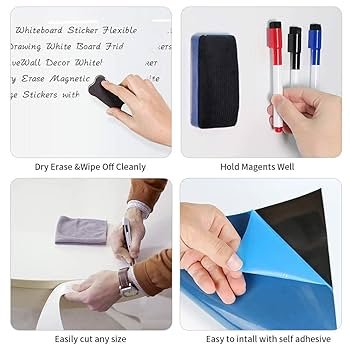
Standard dry erase boards are a staple for home offices, classrooms, and kitchen command centers, but the off-the-shelf sizes rarely fit perfectly in small spaces or custom layouts. Ordering a pre-cut custom board can cost two to three times as much as a standard sheet, with lead times stretching 2–4 weeks for special orders. Cutting a dry erase board yourself is a fast, low-cost DIY project that delivers professional results with basic tools and careful prep. This 2026 updated guide walks you through every step, from measuring and marking to smoothing edges and troubleshooting common mistakes, so you can get a perfect cut the first time, no prior experience required.
Why Cut a Standard Dry Erase Board Instead of Buying Custom?
Pre-cut custom dry erase boards are convenient, but they come with a steep price premium and long wait times that most DIYers can avoid. Cutting your own board lets you tailor the size exactly to your space: whether you need a small 12×12 inch board for a nursery art station, a narrow vertical strip for a hallway family schedule, or a full custom size for a classroom reading nook, you can get the exact dimensions you need in under an hour for the cost of a standard board. For teachers and small business owners, cutting one large 4×8 foot sheet into multiple smaller boards is also a cost-effective way to equip an entire classroom or office without breaking the budget. Even first-time DIYers can achieve clean, professional results by following the step-by-step guidance below.
Essential Tools and Materials for a Clean Cut
Having the right tools on hand before you start will save you time, reduce waste, and prevent damage to the board’s melamine writing surface. Most of these tools are available at any local hardware store, and many are likely already in your household toolbox. For general prep and marking, you will need:
- 25ft locking measuring tape
- Carpenter’s pencil (for visible, smudge-resistant marks)
- 24-inch aluminum straight edge (for perfectly straight cut lines)
- 1-inch wide masking tape
- Wrap-around safety goggles
- Dust mask (optional, for sensitive respiratory systems) For cutting, choose a tool based on your board’s thickness:
- Retractable utility knife with fresh #22 blades (for boards 1/8” to 1/4” thick)
- 12-inch fine-tooth crosscut hand saw (for boards 1/4” to 1/2” thick)
- Jigsaw with a fine-tooth blade (for curved cuts or boards over 1/2” thick) For finishing, you will need:
- Sanding block with 120-grit and 220-grit sandpaper
- Microfiber cloth
- Clear silicone caulk (optional, for high-moisture areas)
Use this quick reference table to select the right tool for your board type:
Board Thickness Recommended Cutting Tool Notes 1/8" – 1/4" (standard melamine) Retractable utility knife Score 3–4 times along the line for a clean break 1/4" – 1/2" (heavy-duty commercial board) 12" fine-tooth crosscut hand saw Slow, steady strokes to avoid splintering the melamine surface Over 1/2" (solid core marker board) Jigsaw with a fine-tooth blade Best for curved or irregular cuts; use a guide to keep lines straight 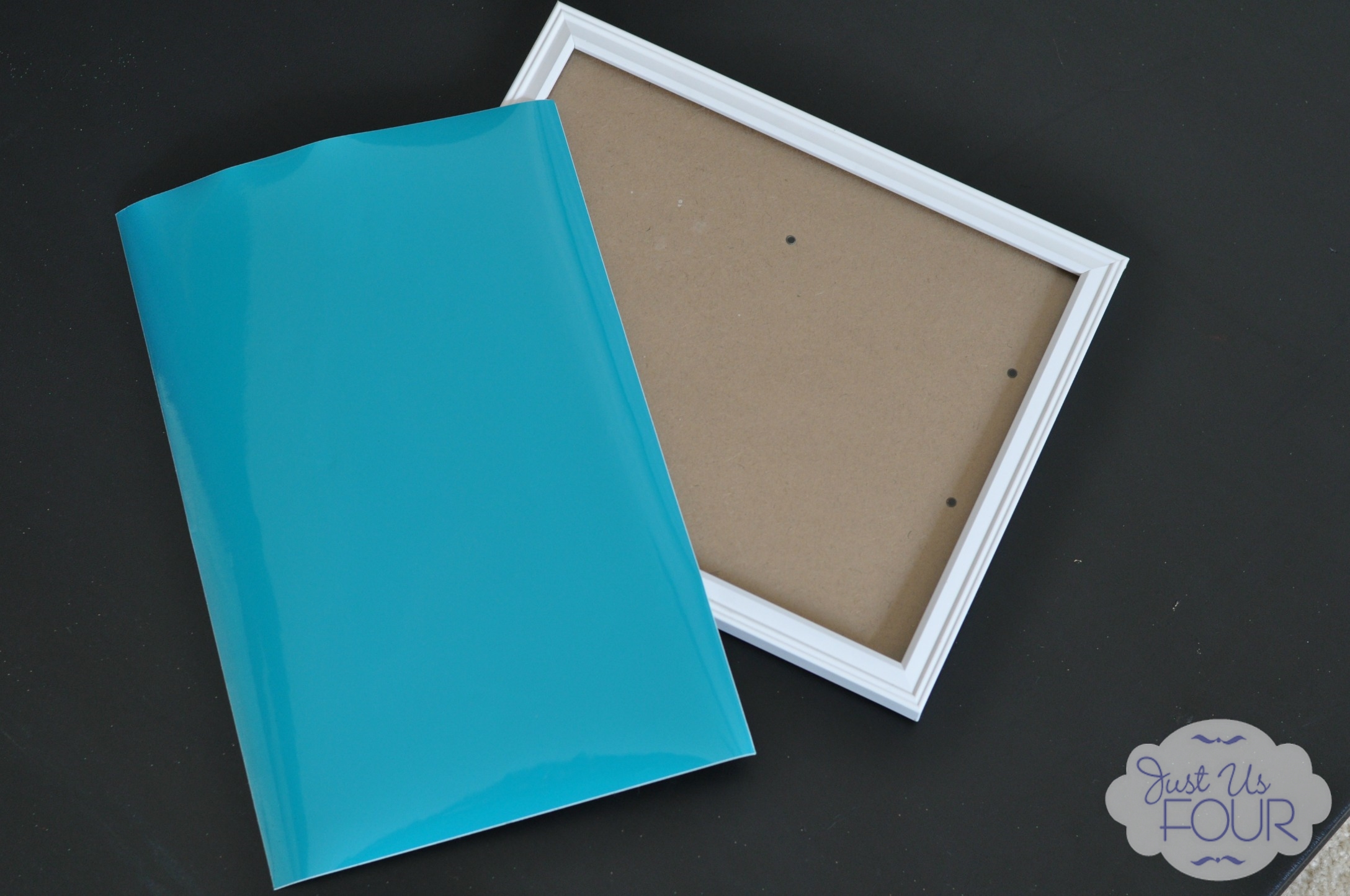
Gather all tools and safety gear before starting your cut to avoid mid-project trips to the hardware store. Credit: www.mysuburbankitchen.com
Step-by-Step Guide to Cutting a Dry Erase Board Perfectly
Following these steps in order will minimize chipping, splintering, and surface damage, even if you’ve never used a hand saw or utility knife before.
Step 1: Measure and Mark Precisely
The old adage “measure twice, cut once” is especially true for melamine dry erase boards, which are prone to chipping if cut incorrectly. First, measure your target dimensions twice to confirm accuracy, then add 1/8 inch to your measurement if you plan to mount the board in a frame, to account for the frame’s lip overlap.
Mark your cut line on the back (non-melamine) side of the board to avoid permanent pencil marks on the writing surface. Use your straight edge to draw a continuous, unbroken line along the cut path: a common mistake new DIYers make is marking the front of the board, which leaves marks that can’t be erased with standard dry erase cleaner. If you don’t have a dedicated metal straight edge, the flat side of a sturdy leather knife sheath works as a reliable guide for scoring clean, straight lines on melamine surfaces.
 Mark cut lines on the back of the board to avoid permanent marks on the writing surface.
Credit: afmat.com
Mark cut lines on the back of the board to avoid permanent marks on the writing surface.
Credit: afmat.com
Step 2: Prep Your Workspace and Safety Gear
A stable work surface is the most important factor in getting a clean, straight cut. Lay your board on a flat, sturdy workbench or table, and secure it with two C-clamps (one on each side of the cut line) to prevent shifting mid-cut. For lightweight tables that wobble, place a non-slip kitchen rug under the table legs to add stability. Put on wrap-around safety goggles before handling any cutting tools, even if you’re using a utility knife. Melamine chips can fly at high speed during cutting and cause serious eye injury. If you’re sensitive to dust, wear a basic dust mask to avoid inhaling fine melamine particles, which can cause respiratory irritation over time.
Step 3: Cut the Board
Choose your cutting tool based on your board’s thickness (refer to the table above for guidance). For utility knife cuts, score the marked line 3–4 times with firm, even pressure, then snap the board along the scored line by applying gentle, steady pressure to the overhanging piece. For hand saws or jigsaws, use long, smooth strokes and let the tool do the work: forcing the saw will cause splintering and uneven edges, and can even cause the blade to kick back. Keep your saw or knife perpendicular to the board at all times to avoid angled cuts, and cut slowly to maintain control. If you’re new to using a hand saw, practice a few strokes on a scrap piece of wood first to get a feel for the tool’s weight and motion.
Step 4: Smooth and Finish the Edges
Raw cut edges of dry erase boards are often rough, splintered, and sharp enough to cause minor cuts. First, use 120-grit sandpaper to sand away any large splinters or saw marks, then switch to 220-grit sandpaper for a smooth, splinter-free finish. Wipe away all dust with a microfiber cloth, then run your finger along the edge to check for rough spots: sand again if needed. If your cut board will be used in a high-moisture area like a kitchen or bathroom, apply a thin bead of clear silicone caulk along the cut edge to seal the porous MDF core and prevent warping from humidity. Let the caulk dry completely before mounting or using the board.
Step 5: Clean and Test the Board
Wipe the entire surface (front and back) of the board with a dry microfiber cloth to remove all cutting dust and debris. Test the writing surface with a dry erase marker to confirm it wasn’t damaged during the cutting process: if you notice minor scratches, buff them out with a small amount of melamine polish, but deep gouges or cracks will require replacing the board entirely.
Critical Safety Tips for Cutting Dry Erase Boards
Safety should always be your top priority when working with sharp cutting tools and melamine materials. Follow these guidelines to reduce your risk of injury:
- Always wear wrap-around safety goggles, even for quick utility knife cuts. Melamine chips can cause permanent eye damage if they make contact with your eye.
- Keep your fingers away from the blade path at all times, and use a push stick for utility knife cuts if you’re new to handling sharp blades.
- Work in a well-ventilated area, and avoid inhaling melamine dust, which can cause respiratory irritation with repeated exposure.
- After finishing your project, store sharp saws and utility knives in a locked cabinet using child-safe drawer locks to keep them out of reach of kids and pets.
- Never cut a board that’s resting on your lap or an unstable surface, as it can shift suddenly and cause serious cuts. For official guidance on safe hand tool operation to reduce injury risk, refer to the OSHA Hand Tool Safety Guidelines.
Troubleshooting Common Cutting Mistakes
Even with careful prep, small errors can happen during the cutting process. Use these fixes to resolve common issues:
- Chipped or splintered edges: Caused by sawing too fast or using a dull blade. Sand the edges smooth, and score the cut line more deeply with a utility knife before cutting next time to reduce chipping.
- Uneven or angled cuts: Caused by an unstable work surface or not using a straight edge. Clamp the board firmly, use a metal straight edge, and measure twice before cutting to avoid this issue.
- Scratched writing surface: Caused by marking the front of the board or dropping tools on the melamine surface. Minor scratches can be buffed out with melamine polish; deep scratches will require board replacement, so always mark cut lines on the back and handle the board carefully.
- Board shifts mid-cut: Caused by insufficient clamping or relying on masking tape alone for large boards. Always use at least two C-clamps, and avoid using tape as the only securing method for boards larger than 12×12 inches.
Best Use Cases for Cut Dry Erase Boards
Custom-sized cut dry erase boards are versatile enough for nearly any space in your home, classroom, or office. Popular use cases include:
- Home office command centers for tracking to-do lists, deadlines, and family schedules
- Classroom reading nooks or homework stations for student practice
- Kitchen meal planning hubs for tracking grocery lists and meal prep schedules; for kitchen use, a cut board paired with a non-slip kitchen runner along the counter edge keeps it from sliding when you’re writing quick notes while cooking
- Kid’s art stations for drawing and letter practice
- Garage or workshop organization boards for tracking inventory and project to-do lists Cut-to-size boards are also a fun family DIY project: involve kids in the measuring and marking step (with close supervision) to teach basic measurement skills, then use the finished board for drawing, homework practice, or family game nights. Many households use cut-to-size boards for kitchen meal planning hubs, where you can track grocery lists and pair snack ideas with crowd-pleasing recipes like artichoke white bean dip for last-minute gatherings.
Frequently Asked Questions
Can I cut a dry erase board with a regular craft knife?
Yes, for boards thinner than 1/4 inch, a sharp retractable utility knife works well. Score the cut line 3–4 times with firm, even pressure, then snap the board along the scored line. Avoid using dull blades, which will tear the melamine surface instead of cutting cleanly.
Will cutting a dry erase board damage its writing surface?
No, as long as you cut from the back (non-coated) side of the board and handle it carefully to avoid scratching the front. Always mark cut lines on the back to prevent permanent pencil marks on the writing surface.
What’s the best way to cut irregular shapes (like circles or curves) into a dry erase board?
For curved cuts, use a jigsaw with a fine-tooth blade. First, print or draw your shape on the back of the board, then drill a small hole inside the shape to insert the jigsaw blade. Cut slowly along the line, then sand the edges smooth for a professional finish.
Can I cut a magnetic dry erase board the same way as a standard board?
Yes, the cutting process is identical. The thin magnetic layer on the back will not be damaged by standard cutting tools, as long as you cut from the back side. Note that cut edges will not be magnetic, so plan your cuts accordingly if you plan to use magnets on the board.
How do I mount a cut dry erase board to the wall?
Use heavy-duty command strips or double-sided mounting tape for boards under 24×36 inches. For larger boards, use wall anchors and screws, pre-drilling holes to avoid splitting the board. Avoid using nails, which can crack the melamine surface.
How do I keep my cut dry erase board looking new for years?
Wipe the board down with a dry microfiber cloth after each use to avoid marker buildup, and avoid using abrasive cleaners or scrub pads that can scratch the melamine surface. If you mounted the board in a high-moisture area, check the sealed edges annually for cracks in the caulk to prevent warping.
Final Tips for Long-Lasting Cut Boards
- Seal cut edges with clear silicone caulk if the board will be exposed to humidity, spills, or heavy use to prevent the porous MDF core from warping or absorbing moisture.
- Avoid using harsh chemical cleaners on the writing surface, as they can degrade the melamine coating over time. Stick to dry erase cleaner or a damp microfiber cloth for regular cleaning.
- If you’re mounting the board, leave a small 1/8-inch gap between the board and the wall to allow for air circulation and prevent moisture buildup behind the surface.
Conclusion
Cutting a dry erase board is a simple, cost-effective DIY project that eliminates the need for expensive custom orders and lets you tailor your board to any space. By measuring carefully, securing your work surface, using the right tool for your board’s thickness, and following basic safety guidelines, you can get a clean, professional-looking cut in under an hour, even if you’re new to DIY projects. The custom board will work just as well as a store-bought pre-cut option for years to come with proper care. Have you cut a custom dry erase board for your home or workspace? Share your project in the comments, or check out our full blog archive for more easy DIY home organization guides.

I’m Abby Lu, a passionate home cook who loves simplifying everyday meals. At PlugChef.com, I share product reviews and cooking guides to help you find the best tools for your kitchen.
Related posts:
 How to Make a Fruit Basket for a Gift: Easy DIY Guide
 Do You Need a Basket? Essential Guide for Air Fryers
 How to Adjust Syrup Dispenser Pressure: Expert Tips
 Kitchen Cabinets With Black Appliances: Trendy Design Tips
 White Kitchen And Stainless Steel Appliances: A Perfect Duo
 Kitchen Colors With White Cabinets And White Appliances: Vibrant Ideas

