
Bamboo cutting boards are a top pick for eco-conscious home cooks: they’re lightweight, durable, and made from a rapidly renewable resource that matures in 3 to 5 years, far faster than slow-growth hardwoods. But many owners unknowingly shorten their board’s lifespan with basic care mistakes, leading to warping, cracking, and bacterial buildup after just a year or two of use. With consistent, correct care, a quality bamboo cutting board can easily last 5 to 10 years, far outlasting cheaper plastic or softwood alternatives. This guide covers every step of bamboo cutting board maintenance, from daily cleaning to deep restoration, to keep your board in top condition for years to come.
Why Bamboo Cutting Boards Are Worth Maintaining
As a grass rather than a true wood, bamboo has a Janka hardness rating of 1300 to 1500, making it significantly harder than maple (the most common wood for cutting boards) and more resistant to deep knife marks and surface scarring. Its fast growth rate and low environmental impact also make it a sustainable kitchen choice, per USDA sustainability guidelines. The only trade-off is that its hardness can dull knife edges faster than softer end-grain wood boards, so proper maintenance is even more critical to avoid surface damage that harbors bacteria and shortens the board’s usable life. For home cooks who prioritize knife longevity, pairing a bamboo board with high-quality knife storage helps maintain blade sharpness between uses.
 Image source: www.bambuhome.com
A properly cared-for bamboo cutting board can last 5–10 years with regular maintenance.
Image source: www.bambuhome.com
A properly cared-for bamboo cutting board can last 5–10 years with regular maintenance.
Daily Maintenance Steps to Prevent Premature Wear
Consistent, simple daily habits are the single biggest factor in extending your bamboo cutting board’s life. Follow these three steps after every use to avoid common damage.
Wash Immediately After Each Use
After each use, wipe away any loose food debris, then wash the board with warm water and a small amount of mild, fragrance-free dish soap. Avoid harsh degreasers or antibacterial soaps, as these can leave chemical residues that seep into the bamboo’s porous surface and alter the taste of food later. Use a soft-bristle brush to scrub off stuck-on bits, but never use steel wool or scouring pads, which will scratch the surface and create hiding spots for bacteria. Never soak the board in water, as prolonged moisture exposure causes the bamboo to swell, warp, and split over time. For routine prep, you can use your everyday kitchen tools without worry, as long as they are non-abrasive.
Dry Thoroughly and Right Away
After washing, pat the board completely dry with a clean, lint-free kitchen towel, then stand it upright on its edge in a well-ventilated area to air dry for at least 30 minutes before storing. A common mistake many owners make is propping the board against a backsplash while still wet, which traps moisture on the back side of the board and leads to cupping (warping into a curved shape) over time. Residual moisture is the #1 cause of mold growth and structural damage in bamboo cutting boards, so never skip this step.
Condition Monthly (or More for Heavy Use)
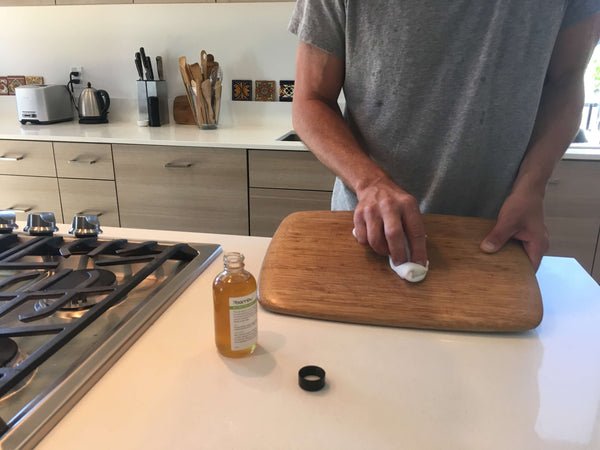
Bamboo is a natural material that will dry out over time without regular moisture, leading to small surface cracks, increased porosity, and a higher risk of bacterial contamination. To prevent this, apply a food-safe conditioner to the board once a month for average home use (3–4 times per week). For heavy use (daily prep of raw meat, acidic foods, or hard ingredients), increase oiling to every 2 weeks. Use only USP-grade food mineral oil, a dedicated bamboo board conditioner (which often includes beeswax for extra water resistance), or fractionated coconut oil (odorless and won’t go rancid). Never use cooking oils (olive, vegetable, sesame, etc.), as these oxidize over time, turn rancid, and leave sticky, smelly residues that are impossible to fully remove. To oil the board, pour a generous amount of conditioner onto the surface, rub it in with a soft cloth or paper towel in circular motions along the grain, let it soak for 2–4 hours (overnight is ideal for very dry boards), then wipe off any excess oil that has not absorbed. You’ll know the board needs oil when its surface looks dull, feels rough to the touch, or has small surface cracks forming.
 Credit: miti-life.com
Applying food-grade mineral oil monthly prevents bamboo from drying out and cracking.
Credit: miti-life.com
Applying food-grade mineral oil monthly prevents bamboo from drying out and cracking.
Deep Cleaning for Stains, Odors, and Bacteria
Even with daily washing, your bamboo cutting board will need occasional deep cleaning to remove stubborn stains, lingering odors, and harmful bacteria. Use these gentle, non-toxic methods to avoid damaging the bamboo.
Disinfect with a Vinegar Solution
White distilled vinegar is a non-toxic, FDA-approved food surface disinfectant that kills common foodborne bacteria like E. coli and Salmonella without harsh chemicals, making it a staple for safe kitchen cleaning routines. To disinfect your board, mix 1 part white vinegar with 1 part warm water, dip a clean cloth in the solution, and wipe the entire surface of the board. Let the solution sit for 5 minutes to kill bacteria, then rinse with warm water and dry immediately as per your daily maintenance steps. Do not soak the board in vinegar, as prolonged exposure to acidity can break down bamboo fibers over time. Avoid this method if your board has a wax finish, as vinegar will strip the protective wax layer.
Lift Tough Stains with Baking Soda Paste
For stains from red wine, coffee, turmeric, berries, or other deeply pigmented foods, make a thick paste of baking soda and warm water, spread it over the stained area, and let it sit for 10–15 minutes. Scrub gently with a soft sponge, then rinse thoroughly and dry. For extremely stubborn stains, add a single drop of hydrogen peroxide to the paste, but test it on a small, hidden area of the board first to avoid lightening the bamboo’s natural color.
Deodorize Lingering Smells
For persistent odors from garlic, onions, raw fish, or other strong-smelling foods, use one of two natural deodorizing methods:
- Sprinkle coarse salt over the board, then rub it with half a lemon, squeezing the lemon juice over the surface as you go. Let it sit for 5 minutes, then rinse and dry. The salt acts as a mild abrasive to lift odor-causing particles, while the lemon’s acidity neutralizes smells.
- Sprinkle a thin layer of baking soda over the entire board, let it sit overnight, then brush off the powder and rinse in the morning.
Safe Storage Practices to Avoid Warping and Damage
How you store your bamboo cutting board when not in use is just as important as how you clean it. Follow these rules to avoid preventable damage:
- Never store the board in a cabinet or drawer while it is even slightly damp. Trapped moisture will lead to mold growth, warping, and splitting over time.
- Always store the board upright on its edge in a well-ventilated area, not flat against a wall, which blocks airflow to one side of the board and causes cupping. If you have limited counter space, you can hang it from a wall-mounted rack, but avoid hanging it by a handle if the board is heavy, as this can cause stress cracks over time.
- Keep the board away from direct heat sources (ovens, stovetops, radiators) and direct sunlight, which will dry out the bamboo, cause it to split, and fade its natural color.
- If you store your board in an unheated garage or cold space during winter, bring it inside to a climate-controlled area: extreme temperature fluctuations cause the bamboo to expand and contract, leading to cracks and structural damage. Keeping your cutting board stored correctly is just as important as preventing slip hazards in your kitchen, which is why many home cooks use spill-proof kitchen floor mats near prep stations to catch spills and keep floors dry.
Common Mistakes That Shorten Your Board’s Lifespan
Even small, seemingly harmless habits can drastically reduce how long your bamboo cutting board lasts. Avoid these common errors to keep your board in great shape:
Running It Through the Dishwasher
No matter the cycle setting, dishwashers are unsafe for bamboo cutting boards. Most dishwashers reach temperatures of 140–150°F (60–66°C), which dries out the bamboo’s natural oils, causing it to crack, split, and warp. Prolonged water exposure also seeps into the bamboo’s porous layers, leading to mold growth and delamination (the separation of the layered bamboo strips most boards are made from). Even "eco" or "gentle" cycles will cause irreversible damage over time.
Using Harsh Abrasives and Cleaners
Avoid steel wool, scouring pads, chlorine bleach, oven cleaners, and other harsh abrasive or chemical cleaners, as these scratch the board’s surface, strip its protective natural oils, and can leave toxic residues that leach into food. For stuck-on food, use a soft-bristle brush or non-abrasive sponge instead. If you store harsh cleaning chemicals in your kitchen, keep them out of reach of children and pets with child-safe cabinet locks to prevent accidental contact.
Cutting Hard or Acidic Foods Directly
While bamboo is highly durable, cutting extremely hard foods (frozen items, bones, shellfish, or shelled nuts) directly on the board can cause deep knife marks and surface cracking over time. Similarly, highly acidic foods (citrus, tomatoes, vinegar-based marinades) left on the board for extended periods break down bamboo fibers and cause permanent staining. Wipe acidic spills off the board immediately after use, and consider using a separate plastic board for raw meat and very hard ingredients to extend your bamboo board’s life.
Skipping Regular Oiling
If you go months without conditioning your board, the bamboo will dry out, develop small surface cracks, and become more porous. A dry, porous board is harder to clean fully, and is more likely to harbor harmful bacteria like Salmonella and E. coli. Stick to a monthly oiling schedule, or increase frequency if you use the board heavily.
Restoring a Worn or Damaged Bamboo Board
If your board has minor wear, you don’t need to replace it right away. These simple restoration steps can bring a worn board back to life:
Fix Minor Surface Scratches and Cracks
For small surface scratches, sand them out with fine-grit (220-grit) sandpaper, rubbing gently along the grain of the bamboo. Wipe away all dust with a damp cloth, then apply a generous layer of mineral oil to restore moisture to the sanded area. For small, shallow cracks, fill them with food-safe wood filler, let it dry completely, sand smooth with 220-grit sandpaper, then oil the repaired area.
Recondition a Severely Dried-Out Board
If your board is dull, rough, and has widespread surface damage, you can fully recondition it with these steps:
- Wash and dry the board completely.
- Sand the entire surface first with 120-grit sandpaper to remove the damaged outer layer, then with 220-grit sandpaper to smooth the surface. Wipe away all sanding dust with a damp cloth.
- Apply 2–3 coats of mineral oil or bamboo conditioner, letting each coat soak for 4–6 hours (overnight is ideal) before wiping off excess oil. Note that if your board has deep, wide cracks that cannot be filled, or has widespread mold growth that cannot be removed with disinfectant, it is time to replace it. A damaged board with deep cracks can harbor bacteria that are impossible to fully eliminate, posing a food safety risk. Pair your restored (or new) board with other durable kitchen tools, like a heat-resistant handle holder to protect your hands when moving hot cookware off the stove.
Frequently Asked Questions
How often should I oil my bamboo cutting board?
For average home use (3–4 times per week), oil your board once a month. If you use it daily for heavy prep (raw meat, acidic foods, hard ingredients), increase oiling to every 2 weeks. You’ll know it needs oil when the surface looks dull, feels dry to the touch, or has small surface cracks forming.
Can I wash bamboo cutting boards in the dishwasher?
No. The high heat and prolonged water exposure in dishwashers will warp, split, and damage bamboo boards, and can also cause the layered bamboo strips to delaminate over time. Always wash them by hand with mild soap and warm water.
What type of oil is best for bamboo cutting boards?
Use only food-safe, odorless mineral oil (look for USP-grade, which is approved for food contact) or a dedicated bamboo board conditioner that includes beeswax for extra water resistance. Avoid cooking oils (olive, vegetable, regular coconut oil) as they go rancid over time and leave sticky, smelly residues.
How do I remove mold from a bamboo cutting board?
If you notice small mold spots, mix 1 part 3% hydrogen peroxide with 2 parts water, dip a cloth in the solution, and scrub the affected area. Let it sit for 10 minutes, then rinse thoroughly and dry completely. For widespread mold that has penetrated deep into the bamboo, discard the board, as mold spores can be impossible to fully remove and pose a food safety risk.
Can I cut raw meat on my bamboo cutting board?
Yes, as long as you wash and disinfect it immediately after use. For extra food safety, many home cooks use separate boards: one for raw meat, poultry, and fish, and another for produce, bread, and cooked foods. This prevents cross-contamination of harmful bacteria.
Conclusion
Bamboo cutting boards are a durable, eco-friendly kitchen staple that can last for a decade or more with proper care. The key to longevity is consistent daily maintenance: wash and dry the board immediately after each use, condition it monthly, avoid harsh cleaners and the dishwasher, and store it in a cool, dry, well-ventilated area. If your board does develop minor wear, simple restoration steps can bring it back to life, but be sure to replace it if it has deep, unrepairable cracks or widespread mold to avoid food safety risks. Ready to build a more sustainable, low-waste kitchen? Explore our full blog library for more guides to durable cookware and eco-friendly meal prep tips.

I’m Abby Lu, a passionate home cook who loves simplifying everyday meals. At PlugChef.com, I share product reviews and cooking guides to help you find the best tools for your kitchen.
Related posts:
 How to Make a Fruit Basket for a Gift: Easy DIY Guide
 Do You Need a Basket? Essential Guide for Air Fryers
 How to Adjust Syrup Dispenser Pressure: Expert Tips
 Kitchen Cabinets With Black Appliances: Trendy Design Tips
 White Kitchen And Stainless Steel Appliances: A Perfect Duo
 Kitchen Colors With White Cabinets And White Appliances: Vibrant Ideas

