
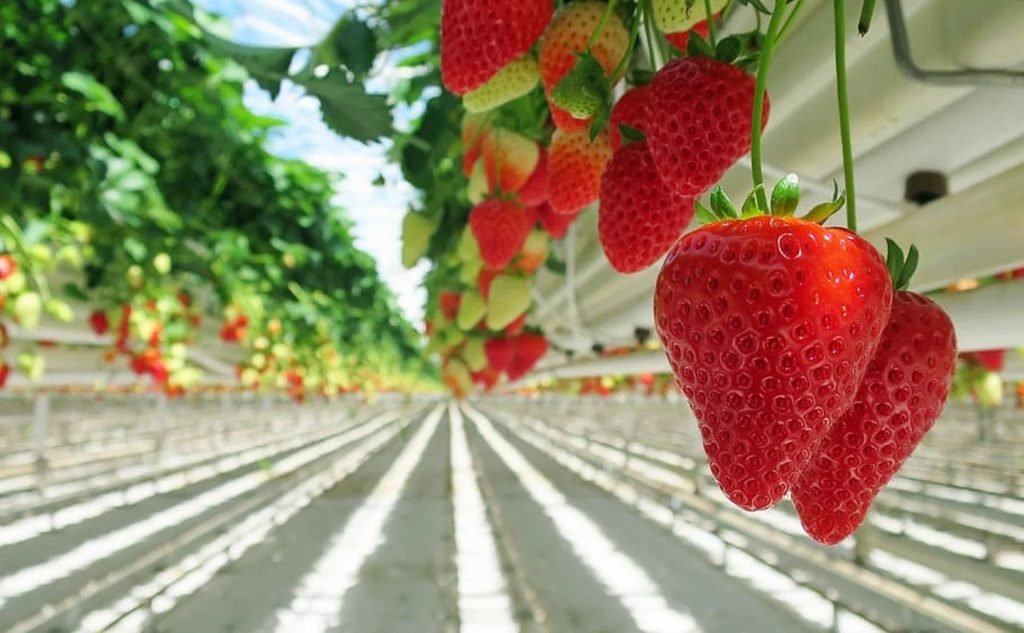
Strawberries are one of the most popular home garden and small farm crops worldwide, prized for their sweet flavor and versatility. But even experienced growers often overlook the single most critical factor for bumper harvests and blemish-free fruit: air humidity. Too much moisture encourages destructive fungal diseases, while too little stresses plants and reduces yield and flavor. If you’ve ever dealt with mushy, moldy berries or stunted, wilting plants, improper humidity is likely the culprit. This guide reveals the exact humidity sweet spot for strawberries, actionable control methods for every growing setup, variety picks tailored to your local climate, and post-harvest tips to keep your harvest fresh for weeks. All guidance aligns with 2026 best practices from university extension programs and commercial strawberry growers.
 A well-ventilated greenhouse is ideal for precise humidity control for strawberry crops.
What Is The Ideal Humidity Range For Strawberries?
Strawberries grow best in moderate relative humidity (RH) between 60% and 70% during the active growing season. This range strikes a perfect balance: it keeps plants sufficiently hydrated through transpiration without creating the consistently moist conditions that fungal spores need to germinate and spread. For more on this, see our guide on how to store strawberries properly.
Why 60-70% Relative Humidity Is The Gold Standard
This target range is confirmed by University of California Agriculture and Natural Resources strawberry production guidelines as the optimal balance for hydration and disease suppression. At this RH level, strawberry leaves dry within 1-2 hours of watering or rain, eliminating the 12+ hours of continuous leaf wetness required for gray mold (Botrytis cinerea), the most destructive strawberry disease, to take hold. Nighttime RH can safely drop 5-10% without harming plants, as strawberry transpiration rates slow after sunset.
In practice, most home growers overestimate their humidity levels by 5-10% when relying on wall-mounted indoor thermostats, so a canopy-level digital hygrometer is a worthwhile investment for accurate readings. For more on this, see our guide on best high end air fryer over 300.
How Extreme Humidity Damages Strawberry Plants
Both high and low humidity outside the 60-70% range cause distinct, avoidable problems for strawberry plants, from reduced yield to total crop loss.
The Hidden Risks Of High Humidity (Above 70% RH)
When RH exceeds 70%, moisture lingers on leaves, flowers, and fruit for hours after watering or rain. This creates ideal conditions for fungal and bacterial diseases:
- Gray mold (Botrytis cinerea) spreads rapidly, causing soft, watery rot on ripe and developing fruit, and can destroy an entire harvest in 3-5 days in warm, damp conditions.
- Powdery mildew (Podosphaera aphanis) appears as white powdery spots on leaves, reduces photosynthesis, and can kill young plants if left untreated.
- High humidity also reduces strawberry pollen viability to near zero after 3 hours of exposure, leading to poor pollination, misshapen fruit, and reduced yield.
- Fruit grown in consistently high humidity absorbs excess moisture from the air, leading to bland, watery flavor and a shelf life 2-3 times shorter than fruit grown in ideal conditions.
The Dangers Of Low Humidity (Below 40% RH)
Low humidity increases the rate of transpiration, causing strawberry plants to lose water faster than their shallow, top-heavy root systems (90% of roots are concentrated in the top 6 inches of soil) can absorb it from the ground. Effects include:
- Wilting of young leaves and flowers, even when soil is adequately moist.
- Flower abortion, where flowers dry up and drop before setting fruit, leading to significant yield loss in prolonged dry spells.
- Smaller, less juicy fruit with underdeveloped seeds and thin flesh.
- Increased populations of spider mites and aphids, which thrive in dry conditions and can defoliate plants in weeks if left unmanaged.
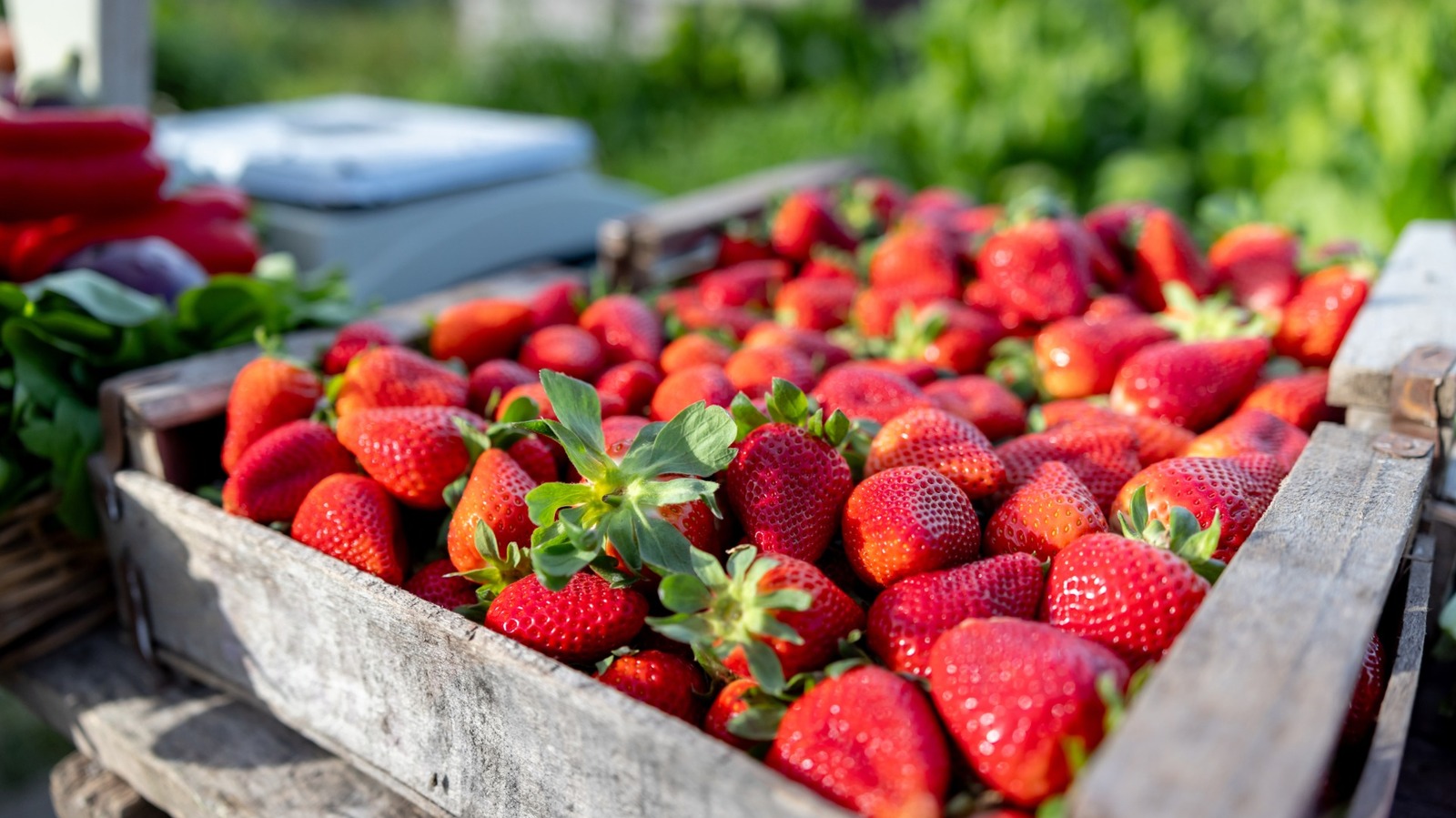 Gray mold, a common high-humidity disease, causes rapid strawberry fruit rot.
Credit: www.chowhound.com
Gray mold, a common high-humidity disease, causes rapid strawberry fruit rot.
Credit: www.chowhound.com
Humidity’s Impact On Every Stage Of Strawberry Growth
Humidity doesn’t just affect mature fruit — it plays a role in every phase of the strawberry plant’s life cycle, from root establishment to harvest. For more on this, see our guide on how to plant strawberries in hanging baskets.
Root Development And Soil Health
Strawberry roots are extremely sensitive to soil moisture levels tied to air humidity. High humidity slows soil evaporation, leading to waterlogged soil that deprives roots of oxygen and encourages root rot pathogens like Phytophthora cactorum. Low humidity dries the top 2-3 inches of soil rapidly, making it impossible for shallow roots to access water. The 60-70% RH range keeps soil moisture consistent, supporting strong, healthy root systems that can absorb nutrients efficiently.
A common mistake home growers make is watering on a fixed schedule rather than adjusting for current humidity levels: in a week of high humidity and cloud cover, plants may need 50% less water than they would in dry, sunny conditions.
Flowering, Pollination, And Fruit Set
Humidity directly impacts pollination success, which determines fruit set and yield. High humidity makes pollen sticky and non-viable, and reduces bee activity, as pollinators avoid flying in damp, heavy air. Low humidity dries out flower petals and pollen before bees can transfer it between blooms, leading to poor pollination and misshapen fruit. The 60-70% RH range keeps pollen viable for 6-8 hours, giving pollinators ample time to visit flowers, and supports even, complete fruit development.
Disease And Pest Susceptibility
As noted earlier, high humidity is the primary driver of fungal diseases in strawberries. It also creates favorable conditions for pests like slugs and snails, which feed on ripe fruit and young leaves in damp conditions. Low humidity increases spider mite populations, as dry air accelerates their reproductive cycle. Balanced humidity reduces both disease and pest pressure, cutting the need for chemical treatments significantly in most home garden settings.
Practical Humidity Control Techniques For Every Growing Setup
Humidity control methods vary based on whether you grow strawberries in a greenhouse, outdoor garden bed, or container. The following techniques are tailored to each setup, using affordable, low-labor methods.
Greenhouse Humidity Management
Greenhouses offer the most control over humidity, but also require the most active management to avoid extreme fluctuations:
- Size exhaust fans to move 1 cubic foot of air per square foot of greenhouse space per minute, and run them for 10-15 minutes every hour during the day to exchange stale, moist air for dry outside air.
- Install a humidistat to automatically trigger fans when RH exceeds 72%, eliminating the need for constant manual monitoring.
- For dry winter conditions, use a cool-mist humidifier with a built-in humidistat to raise RH to the target range without over-humidifying.
- Open greenhouse vents on warm days even if rain is forecast, to allow air exchange and reduce moisture buildup.
For advanced greenhouse growers, the University of Massachusetts Extension offers detailed guidance on sizing ventilation systems for different greenhouse dimensions. Consistent monitoring is just as important for garden setups as it is for home maintenance, so pair your humidity tracking with reliable pest-proofing strategies for greenhouse entry points to reduce pest ingress. If you use propane or electric heaters to maintain greenhouse temperatures in cold weather, keep emergency fire safety essentials on hand to address any heating element malfunctions.
Outdoor Growing Adjustments
Outdoor growers have less direct control over humidity, but can use site selection and cultural practices to mitigate extreme conditions:
- Plant strawberries on a 2-3% slope to improve drainage and prevent cold, damp air from settling around plants in low-lying areas.
- Space plants 12-18 inches apart in rows 3 feet apart to allow air circulation through the canopy, which reduces RH around leaves and fruit by 10-15% compared to overcrowded plantings.
- Use 30% density shade cloth during peak summer heat to reduce soil evaporation and lower local RH by 5-10%.
- For regions with frequent spring rain, use raised beds at least 8 inches tall to improve drainage and prevent waterlogged soil.
For greenhouse or cold frame floors that retain moisture after watering, placing a washable non-slip mat reduces evaporative humidity around the base of your plants.
Mulch And Ground Cover Strategies
Mulching is one of the most effective, low-cost ways to stabilize humidity around strawberry plants:
- Use straw (not hay, which contains weed seeds) or shredded hardwood bark as mulch, applied in a 2-3 inch layer around the base of plants, leaving a 1-inch gap around the crown to avoid rot. Organic mulches reduce soil evaporation by 50%, stabilizing RH around the root zone and reducing the need for supplemental watering.
- Avoid black plastic mulch, which heats the soil and increases transpiration, raising local RH and encouraging fungal growth.
- For perennial strawberry patches, low-growing living ground covers like clover can be used between rows to suppress weeds and reduce evaporation, but remove them annually to avoid competition for nutrients.
Watering Practices That Work With Humidity Levels
Watering practices are directly tied to humidity management, as overwatering in high humidity is the #1 cause of home grower strawberry crop loss. Follow these guidelines to avoid common mistakes.
Choosing The Right Irrigation Method
Drip irrigation is the only recommended method for strawberries, as it delivers water directly to the soil near the root zone, keeping foliage dry and reducing leaf wetness duration. Use pressure-compensating drip emitters that deliver 1-2 gallons per hour per plant, placed 2-3 inches from the crown. Soaker hoses work well for row plantings, but check them regularly for clogs that can cause overwatering. Avoid overhead sprinklers entirely, as they wet leaves and fruit, increasing leaf wetness duration by 6-8 hours, which is enough for fungal spore germination.
Avoiding Overwatering In High-Humidity Conditions
In high humidity, soil stays moist for longer, so reduce watering frequency by 25% compared to dry conditions. Always check the top 2 inches of soil before watering: if it feels moist to the touch, delay watering for 24 hours. Use a soil moisture meter for accurate readings, rather than relying on surface appearance. Signs of overwatering include yellowing lower leaves, soft brown roots, and a musty smell from the soil. If you see these symptoms, reduce watering immediately and improve drainage by adding compost to heavy clay soil.
Always use sharp, quality cutting tools when pruning to avoid tearing plant tissue, which creates entry points for disease.
Optimizing Watering Timing For Your Climate
Water strawberries between 5am and 9am, when temperatures are cool and wind is low, to minimize evaporation and allow foliage to dry within 1-2 hours. Avoid watering in the evening, as foliage will remain wet overnight, when RH is naturally higher, increasing disease risk. During heatwaves with low RH, water deeply 2-3 times per week instead of shallow daily watering, to encourage deep root growth that can access deeper soil moisture.
Selecting The Right Strawberry Varieties For Your Humidity Level
Choosing a cultivar matched to your local humidity level reduces disease pressure and improves yield and flavor, eliminating the need for intensive humidity control in many cases.
Top Humidity-Tolerant Cultivars For Damp Climates
For regions with RH above 70% for most of the growing season (coastal areas, the southeastern US, etc.), choose cultivars with built-in resistance to gray mold and powdery mildew:
- ‘Chandler’: A classic June-bearing variety with thick, waxy leaves that repel moisture, and firm fruit that resists rot. Performs well in both field and greenhouse settings.
- ‘Seascape’: A day-neutral variety with excellent powdery mildew resistance, producing sweet fruit from spring to fall in cool, damp climates.
- ‘Albion’: A California-bred day-neutral cultivar with high resistance to both gray mold and powdery mildew, ideal for humid coastal regions.
- ‘Sweet Charlie’: A June-bearing variety with firm, flavorful fruit that holds up well in high humidity, and good resistance to leaf spot diseases.
Drought-Resistant Varieties For Arid Regions
For arid or semi-arid regions with RH below 40% for extended periods, choose cultivars with open plant structures and drought tolerance:
- ‘Eversweet’: A day-neutral variety with small, open leaves that allow for maximum air circulation, and deep roots that access deeper soil moisture.
- ‘Fort Laramie’: A cold-hardy June-bearing variety with excellent drought tolerance, producing sweet, juicy fruit even in low-humidity conditions.
- ‘Ozark Beauty’: An everbearing variety with good drought resistance, producing two crops per year in dry climates.
How Modern Breeding Is Closing The Humidity Gap
Modern strawberry breeding programs use marker-assisted selection to identify genes linked to humidity tolerance and disease resistance, cutting the development time for new cultivars from 10 years to 6 years on average. The University of Florida’s strawberry breeding program, for example, has released several cultivars specifically adapted to the high-humidity southeastern US, with built-in resistance to Botrytis and powdery mildew, without sacrificing flavor. This means home growers in extreme humidity climates no longer have to choose between disease resistance and sweet, flavorful fruit.
Common Humidity-Related Problems And How To Fix Them
Even with careful planning, humidity extremes can still cause problems. Use these quick fixes to address common issues before they destroy your harvest.
Fungal And Bacterial Diseases
- Gray mold: Remove all infected fruit and foliage immediately, and increase air circulation by pruning crowded stems. Apply an organic fungicide containing Bacillus subtilis at the first sign of disease, and avoid overhead watering.
- Powdery mildew: Mix 1 tablespoon of neem oil with 1 gallon of water and spray leaves every 7 days until symptoms disappear. Prune affected foliage to improve air flow.
- Root rot: Stop watering immediately, and gently remove the plant from the soil to inspect roots. Trim soft, brown roots with sterile cutting tools, and replant in well-draining soil amended with compost.
Pest Infestations Linked To Humidity Extremes
- Spider mites: Increase humidity around plants by misting foliage in the early morning (only in low-humidity conditions) to discourage mite reproduction. Introduce predatory mites (Phytoseiulus persimilis) for natural control, and avoid broad-spectrum insecticides that kill beneficial insects.
- Slugs and snails: Place copper tape around the base of raised beds, or set out beer traps to lure and kill pests. Keep the growing area free of fallen fruit and debris, which provides habitat for slugs.
Fruit Quality Issues
- Soft, bland fruit from high humidity: Harvest fruit as soon as it ripens, and store in the refrigerator immediately to slow mold growth.
- Shriveling, dry fruit from low humidity: Harvest fruit in the early morning when it is fully turgid, and store in a perforated container in the refrigerator to retain moisture.
Maximizing Yield And Quality With Precision Humidity Control
Consistent humidity management, paired with other cultural practices, is the key to record harvests and premium-quality fruit.
Daily Monitoring Best Practices
Use a digital hygrometer with a remote sensor placed at canopy level (not on a greenhouse wall, which can give inaccurate readings) to get accurate real-time RH data. Check readings twice daily, at sunrise and mid-afternoon, when RH is at its highest and lowest points of the day. Keep a log of readings, watering schedules, and weather events to identify patterns and adjust your management plan accordingly. For outdoor growers, use a local weather station app to track regional RH and adjust your watering and ventilation practices to match forecasted conditions.
 A digital hygrometer is the most accurate tool for tracking daily humidity fluctuations.
Credit: www.gorillagrowtent.com
A digital hygrometer is the most accurate tool for tracking daily humidity fluctuations.
Credit: www.gorillagrowtent.com
Combining Cultural Practices For Consistent Results
No single humidity control method works on its own. Pair the following practices for maximum impact:
- Use drip irrigation with mulching to reduce soil evaporation and stabilize RH around the root zone.
- Prune strawberry plants annually in early spring to remove old, diseased foliage and improve air circulation through the canopy, which reduces RH around leaves and fruit by 10-15% in dense plantings.
- Space plants properly, and avoid overcrowding, which traps moisture and increases disease risk.
- In greenhouse settings, combine ventilation with low-intensity heating in cold months: cold air holds less moisture, so heating incoming air reduces RH without introducing excess moisture.
Post-Harvest Humidity Management For Longer-Lasting Berries
Humidity management doesn’t end at harvest. Follow these steps to extend the shelf life of your berries by 2-3 times:
- Sort berries immediately after picking, removing any damaged or moldy fruit, which can spread to healthy berries in storage.
- Store fresh strawberries in a perforated container in the refrigerator at 32-36°F and 90-95% RH. This high storage humidity prevents shriveling, while the cool temperature slows respiration and mold growth.
- Avoid washing berries before storage, as surface moisture accelerates spoilage. Wash berries just before eating or using in recipes.
- For longer-term storage, spread berries in a single layer on a baking sheet and freeze for 2 hours before transferring to a sealed container. This preserves flavor and texture for up to 12 months.
If you’re looking for creative ways to use your harvest, check out our guide on prepping Havarti for charcuterie for delicious pairing ideas.

Frequently Asked Questions
Do strawberries grow better in high or low humidity?
Strawberries thrive in moderate relative humidity (RH) between 60% and 70% during the growing season. High humidity above 70% promotes fungal diseases like gray mold and powdery mildew, while low humidity below 40% causes water stress, reduced fruit set, and smaller, less juicy berries. The 60-70% range balances transpiration needs with disease suppression for optimal growth and yield.
How does humidity affect strawberry fruit quality?
High humidity during growth causes fruit to absorb excess moisture, leading to bland flavor, soft texture, and rapid post-harvest rot. Low humidity causes fruit to lose moisture quickly after harvest, resulting in shriveling and a mealy texture. Berries grown in the ideal 60-70% RH range have firm flesh, concentrated sweetness, and a shelf life 2-3 times longer than those grown in extreme humidity conditions.
Can low humidity stunt strawberry plant growth?
Yes. When RH drops below 40%, strawberry plants lose water through their leaves faster than their shallow root systems can absorb it from the soil. This water stress causes flower abortion, stunted leaf growth, and smaller fruit. Prolonged low humidity can also kill young plants if not addressed with increased watering and partial shade.
Is high humidity bad for strawberry disease control?
High humidity is the single biggest risk factor for fungal and bacterial diseases in strawberry crops. Gray mold, the leading cause of post-harvest strawberry loss in high-humidity growing regions, requires 12+ hours of leaf wetness and RH above 75% to spread. Powdery mildew can develop at RH as low as 60% if air circulation is poor. While high humidity cannot be eliminated entirely in rainy or coastal climates, proper ventilation, spacing, and fungicide applications can reduce disease risk significantly in most cases.
Can I grow strawberries in a high-humidity bathroom?
While strawberries can survive short periods in high-humidity bathroom environments, they are not well-suited for long-term growth there. Bathrooms typically have RH above 70% with poor air circulation, which creates ideal conditions for mold and fungal diseases. Additionally, most bathrooms have low light levels, which strawberries require (at least 6 hours of direct sun daily) for fruit production.
What humidity level is best for storing harvested strawberries?
After harvest, store strawberries in the refrigerator at 32-36°F and 90-95% relative humidity. This high storage humidity prevents the berries from losing moisture and shriveling, while the cool temperature slows respiration and mold growth. Avoid washing berries before storage, as surface moisture accelerates spoilage.
Conclusion
Growing perfect, flavorful strawberries comes down to mastering one often-overlooked variable: air humidity. The 60-70% relative humidity range is the non-negotiable starting point for healthy plants, high yield, and disease-free fruit, regardless of whether you grow in a greenhouse, outdoor bed, or container. For growers in damp, high-humidity climates, prioritize air circulation, disease-resistant cultivars, and drip irrigation to keep foliage dry. For growers in arid, low-humidity regions, use mulch and deep, infrequent watering to keep soil moisture consistent and reduce water stress.
By combining daily humidity monitoring with the cultural practices outlined in this guide, you can eliminate the most common causes of strawberry crop loss and enjoy sweet, juicy berries all season long. For more home growing tips, kitchen hacks, and seasonal produce ideas to make the most of your harvest, check out our full seasonal produce guide today.

I’m Abby Lu, a passionate home cook who loves simplifying everyday meals. At PlugChef.com, I share product reviews and cooking guides to help you find the best tools for your kitchen.
Related posts:
 How to Make a Fruit Basket for a Gift: Easy DIY Guide
 Do You Need a Basket? Essential Guide for Air Fryers
 How to Dispose of Small Kitchen Appliances: Easy & Eco-Friendly Tips
 Kitchen White Cabinets Stainless Appliances: Timeless Elegance
 How to Hide Appliances in a Kitchen: Clever Design Tips
 Where to Sell Old Kitchen Appliances: Top Platforms Revealed

