
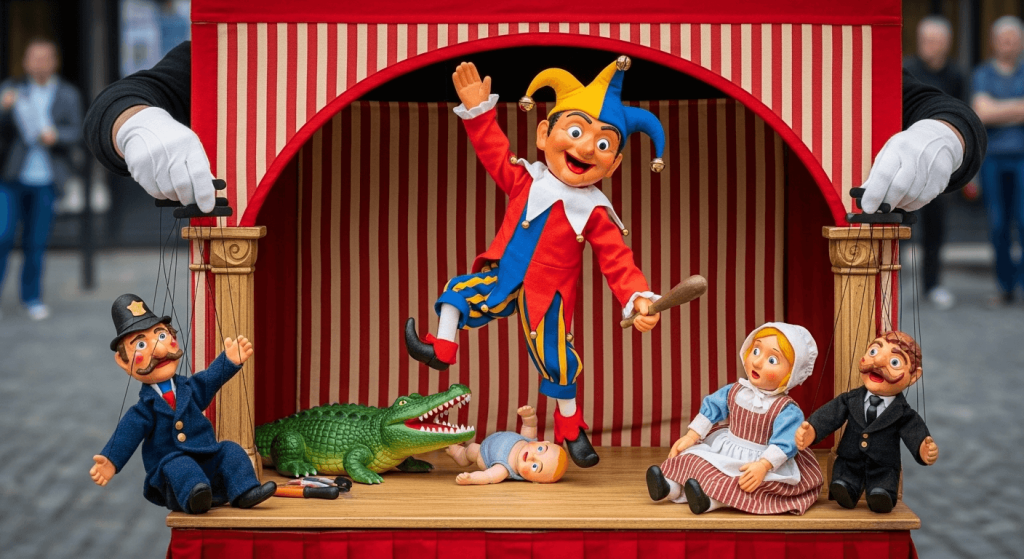
Have you ever felt so happy that you were simply “pleased as punch”? It’s a fun phrase you might use without even thinking about where it comes from.
But what if knowing its origin made the saying even more interesting? You’ll discover the surprising history behind “pleased as punch” and why it’s stuck around for so long. Keep reading—your next favorite phrase story is just ahead!
Roots Of The Phrase
The phrase “pleased as punch” has a rich history that traces back centuries. Understanding its roots gives insight into its vivid imagery and lasting appeal. This phrase captures the feeling of great satisfaction or delight in a colorful way.
Its origin is linked to a popular puppet character named Punch. This character was known for his mischievous and joyful nature. The phrase grew out of the cultural scene surrounding Punch’s stories.
Early Literary Appearances
The phrase first appeared in English literature during the 17th century. It was often used to describe someone who was very happy or proud. Writers included it in plays and poems to add humor and color.
Punch, the character, was part of puppet shows that entertained audiences. His name became a symbol of cheeky pleasure. Early texts show the phrase “pleased as Punch” used to express this feeling vividly.
Cultural Influences
Punch’s character has roots in the Italian commedia dell’arte tradition. Known as Pulcinella, he was a clever and lively figure. This character influenced English puppet shows and popular culture.
The phrase gained popularity as Punch’s shows became common in fairs and theaters. People enjoyed the humor and boldness of Punch. This made the phrase stick as a way to describe being very pleased.
The phrase reflects cultural humor and the lively spirit of street entertainment. It remains a charming way to express joy and satisfaction today.

Credit: www.youtube.com
Meaning Behind The Words
The phrase “Pleased As Punch” carries a lively meaning that goes beyond the words themselves. Understanding its meaning helps us appreciate why it has lasted so long in English. The phrase blends literal and figurative ideas to express a strong feeling of happiness.
Literal Vs Figurative Use
Literally, “Punch” refers to a character from old puppet shows known for his cheeky smile. Being “pleased as Punch” means being as happy as that character looked.
Figuratively, the phrase describes someone who feels very happy or proud. It is not about actual punches or fighting. Instead, it shows a joyful, satisfied mood, often with a playful tone.
Emotional Connotations
The phrase carries a sense of light-hearted joy. It suggests simple, pure pleasure without any serious stress or worry. It often implies a quiet pride or delight in something small but meaningful.
People use it to express happiness that feels genuine and fun. It paints a picture of someone smiling with satisfaction, enjoying a moment fully.
Historical Context
The phrase “pleased as punch” has a curious origin. This expression has delighted English speakers for centuries. It reflects both cultural and historical influences. Understanding its roots gives insight into its enduring charm.
Time Period Origins
The phrase dates back to the 17th century. It originates from the puppet show character, Punch. Punch and Judy shows were popular in England. Punch was known for his mischievous and joyful nature. His antics entertained audiences and left them laughing. The character’s happiness inspired the saying “pleased as punch.”
Geographical Spread
The expression spread across English-speaking countries. It became popular in Britain first. Then, it traveled to America with British immigrants. The phrase found its way into everyday language. Over time, it gained a global presence. Today, people worldwide use it to express delight. Its simple charm continues to appeal across cultures.

Credit: www.youtube.com
Evolution Over Time
The phrase “pleased as punch” has changed a lot through the years. Its meaning and usage evolved along with language and culture. This evolution shows how people keep language fresh and relevant. Exploring these changes helps us understand the phrase better today.
Changes In Usage
Originally, “pleased as punch” related to a character named Punch from puppet shows. Punch was known for his cheeky and happy nature. Over time, the phrase shifted from describing that character to expressing strong happiness.
In earlier centuries, people used the phrase mostly in storytelling and plays. It had a lively, sometimes mischievous tone. As language became less formal, the phrase found a place in everyday speech. Now, it simply means being very happy or satisfied.
Modern Interpretations
Today, “pleased as punch” is a common way to say someone is very happy. It no longer refers to the puppet character. Instead, it captures a general feeling of joy or pride.
People use it in casual talks, writing, and even advertising. The phrase keeps its playful spirit but feels more natural and friendly. Its simple meaning helps it stay popular across generations.
Similar Expressions
The phrase “pleased as punch” conveys pure joy and satisfaction. Many languages and cultures have their own ways to express similar feelings. These expressions help us understand how people around the world show happiness. Exploring them reveals interesting connections and cultural differences.
Comparisons With Other Idioms
Several English idioms share the same joyful meaning as “pleased as punch.” For example, “happy as a clam” and “over the moon” both express great happiness. “On cloud nine” also describes feeling very pleased. These phrases use simple images to show strong positive emotions.
- Happy as a clam:Feeling very content and safe.
- Over the moon:Extremely happy or delighted.
- On cloud nine:Experiencing great joy or bliss.
Each idiom uses different ideas but all capture the feeling of being very pleased. They show how language paints pictures to express emotions.
Cross-cultural Variants
Other languages have unique expressions that mean the same as “pleased as punch.” For example, in Spanish, “estar como una lombriz” means to feel very happy. In French, people say “être aux anges,” which means to be with angels, showing delight. Japanese speakers use “うれしい限り” (ureshii kagiri), meaning extremely happy.
| Language | Expression | Meaning |
|---|---|---|
| Spanish | Estar como una lombriz | To be very happy |
| French | Être aux anges | To be delighted |
| Japanese | うれしい限り (ureshii kagiri) | Extremely happy |
| German | Auf Wolke sieben sein | To be on cloud seven (very happy) |
These variants show that happiness is a universal feeling. Different cultures use vivid images to describe joy and satisfaction.

Credit: www.youtube.com
Impact On Language
The phrase “Pleased as Punch” has left a notable mark on the English language. It captures a vivid feeling of joy and satisfaction in just three words. Understanding its impact helps you see how language evolves and stays alive through everyday use.
Influence In Literature
Writers have long used “Pleased as Punch” to convey genuine happiness with a touch of whimsy. You might find it in classic works where characters express delight clearly and simply.
Its playful tone adds charm without overcomplicating emotions. When you read a novel or poem featuring this phrase, it often lightens the mood or emphasizes a character’s contentment.
Have you noticed how some phrases stick in your mind because they feel natural and relatable? That’s exactly what “Pleased as Punch” does in literature—it connects with readers instantly.
Presence In Popular Culture
Beyond books, this phrase pops up frequently in movies, TV shows, and even everyday conversations. Its catchy rhythm makes it easy to remember and fun to say.
Cartoons and comedy often use “Pleased as Punch” to highlight a character’s joy in a playful way. This keeps the phrase alive and relevant across generations.
Next time you hear or use this expression, think about how it adds color to your speech and how language is shaped by shared experiences. What other phrases do you use that carry similar energy?
Frequently Asked Questions
What Does The Phrase “pleased As Punch” Mean?
Pleased As Punch” means feeling very happy or delighted. It describes strong satisfaction or joy about something. The phrase is often used to express pride or contentment.
Where Did The Phrase “pleased As Punch” Originate?
The phrase originated from the 17th-century puppet character Punch. Punch was known for his mischievous and gleeful nature, symbolizing delight. It became a popular idiom in English to express happiness.
How Old Is The Phrase “pleased As Punch”?
The phrase dates back to the early 1600s. It appeared in English literature and theater during that time. Its use has continued for centuries to describe joy and satisfaction.
Why Is Punch Associated With Pleasure In The Phrase?
Punch’s character was known for his cheeky, joyful antics. This made “Pleased As Punch” a fitting expression for feeling gleeful. The phrase captures Punch’s playful and happy nature.
Conclusion
The phrase “pleased as punch” has a fun and rich history. It comes from old puppet shows where Punch was very happy. Today, people use it to show great joy. Knowing its origin makes the phrase more interesting. It shows how language grows and changes over time.
Next time you say it, you can smile about its story. Words carry stories. This one tells of laughter and fun. Simple phrases often have deep roots. That’s the charm of language.

Hi, I’m Daniel Brooks—a food lover and kitchen gear enthusiast. I enjoy testing cookware, utensils, and gadgets to see what really works in everyday cooking. At PlugChef.com, I share honest reviews, comparisons, and simple guides to help you choose the best tools for a safer, smarter, and more enjoyable kitchen.
Related posts:
 What Type of Cooking Utensils are Safe: Expert Picks
 What Innovations Could Blenders Make: Unleashing Future Tech
 Smart Strategies to Organize a Small Kitchen: Maximize Space
 How to Organize a Kitchen Cabinet: Expert Tips & Tricks
 How to Organize Kitchen Drawers: Expert Tips and Tricks
 How to Organize a Corner Kitchen Cupboard: Expert Tips

