
Are you tired of your baking tools losing their shine and efficiency after just a few uses? Perhaps you’ve noticed your equipment isn’t performing as well as it used to, leaving you frustrated with less-than-perfect baked goods.
Maintaining your baking tools and equipment is essential to achieving consistent, delicious results every time. Imagine how much easier and more enjoyable your baking sessions could be if your tools were always in top condition. You’ll discover simple yet effective methods to keep your baking arsenal well-maintained, ensuring you get the most out of your investment.
By the end, you’ll feel confident and equipped to tackle any baking challenge with ease, knowing your tools are ready to support you. Let’s dive in and transform your baking experience!
Importance Of Proper Maintenance
Proper maintenance of baking tools and equipment is crucial. It ensures longevity and efficiency. Clean and well-maintained tools perform better. They also produce consistent results. Neglecting maintenance can lead to costly replacements. It can affect the quality of your baked goods. Regular care reduces the risk of malfunction. It also ensures safety in the kitchen. A well-maintained tool is a reliable tool.
Importance Of Hygiene
Clean tools prevent contamination. Bacteria can thrive on dirty surfaces. They can spoil your baked goods. Regular cleaning removes residue. It keeps tools hygienic. Using clean tools ensures safe food preparation. It protects your health and your customers’.
Efficiency And Performance
Maintained tools work efficiently. A sharp knife cuts smoothly. A clean mixer blends uniformly. Proper care enhances performance. Well-maintained tools save time. They reduce effort in the kitchen. Efficient tools lead to better results. They make baking enjoyable.
Cost-effectiveness
Neglect leads to expensive repairs. Regular maintenance saves money. It prevents unnecessary replacements. Investing time in care is cost-effective. It prolongs the life of your equipment. You spend less on new tools. Proper maintenance is an investment. It pays off in the long run.
Safety Considerations
Maintained tools are safer to use. Faulty equipment can cause accidents. Regular checks identify issues early. It prevents potential hazards. Safe equipment is crucial in busy kitchens. Proper maintenance ensures safety. It protects you and your staff.
Cleaning Baking Tools
Proper care of baking tools ensures their longevity and efficiency. Regular cleaning prevents buildup and maintains hygiene. Dry thoroughly to avoid rust and damage.
Cleaning your baking tools is essential for maintaining their longevity and ensuring the best results for your baked goods. Properly cleaned tools not only prevent cross-contamination but also enhance the flavor of your creations. Let’s dive into some practical cleaning routines that every baker should know.Daily Cleaning Routines
Start your day by organizing your workstation. A clean workspace inspires creativity and efficiency. After each baking session, immediately rinse tools like spatulas, mixing bowls, and measuring cups under warm water. Use mild dish soap and a soft sponge to gently scrub away any residue. Avoid harsh abrasives which can scratch your tools. Pay close attention to corners and crevices where dough and batter might hide. Dry your tools thoroughly before storing them. Moisture can lead to rust or mold, especially on metal or wooden items. What’s your go-to method for quick drying?Deep Cleaning Techniques
Despite daily cleaning, tools sometimes need a deeper clean to remove stubborn grime. Consider soaking items like silicone mats or cake pans in a mixture of warm water and vinegar. This helps dissolve any lingering grease. For metal tools, create a paste using baking soda and water. Apply it to tarnished areas, let it sit for a few minutes, then scrub with a gentle brush. This technique can restore shine without harsh chemicals. Don’t forget about your oven! A deep clean every few months can prevent burnt residue from affecting your bakes. Use a homemade solution of baking soda and vinegar to tackle tough spots. By implementing these cleaning practices, you can ensure your tools are always in top condition. What’s your favorite baking tool that you can’t live without?Caring For Baking Equipment
Baking is an art. It requires precision and quality tools. These tools need care to maintain their performance. Regular care extends their lifespan. It saves money and ensures great results.
Regular Inspections
Inspect tools often. Look for signs of wear and tear. Check for rust or damage. Early detection prevents bigger issues. Make a checklist for inspection tasks. Keep a schedule for these checks.
Lubrication And Calibration
Lubricate moving parts. It prevents friction and damage. Use food-safe lubricants. Check calibration regularly. Proper calibration ensures accuracy. Tools must measure ingredients correctly. It affects the taste and texture.

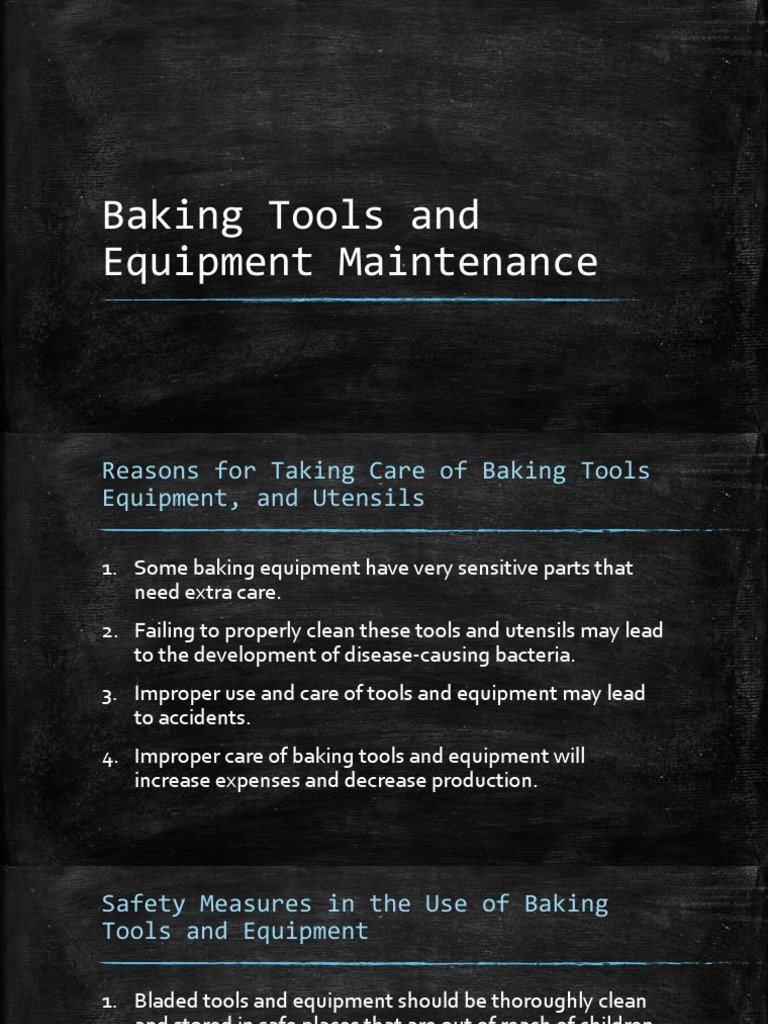
Credit: www.scribd.com
Storage Solutions
Storing your baking tools and equipment properly is more than just keeping them out of sight. It’s about ensuring their longevity and maintaining their efficiency. When you organize your tools effectively, you reduce the time spent searching for them, allowing more time for perfecting your recipes. But how do you make sure everything is stored optimally? Let’s dive into some practical storage solutions.
Organizing Small Tools
Small tools can easily become a cluttered mess if not organized well. Consider using labeled containers or drawers to separate items like measuring spoons, whisks, and spatulas. This not only keeps them in place but also makes it easier for you to grab what you need when you’re in the zone.
Arrange your baking tools by frequency of use. Place the ones you use daily at the front or top for easy access. This simple practice can drastically improve your baking workflow. Have you ever found yourself wasting time searching for a specific tool? Imagine the relief of having it right at your fingertips.
Storing Large Equipment
Large baking equipment requires a strategic approach to storage. Mixers, ovens, and bread makers need a dedicated space that offers both protection and accessibility. Opt for sturdy shelving units that can hold the weight and size of these items securely.
Think about the space in your kitchen or baking area. Would wall-mounted shelves or a rolling cart better suit your needs? Each setup offers unique advantages, like saving space or being mobile. Remember the time you struggled to move your mixer? A rolling cart could be your solution.
Properly storing your equipment is key to keeping them in top shape. Dust covers can prevent grime from settling, ensuring they remain clean and ready for use. Do you notice any neglected areas? Identifying these can help maximize your storage solutions.
Storage solutions are not just about tidiness—they’re about creating an efficient and enjoyable baking environment. How do you store your tools and equipment, and is there room for improvement? Reflect on these ideas and find what works best for you.
Dealing With Wear And Tear
Maintaining baking tools and equipment ensures efficiency and longevity. Regular cleaning prevents residue buildup that can damage surfaces. Inspect tools for wear and repair or replace parts promptly to avoid costly replacements.
Baking tools and equipment endure wear and tear over time. Proper maintenance ensures longevity and optimal performance. Regular checks help identify damage early. Timely intervention prevents bigger issues.Identifying Signs Of Wear
Look for scratches on baking surfaces. Dents can alter baking results. Loose handles on pans indicate wear. Check for rust on metal tools. Inspect electric equipment for frayed cords. Listen for unusual noises during operation. These signs suggest the need for attention.Repair Or Replace
Minor damages often need simple repairs. Tightening screws can fix loose handles. Buffing removes surface scratches. For frayed cords, consider professional repair. Deep dents may require replacement. Rusted tools might need replacement to ensure safety. Evaluate costs of repair versus replacement.
Credit: www.scribd.com
Safety Tips
Baking is a delightful activity that involves precision and care. Properly maintaining tools and equipment is vital for safety in the kitchen. This includes understanding how to handle each tool safely and taking steps to prevent accidents. Following these safety tips ensures a smooth and enjoyable baking experience.
Handling Tools Safely
Always read the manufacturer’s instructions before using new baking tools. They provide important safety guidelines. Keep knives and sharp objects away from the edge of the counter. This reduces the risk of accidental cuts. Use tools with ergonomic handles to ensure a firm grip. This helps prevent slipping.
Make sure your hands are dry when handling electrical equipment. Wet hands can lead to electric shocks. Unplug appliances when not in use. This is a simple way to ensure safety. Check cords and plugs for damage regularly. Replace them if they show signs of wear.
Preventing Accidents
Organize your workspace to prevent clutter. A tidy space reduces the risk of accidents. Store tools in designated areas. This keeps them easily accessible and safe. Use non-slip mats under mixing bowls. This prevents them from sliding during use.
Wear appropriate clothing in the kitchen. Avoid loose sleeves that can catch on equipment. Use oven mitts when handling hot items. They protect your hands from burns. Keep a fire extinguisher nearby. It’s essential for emergencies.
Eco-friendly Maintenance Practices
Properly maintaining baking tools involves eco-friendly practices. Clean them with natural solutions like vinegar and baking soda. Store equipment in dry places to prevent rust. Regular checks ensure tools remain functional and reduce waste.
Maintaining your baking tools and equipment doesn’t just extend their lifespan; it also contributes to a healthier planet. Eco-friendly maintenance practices can be simple yet powerful in reducing your carbon footprint. You can make a positive impact by choosing sustainable products and minimizing waste in your cleaning routine.Using Sustainable Products
Switch to eco-friendly cleaning products that are gentle on your tools and the environment. Many brands offer biodegradable soaps and natural scrubbers that clean effectively without harmful chemicals. Look for products with minimal packaging to further reduce your environmental impact. Consider making your own cleaning solutions at home. A mix of vinegar and baking soda can work wonders on stubborn stains and is completely safe. You might find that these homemade solutions are not only eco-friendly but also cost-effective.Reducing Waste In Maintenance
Focus on reducing waste in your maintenance routine by reusing and recycling materials. Use old kitchen towels instead of disposable wipes for cleaning spills and drying tools. This small change can significantly cut down on waste over time. Store your tools and equipment properly to avoid unnecessary wear and tear. Invest in quality storage options that protect your items and prevent the need for replacements. Are there tools you no longer use? Consider donating or recycling them instead of discarding. By embracing these eco-friendly practices, you’re not only caring for your baking tools but also supporting a sustainable future. Wouldn’t it be great if every baker took small steps toward a greener kitchen? Your actions today can inspire others to follow suit.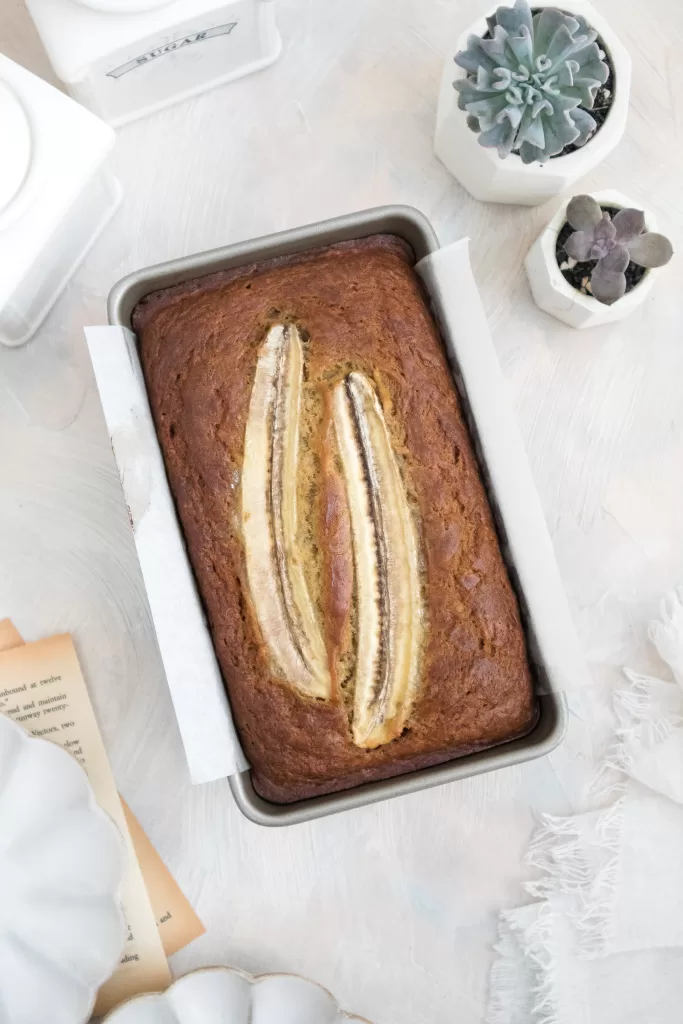
Credit: thejobaker.com
Frequently Asked Questions
How Do We Maintain Baking Tools And Equipment?
Clean tools with warm, soapy water after each use. Dry thoroughly to prevent rust. Regularly inspect and sharpen blades. Store in a cool, dry place. Use protective covers for sharp tools. Check for wear and replace damaged items promptly.
How Do You Maintain Cooking Tools And Equipment?
Clean tools immediately after use with warm, soapy water. Dry thoroughly to prevent rust. Sharpen knives regularly. Store equipment in a dry, organized place. Inspect for damage routinely and repair or replace as needed.
How Would You Maintain Tools And Equipment?
Clean tools regularly and check for damage. Store them in a dry, organized place. Sharpen blades and replace worn-out parts promptly. Lubricate moving parts to prevent rust. Follow manufacturer maintenance guidelines for best results.
How Can We Maintain Tools And Equipment In Food Processing?
Regular cleaning ensures tools stay hygienic. Schedule routine maintenance checks to prevent wear. Use proper storage to avoid damage. Train staff on correct handling procedures. Replace worn-out equipment promptly to maintain efficiency.
Conclusion
Taking care of baking tools keeps them working longer. Regular cleaning prevents damage and ensures safety. Store equipment in dry places to avoid rust. Check tools for wear and fix them when needed. These steps save money on replacements. A little effort goes a long way in maintaining tools.
Better maintained tools lead to better baking results. Keep this routine simple and consistent. It makes baking fun and stress-free. Happy baking starts with well-kept tools!

I’m Abby Lu, a passionate home cook who loves simplifying everyday meals. At PlugChef.com, I share product reviews and cooking guides to help you find the best tools for your kitchen.
Related posts:
 What Type of Cooking Utensils are Safe: Expert Picks
 What Innovations Could Blenders Make: Unleashing Future Tech
 Smart Strategies to Organize a Small Kitchen: Maximize Space
 How to Organize a Kitchen Cabinet: Expert Tips & Tricks
 How to Organize Kitchen Drawers: Expert Tips and Tricks
 How to Organize a Corner Kitchen Cupboard: Expert Tips

