
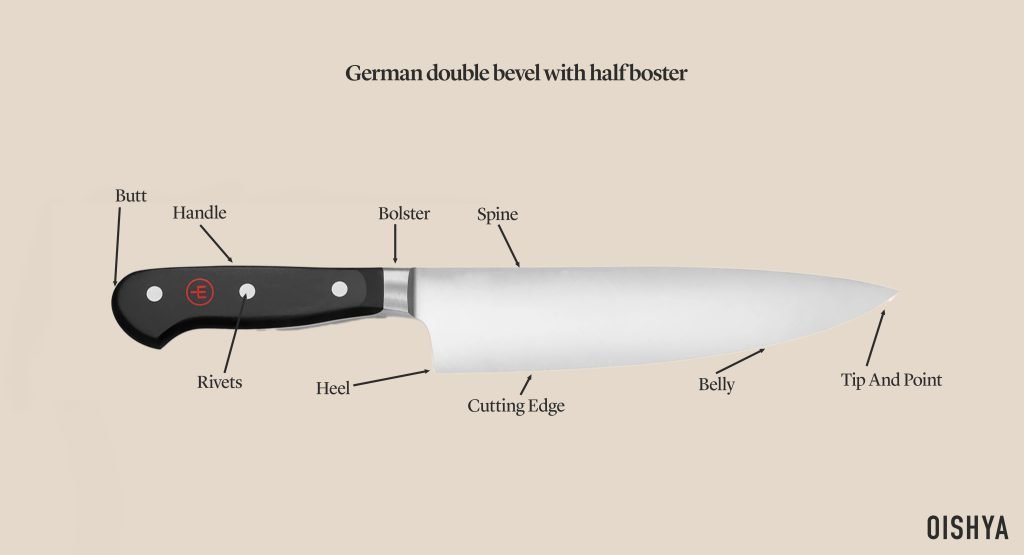
When you pick up a chef knife, do you really know what each part does? Understanding the different parts of your chef knife can make a big difference in how you use it.
Knowing these details helps you cut more safely, work faster, and even choose the right knife for your kitchen. You’ll discover everything about your chef knife’s key parts — from the blade to the handle — so you can cook with confidence and skill.
Keep reading, and your cooking game will never be the same.
Blade Anatomy
The blade is the heart of a chef knife. Its design affects how you cut, slice, and chop. Understanding the blade anatomy helps you use the knife better. It also helps you choose the right knife for your kitchen tasks.
Tip
The tip is the pointed end of the blade. It allows for delicate tasks like trimming and scoring. This part is precise and easy to control. It helps in cutting small or detailed pieces of food.
Edge
The edge is the sharp part of the blade that cuts food. It runs from the tip to the heel. A sharp edge makes slicing smooth and effortless. Keeping the edge sharp is important for safety and efficiency.
Spine
The spine is the thick, dull top part of the blade. It adds strength and balance to the knife. Chefs often press their fingers on the spine for control. It also protects your hand from slipping onto the edge.
Heel
The heel is the rear part of the edge, near the handle. It is strong and perfect for chopping tough foods. This area gets the most force during heavy cutting tasks. Using the heel helps cut through hard vegetables or meat easily.
Handle Components
The handle of a chef knife plays a crucial role in how comfortable and safe you feel while cutting. Understanding its components can help you choose a knife that fits your grip and style. Each part of the handle contributes to balance, control, and durability, impacting your overall kitchen experience.
Tang
The tang is the metal part of the blade that extends into the handle. A full tang, which runs the entire length of the handle, adds strength and balance. If you’ve ever felt a knife that feels heavy at the handle, it’s often because of a well-made full tang.
Bolster
The bolster is the thick junction between the blade and handle. It provides a smooth transition and acts as a finger guard to prevent slips. Have you noticed how some knives feel safer to hold? That’s often thanks to a sturdy bolster.
Rivets
Rivets are small metal pins that secure the handle scales to the tang. They keep the handle firmly in place, ensuring the knife doesn’t loosen over time. If your knife handle ever feels wobbly, it might be due to loose or missing rivets.
Butt
The butt is the end of the handle opposite the blade. It helps with grip and balance, especially when chopping with force. Some butts are flat for easier storage, while others are rounded for comfort—what feels better in your hand?
Blade Materials
Blade materials affect a chef knife’s sharpness and durability. Stainless steel is common for rust resistance, while carbon steel offers sharp edges but needs care. Some knives combine metals for strength and ease of use.
Choosing the right blade material for your chef knife can dramatically affect your cooking experience. Each type of steel offers unique benefits and drawbacks. Understanding these differences can help you select a knife that best suits your needs.Stainless Steel
Stainless steel knives are popular for their resistance to rust and corrosion. They are low-maintenance, making them a great choice for busy kitchens. However, they may require more frequent sharpening to maintain a fine edge.Carbon Steel
Carbon steel blades are known for their incredible sharpness and edge retention. They can easily slice through tough ingredients, making them a favorite among professional chefs. But they require careful maintenance to prevent rust and discoloration.Damascus Steel
Damascus steel is admired for its striking patterns and exceptional strength. These knives offer a balance of sharpness and durability, making them both functional and aesthetically pleasing. They can be a conversation starter in your kitchen, but tend to be pricier. Choosing the right blade material depends on how you prioritize maintenance, sharpness, and appearance in your cooking routine. Which of these materials aligns with your culinary preferences?
Credit: www.wekivaculinary.org
Blade Shapes
The shape of a chef knife blade affects how it cuts and handles. Different blade shapes suit different tasks in the kitchen. Choosing the right blade shape helps improve your cutting speed and comfort. Here are the common blade shapes used in chef knives.
European Style
European style blades usually have a broad and curved edge. This shape allows for a rocking motion while chopping. The blade is thick and strong, perfect for heavy-duty tasks. It can cut through tough vegetables and meat easily.
Japanese Style
Japanese style blades are thinner and lighter than European blades. They have a sharper edge for precise cuts. The blade often has a straighter edge, ideal for slicing and dicing. These knives work well with delicate foods like fish and vegetables.
Hybrid Blades
Hybrid blades combine features from both European and Japanese styles. They offer a balance between strength and precision. The blade shape supports versatile cutting techniques. This type suits cooks who want one knife for many tasks.
Knife Balance And Weight
Knife balance and weight are crucial factors that affect how comfortable and efficient a chef knife feels in your hand. A well-balanced knife reduces fatigue, improves control, and makes cutting tasks smoother. Understanding these elements helps you choose a knife that fits your style and kitchen needs.
What Is Knife Balance?
Knife balance refers to how the weight is distributed between the blade and the handle. If the weight is evenly spread, the knife feels steady and easier to maneuver. You can test this by resting the knife on your finger near the middle; a balanced knife will stay level without tipping forward or backward.
Why Knife Weight Matters
The weight of a knife influences how much effort you need to cut through food. Heavier knives can slice through tough ingredients with less pressure, but they may tire your hand faster. Lighter knives offer more speed and precision but might require more force for dense items.
Finding The Right Balance For You
Everyone’s hands and cutting habits are different, so the ideal balance and weight vary. If you prefer chopping vegetables quickly, a lighter, well-balanced knife might suit you best. If you often cut meat or hard vegetables, a slightly heavier knife with a forward balance could help.
Tips To Evaluate Knife Balance And Weight
- Hold the knife naturally as if you’re cutting; notice if it feels front-heavy or handle-heavy.
- Try cutting a few slices of various foods to feel how the knife moves.
- Compare different knives by their balance point and overall weight to find what feels right.
Have you ever struggled with a knife that felt awkward or tiring to use? Paying close attention to balance and weight could change how you work in the kitchen and make cooking more enjoyable.

Credit: www.amazon.ca
Care And Maintenance Tips
Proper care and maintenance keep your chef knife sharp and safe. A well-maintained knife lasts longer and performs better. Simple habits protect the blade and handle. This section covers essential tips to care for your chef knife.
Sharpening
Regular sharpening keeps the blade sharp and effective. Use a whetstone or sharpening tool designed for chef knives. Hold the blade at the correct angle, usually 15 to 20 degrees. Move the blade smoothly across the stone. Sharpen both sides evenly. Test sharpness by slicing paper or vegetables.
Cleaning
Clean your knife right after use. Avoid soaking it in water for long periods. Hand wash with warm, soapy water and a soft sponge. Rinse and dry immediately to prevent rust and damage. Never put your chef knife in the dishwasher. Harsh detergents and heat harm the blade and handle.
Storage
Store your knife safely to protect the blade and yourself. Use a knife block, magnetic strip, or blade guard. Avoid tossing knives in drawers with other utensils. Keep the blade dry before storage. Proper storage prevents dulling and accidents.

Credit: www.youtube.com
Frequently Asked Questions
What Are The Main Parts Of A Chef Knife?
A chef knife has five main parts: the blade, edge, tip, spine, and handle. Each part plays a key role in cutting and handling.
How Does The Blade Affect A Chef Knife’s Performance?
The blade determines cutting ability and durability. Its shape and material impact precision, sharpness, and ease of use.
Why Is The Handle Important In A Chef Knife?
The handle provides grip and control. It ensures comfort and safety during chopping and slicing tasks.
What Is The Function Of The Knife’s Tip?
The tip is used for delicate tasks like mincing and intricate cutting. It allows precision in food preparation.
Conclusion
Understanding the parts of a chef knife helps in using it better. Each part has a clear job. The blade cuts, the handle gives grip, and the bolster adds balance. Knowing these parts lets you choose the right knife for cooking.
It also helps in cleaning and keeping the knife safe. A good chef knife makes cooking easier and more fun. Keep learning about knives to improve your kitchen skills. Simple steps lead to better results.

Hi, I’m Daniel Brooks—a food lover and kitchen gear enthusiast. I enjoy testing cookware, utensils, and gadgets to see what really works in everyday cooking. At PlugChef.com, I share honest reviews, comparisons, and simple guides to help you choose the best tools for a safer, smarter, and more enjoyable kitchen.
Related posts:
 What Type of Cooking Utensils are Safe: Expert Picks
 What Innovations Could Blenders Make: Unleashing Future Tech
 Smart Strategies to Organize a Small Kitchen: Maximize Space
 How to Organize a Kitchen Cabinet: Expert Tips & Tricks
 How to Organize Kitchen Drawers: Expert Tips and Tricks
 How to Organize a Corner Kitchen Cupboard: Expert Tips

