Most households don’t think twice about the humble kitchen sponge — but traditional plastic options are a hidden source of household waste, microplastic pollution, and harmful bacteria. Unlike synthetic sponges that take hundreds of years to break down in landfills and shed microplastics into waterways with every scrub, eco-friendly kitchen sponges offer a low-waste, high-performance alternative that keeps your home sparkling without harming the planet. This guide breaks down what makes a truly sustainable sponge, compares top natural materials, reviews the best 2026 options for every use case, and shares simple care tips to extend their lifespan. Swapping to eco-friendly sponges is a small change that cuts household plastic waste, reduces exposure to harsh chemicals, and supports a healthier home for your family and the environment.
Why Ditch Traditional Plastic Kitchen Sponges?
Standard kitchen sponges are made from non-recyclable polyurethane foam and plastic scrubbing layers, making them one of the most common single-use plastic items in household waste. According to the U.S. Environmental Protection Agency, plastic kitchenware including sponges contributes over 1.3 million tons of municipal solid waste annually, 90% of which ends up in landfills or incinerators plastic waste statistics. Beyond waste, traditional sponges shed microplastic particles with every use, which can end up in waterways and even the food chain.
They also pose a direct hygiene risk: the CDC notes that kitchen sponges and dishcloths are among the most germ-prone items in the home, often harboring Salmonella, E. coli, and other harmful bacteria if not replaced and sanitized regularly kitchen hygiene guidelines. Most plastic sponges need replacing every 1–2 weeks, creating a constant cycle of waste. Eco-friendly natural sponges solve both problems: they break down harmlessly in weeks instead of centuries, and their porous natural fibers are less hospitable to bacterial growth than synthetic plastic foam.
What Defines a Truly Eco-Friendly Kitchen Sponge?
Not all "eco-labeled" sponges are created equal. A truly sustainable kitchen sponge meets four key criteria:
- 100% biodegradable/compostable materials: No plastic foam, plastic scrubbing layers, or synthetic microbeads. Look for sponges made from plant-based cellulose, coconut coir, sisal hemp, or walnut shell, with plant-based adhesives only.
- Responsibly sourced ingredients: FSC certification for cellulose components confirms deforestation-free wood pulp sourcing, while organic certification for coconut or hemp fibers ensures no harmful pesticides were used in production.
- Non-toxic construction: Free of harsh chemicals like triclosan, synthetic dyes, and petroleum-based additives that can leach into food or water during use.
- Certified compostability: Look for third-party certifications like TUV Austria OK Compost Home to confirm the sponge will break down fully in a backyard compost bin, not just industrial facilities.
Beware of greenwashing: many brands label sponges "eco-friendly" while including a plastic scrubbing side or synthetic foam core. Always check the full material list before purchasing to confirm the entire sponge is compostable.
Top Eco-Friendly Kitchen Sponge Materials Compared
Different natural materials offer varying levels of scrubbing power, durability, and compostability to suit every household’s needs:
| Material | Scrubbing Power | Durability | Compostability | Best Use Case |
|---|---|---|---|---|
| Cellulose (wood pulp) | Low-medium | 2–3 weeks | Home compostable | Gentle dishwashing, wiping countertops |
| Coconut Coir | Medium-high | 3–4 weeks | Home compostable | Stuck-on food, pots and pans |
| Sisal Hemp | High | 3–4 weeks | Home compostable | Tough grime, cast iron, grill grates |
| Walnut Shell | Medium-high | 3–4 weeks | Industrial compost recommended | Heavy-duty scrubbing, baked-on residue |
Cellulose makes up the soft, absorbent base of most eco-sponges, while coconut coir, sisal hemp, or walnut shell form the firm scrub layer for tough messes. All materials break down naturally in weeks, eliminating the long-term waste associated with plastic sponges.
How to Care for Natural Kitchen Sponges to Maximize Their Lifespan
A common mistake users make is leaving eco-sponges soaking in water, which speeds up fiber deterioration and bacterial growth. With proper care, natural sponges can last 2–4 weeks on average — comparable to standard plastic sponges — and cut down on repurchase costs and waste. Follow these steps to extend their lifespan:
- Rinse thoroughly after every use: Remove all food debris and soap residue to prevent bacterial buildup and staining.
- Wring out completely: Excess water breaks down natural fibers faster and encourages mold growth.
- Air dry in a well-ventilated, elevated holder: Never leave sponges sitting in a pool of water on the sink edge, or store them in a closed container that traps moisture. In practice, this single step can extend sponge lifespan by 30% or more.
- Sanitize weekly: Soak sponges in a 1:1 white vinegar and water solution for 5 minutes, or run them through the dishwasher’s top rack on the sanitize cycle. Avoid bleach, which breaks down natural fibers and reduces compostability.
- Replace every 2–4 weeks: Even with care, natural fibers wear down over time. When sponges start to fall apart or hold persistent odor, toss them in your home compost bin (if certified home compostable) or municipal green waste bin.
- Assign task-specific sponges: Use separate sponges for dishes, countertops, and produce to avoid cross-contamination. This also extends overall lifespan, as produce sponges experience far less wear than dish-scrubbing ones. A dedicated task-specific cleaning set makes this system easy to implement for busy households.
Top 7 Eco-Friendly Kitchen Sponges for 2026
We evaluated dozens of options for performance, sustainability, value, and real-world usability to bring you the top picks for every household need:
1. Isshah Plant-Based Kitchen Sponges (12 Pack)
 FSC-certified sisal hemp construction ensures responsible, sustainable sourcing
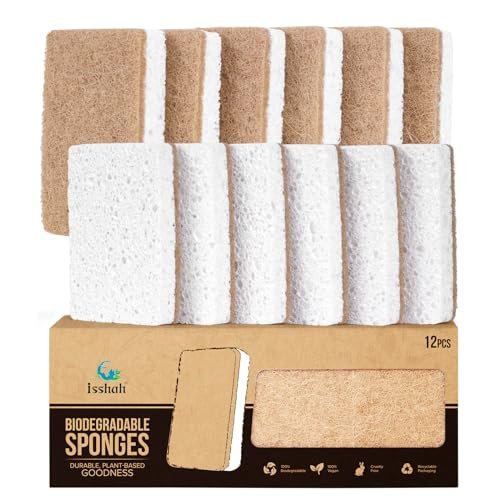
Ideal for households prioritizing certified sustainable and cruelty-free cleaning supplies, the Isshah 12-pack is a top pick for everyday dishwashing and general kitchen cleaning. Made from 100% FSC-certified sisal hemp with a cellulose foam base, these sponges are fully biodegradable and PETA-approved for no animal testing. The dual-layer design offers a soft, absorbent side for wiping surfaces and a firm hemp scrub side for stuck-on food, without scratching glass, ceramic, or non-stick cookware. Their gentle texture works well for removing surface stains from wood and glass, as outlined in our guide to removing surface stains.
Pros:
- FSC-certified responsibly sourced fibers
- PETA-approved cruelty-free production
- Fully biodegradable and compostable in home bins
- Firm scrub side tackles grease without scratching
- 12-pack offers 6+ months of supply for average households
Cons:
- Natural brown fibers may show light stains over time
- Less abrasive than synthetic scrubbing pads for heavy, baked-on messes
Care note: Air dry fully between uses to prevent hemp fibers from becoming brittle. For extra versatility with delicate surfaces, pair these with non-abrasive cleaning tools for sensitive cookware and glassware.
CTA: For families seeking certified, ethical cleaning supplies, the Isshah 12-pack delivers consistent performance and alignment with sustainable values. You can find the 12-pack here.
2. AIRNEX Natural Kitchen Sponges (12 Pack)
 Dual-layer design combines gentle cleaning with mild abrasive scrubbing power
A budget-friendly, all-purpose option for everyday use, the AIRNEX 12-pack uses a cellulose foam base paired with a natural coconut fiber scrub layer. These sponges are fully compostable in home bins, free of synthetic dyes and harsh chemicals, and work well for washing dishes, wiping countertops, and cleaning bathroom surfaces. Their lightweight, ergonomic design reduces hand strain during long cleaning sessions, and their efficient design works well for quick cleanups and full sink loads alike, making them a versatile pick for maintaining a tidy kitchen.
Pros:
- 100% compostable cellulose and coconut fibers
- Mild scrub side safe for most cookware
- Lightweight, easy to maneuver for all hand sizes
- 12-pack provides 6+ months of supply
- Affordable per-unit cost for bulk buyers
Cons:
- Scrub side is not aggressive enough for baked-on food or grill grates
- White cellulose base may show dark food stains over time
Care note: Sanitize weekly with vinegar to keep the coconut fibers from holding odor. For tough, stuck-on messes, pair with sturdy natural scrubbers to avoid over-wearing the sponge.
CTA: If you want an affordable, all-purpose eco-sponge for daily household use, the AIRNEX 12-pack is a reliable, low-waste pick. You can find the 12-pack here.
3. Treenewbid Eco Non-Scratch Kitchen Sponges (24 Pack)
 Compact, lightweight design fits comfortably in hand for extended cleaning sessions
Designed for high-volume households and frequent hosts, the Treenewbid 24-pack offers ultra-gentle, non-scratch cleaning for delicate surfaces. Made from plant-based foam with a soft scrubbing texture, these sponges are safe for non-stick pans, glassware, and coated countertops, with no risk of scratching or marring finishes. The large pack size means you’ll have a fresh sponge on hand for months, reducing the need for frequent repurchases. Their non-scratch texture is also safe for wiping down wipe down countertops and fragile glassware.
Pros:
- Ultra-non-scratch texture safe for all delicate cookware
- 24-pack offers 12+ months of supply for average households
- Compact, ergonomic design fits small hands and tight spaces
- Fully biodegradable and compostable
- Affordable per-sponge cost for bulk buyers
Cons:
- Very soft scrubbing side is not effective for stuck-on food
- Only available in plain yellow, which shows stains easily
Care note: Use these exclusively for delicate surfaces and glassware to avoid wasting their gentle texture on tough messes. To keep your cleaning routine organized, store them with a task-specific cleaning set to separate them from heavy-duty scrub sponges.
CTA: For households with lots of delicate glassware and non-stick cookware, the Treenewbid 24-pack is a cost-effective, gentle cleaning solution. You can find the 24-pack here.
4. WUHUIXOZ Eco Non-Scratch Kitchen Sponges (24 Pack)
 Neutral color and compact size make these easy to store in any kitchen drawer
Another high-value bulk option for families, the WUHUIXOZ 24-pack features a slightly firmer non-scratch texture than the Treenewbid option, making it suitable for both delicate dishes and everyday countertop cleaning. Made from biodegradable plant-based foam, these sponges are free of plastic and synthetic additives, and break down fully in home compost bins within 6–8 weeks of disposal. Their neutral beige color shows stains less visibly than white or yellow sponges, making them a low-maintenance pick for busy kitchens.
Pros:
- Firm enough for everyday messes, gentle enough for non-stick cookware
- 24-pack offers 12+ months of supply
- Neutral beige color shows stains less visibly than white or yellow sponges
- Fully biodegradable and compostable
- Compact size fits easily in kitchen drawers and sponge holders
Cons:
- Still not abrasive enough for heavy, baked-on food residue
- Foam base breaks down slightly faster than cellulose alternatives with heavy use
Care note: Wring out fully after each use to prevent the foam base from becoming waterlogged and deteriorating prematurely.
CTA: For families wanting a high-volume, versatile non-scratch sponge for daily use, the WUHUIXOZ 24-pack delivers excellent long-term value. You can find the 24-pack here.
5. ecoTru Natural Compostable Kitchen Sponges (6 Pack)
 Non-toxic construction is safe for use around food and young children
A top pick for families with young children and pets, the ecoTru 6-pack uses organic coconut coir for its scrub layer and unbleached cellulose for the foam base, with no harsh chemicals, synthetic dyes, or plastic components. These sponges are non-toxic, so they won’t leach harmful substances into food or water during use, and are fully compostable in home bins. The firm coconut scrub side tackles stuck-on food on pots, pans, and produce without scratching surfaces. These non-toxic sponges are a safe pick for families prioritizing non-toxic household products.
Pros:
- Organic, non-toxic materials safe for food contact and homes with kids/pets
- Firm coconut scrub side handles stuck-on food without scratching
- Fully compostable in home bins
- 6-pack provides 3+ months of supply for average households
- Made by a B Corp-certified brand committed to sustainable manufacturing
Cons:
- Higher per-unit cost than bulk cellulose options
- Coconut fibers can shed small bits during initial uses (rinsing before first use resolves this)
Care note: For families prioritizing non-toxic household products, pair these sponges with childproofing solutions to create a fully safe, low-waste kitchen environment for young kids. Their compostable design also supports zero-waste goals by reducing the amount of organic kitchen waste sent to landfills.
CTA: If you need non-toxic, family-safe cleaning supplies, the ecoTru 6-pack is a trustworthy, high-performance option. You can find the 6-pack here.
6. Silkyhose Biodegradable Natural Kitchen Sponges (12 Pack)
 Odor-resistant design stays fresh even with frequent, heavy use
A standout pick for users who struggle with smelly traditional sponges, the Silkyhose 12-pack uses natural cellulose and coconut coir with a proprietary odor-resistant treatment that prevents mold and bacteria buildup between uses. These sponges are fully compostable, free of harsh chemicals, and have a soft, flexible texture that works well for washing dishes, wiping countertops, and cleaning small appliances like microwaves and toasters. Their odor-resistant construction stays fresh longer than standard sponges, making them ideal for busy home cooking routines.
Pros:
- Odor-resistant design stays fresh 2–3x longer than standard eco-sponges
- Soft, flexible texture ideal for cleaning curved surfaces like mugs and mixing bowls
- Fully biodegradable and compostable
- 12-pack offers 6+ months of supply
- Lightweight design reduces hand strain during long cleaning sessions
Cons:
- Scrub side is mild, not suitable for heavy, stuck-on messes
- Limited color options (only available in natural white/brown)
Care note: Even with odor-resistant treatment, air dry fully between uses to extend freshness and lifespan.
CTA: If you’re tired of musty, smelly kitchen sponges, the Silkyhose 12-pack offers long-lasting freshness and reliable cleaning performance. You can find the 12-pack here.
7. ARCLIBER Heavy-Duty Cellulose Sponges (6 Pack)
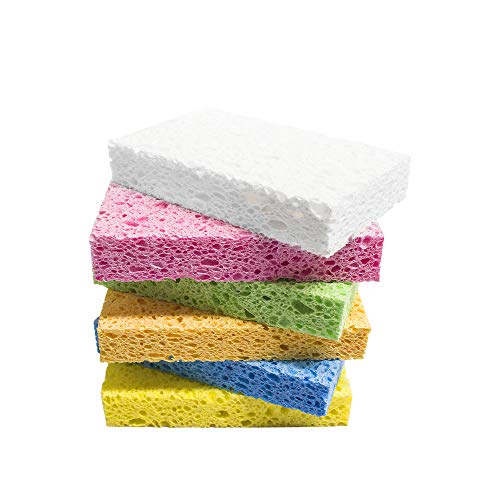 Multicolor design lets you assign sponges to specific tasks to avoid cross-contamination
A top pick for home cooks and grill enthusiasts, the ARCLIBER 6-pack features extra-thick cellulose foam and a firm coconut scrub layer designed for heavy-duty messes. These sponges are fully compostable, pop up to full size when soaked in water for easy storage, and come in 6 distinct colors so you can assign each sponge to a specific task (dishes, countertops, grill grates, produce, etc.) to avoid cross-contamination. These heavy-duty sponges are a top pick for home cooks tackling tough kitchen messes.
Pros:
- Heavy-duty scrub side tackles baked-on food, grill grease, and stuck-on messes
- Pop-up design saves storage space in kitchen drawers
- Multicolor set makes task assignment easy for hygiene
- Fully biodegradable and compostable
- Thick foam holds more water and soap for faster cleaning
Cons:
- Higher per-unit cost than standard cellulose sponges
- Colors may fade slightly with repeated use of harsh detergents
Care note: Assign each color to a specific task to avoid cross-contamination, and sanitize weekly with vinegar to keep the scrub layer free of bacteria. For even tougher grill messes, pair with professional-grade scrubbers for extra power. Their versatile design works well alongside other eco-friendly cleaning tools, including budget-friendly options like the IKEA kitchen cleaning brush for tight spaces.
CTA: For home cooks who need a durable, heavy-duty eco-sponge for tough kitchen messes, the ARCLIBER 6-pack is a high-performance, low-waste pick. You can find the 6-pack here.
8. AIRNEX Compostable Coconut Walnut Scrubber Sponges (10 Pack)
 Coconut walnut scrubber layer tackles baked-on grime without scratching cookware
A hybrid option for users who need extra scrubbing power for baked-on messes, the AIRNEX 10-pack uses a cellulose foam base paired with a coconut walnut shell scrub layer. The walnut shell adds extra abrasive power for stuck-on food, burnt pots, and grill grates, without scratching stainless steel, cast iron, or ceramic surfaces. These sponges are fully compostable, free of harsh chemicals, and work well for heavy-duty kitchen cleaning tasks. These compostable sponges are a reliable pick for households seeking to reduce waste while maintaining a spotless kitchen space.
Pros:
- Walnut shell scrub layer adds extra power for baked-on messes
- Fully compostable cellulose base
- Safe for stainless steel, cast iron, and ceramic surfaces
- 10-pack provides 5+ months of supply for average households
- Neutral color blends with most kitchen decor
Cons:
- Higher per-unit cost than standard coconut scrub sponges
- Walnut shell may scratch soft non-stick coatings if used aggressively
Care note: Use the scrub side only for durable surfaces, and reserve the soft cellulose side for non-stick cookware and glassware. Their natural composition also pairs well with other zero-waste kitchen swaps, from reusable produce bags to natural cleaning ingredients for a fully sustainable routine.
CTA: If you need extra scrubbing power for heavy, baked-on messes without sacrificing sustainability, the AIRNEX 10-pack is a top-performing pick. You can find the 10-pack here.
9. hasumcol Natural Compostable Coconut Scrubber Sponges (12 Pack)
 Neutral brown and white color blends seamlessly with most kitchen decor
A minimalist, no-frills option for zero-waste households, the hasumcol 12-pack uses 100% compostable coconut coir for its scrub layer and unbleached cellulose for the foam base, with no synthetic additives or dyes. These sponges are fully biodegradable in home compost bins, free of harsh chemicals, and work well for everyday dishwashing and countertop cleaning. Their neutral brown and white color blends seamlessly with most kitchen decor, making them a low-profile pick for minimalist kitchens.
Pros:
- 100% natural, dye-free construction
- Firm coconut scrub side handles everyday stuck-on food
- Fully compostable in home bins
- 12-pack offers 6+ months of supply
- Affordable per-unit cost for bulk buyers
Cons:
- Scrub side is not aggressive enough for heavy, baked-on messes
- Coconut fibers may shed small bits during initial uses
Care note: Rinse thoroughly before first use to remove loose coconut fibers, and air dry fully between uses to extend lifespan.
CTA: For minimalist, zero-waste households seeking a simple, effective eco-sponge, the hasumcol 12-pack is a no-fuss, affordable pick. You can find the 12-pack here.
10. HOMERHYME Dual-Sided Odorless Natural Dish Sponges (12 Pack)
 Dual-sided design lets you switch between gentle washing and tough scrubbing
A versatile all-in-one option for households that want one sponge for all cleaning tasks, the HOMERHYME 12-pack features a dual-sided design with a soft cellulose side for gentle washing and a firm natural fiber scrub side for tough messes. These sponges are fully biodegradable, odor-resistant even with frequent use, and work well for dishwashing, countertop cleaning, and even bathroom cleaning. The dual-sided design lets you switch between gentle washing and tough scrubbing without needing multiple sponges on hand.
Pros:
- Dual-sided design eliminates the need for multiple sponge types
- Odor-resistant construction stays fresh for weeks
- Fully biodegradable and compostable
- 12-pack offers 6+ months of supply
- Non-scratch texture safe for all cookware
Cons:
- Scrub side is not as firm as dedicated heavy-duty sponges
- Only available in brown/white color options
Care note: Use the soft side for dishes and delicate surfaces, and the scrub side for countertops and durable cookware to extend lifespan. For even more versatile cleaning, pair with multi-surface cleaning tools for hard-to-reach areas.
CTA: If you want a single, versatile sponge for all your household cleaning needs, the HOMERHYME 12-pack is a convenient, low-waste pick. You can find the 12-pack here.
Frequently Asked Questions
What materials are used in eco-friendly kitchen sponges?
Most high-quality eco-friendly kitchen sponges are made from a combination of plant-based cellulose (sourced from sustainably managed wood pulp), natural fiber scrub layers (coconut coir, sisal hemp, or walnut shell), and plant-based adhesives. Unlike traditional plastic sponges, they contain no synthetic foam, plastic microbeads, or harsh chemical additives. Look for FSC certification on cellulose components to confirm responsible, deforestation-free sourcing, and organic certification for coconut or hemp fibers to avoid pesticide residues, as detailed in our guide to organic minimalist kitchen design.
Are eco-friendly sponges as effective as plastic sponges for tough messes?
Yes, for most everyday and even heavy-duty messes. Natural fiber scrub layers (especially coconut coir and sisal hemp) provide enough abrasive power to tackle stuck-on food, baked-on grease, and grill grime without scratching surfaces. For extremely tough, carbonized messes, you may need to let the sponge soak in warm soapy water for a few minutes before scrubbing, or pair it with a natural cleaning paste like baking soda and vinegar. Sponges with natural coconut or hemp scrub layers, similar to dedicated eco-coconut cleaning brushes, can handle even tough, stuck-on stains without damaging cookware.
Can I compost eco-friendly kitchen sponges at home?
Most 100% plant-based eco-sponges are certified home compostable, meaning they will break down in a backyard compost bin in 6–8 weeks, turning into nutrient-rich soil for your garden. Avoid sponges with plastic scrubbing layers or synthetic dyes, as these will not break down in home compost and may contaminate your pile. If you don’t have a home compost bin, most municipal green waste programs accept compostable kitchen sponges — check your local waste management guidelines for confirmation.
How long do natural kitchen sponges last compared to plastic ones?
With proper care, natural eco-sponges last 2–4 weeks on average, which is comparable to the 1–2 week lifespan of standard plastic cellulose sponges. High-quality options with thick coconut or hemp scrub layers can last up to 6 weeks with light use. Natural kitchen sponges typically last 2 to 4 weeks with regular use, a timeline that aligns with wooden cutting board seasoning schedules for consistent kitchen hygiene. Their exact lifespan depends on cleaning frequency and maintenance, much like the care guidelines for kitchen appliances to extend their usable life. Plastic sponges may last slightly longer with heavy use, but they contribute to plastic waste and microplastic pollution, making natural alternatives a better choice for most households.
Are eco-friendly sponges safe for non-stick cookware?
Yes, all 100% natural eco-sponges are non-scratch and safe for non-stick, ceramic, and coated cookware, as long as you use the soft cellulose side for washing and avoid rubbing the scrub layer directly on delicate non-stick surfaces. For extra protection, use the soft side of the sponge for non-stick pans and reserve the scrub side for stainless steel, cast iron, and other durable surfaces.
Do natural sponges harbor less bacteria than plastic ones?
Studies have found that natural fiber sponges harbor slightly fewer bacteria than plastic sponges, as their porous natural fibers are less hospitable to bacterial growth than synthetic plastic foam. That said, all kitchen sponges can harbor bacteria if not cared for properly. Sanitizing your sponge weekly with vinegar or running it through the dishwasher’s sanitize cycle, and replacing it every 2–4 weeks, will keep it hygienic regardless of material. For even tougher messes, natural sponges can be paired with durable kitchen cleaning brushes for extra scrubbing power without scratching surfaces.
Conclusion
Switching to eco-friendly kitchen sponges is one of the simplest, most impactful changes you can make to reduce household plastic waste and create a healthier, greener home. Unlike traditional plastic sponges that contribute to landfill pollution and microplastic contamination, natural compostable sponges break down harmlessly in as little as 6 weeks, cutting your kitchen’s plastic footprint without sacrificing cleaning performance. With options ranging from gentle non-scratch varieties for delicate cookware to heavy-duty scrub sponges for tough, baked-on messes, there’s an eco-friendly option for every household’s needs.
Pairing proper sponge care (regular sanitizing, air drying, and task assignment) with sustainable cleaning tools extends the lifespan of your sponges, saves you money on repurchases, and keeps your kitchen safer from harmful bacteria. For more simple ways to build a zero-waste, eco-friendly kitchen, explore our full library of cleaning best practices today. Swapping to eco-sponges is a small, low-effort step that delivers big benefits for your home and the planet — cleaner dishes, a cleaner kitchen, and a cleaner world, all without extra cost or hassle. Ready to make the switch? Start with one 12-pack of compostable sponges this week to cut down on plastic waste while keeping your kitchen sparkling clean.

I’m Abby Lu, a passionate home cook who loves simplifying everyday meals. At PlugChef.com, I share product reviews and cooking guides to help you find the best tools for your kitchen.
Related posts:
 Cheap Ice Cream Maker Under $100: Discover Delicious Homemade Treats
 Best Handheld Milk Frothers: Ultimate Tools for Perfect Coffee Creations
 Best Wine Opener for Weak Hands: Effortless and Ergonomic Choices
 Best Kitchen Scale for Accurate Cooking and Baking Precision
 Holikme 5Pack Kitchen Cleaning Brush Green: Ultimate Scrubbing Power
 Kitchen Wall Cleaning Brush: Ultimate Tools for Effortless Deep Cleaning