
Workplace safety regulations evolve regularly, and as of 2026, OSHA first aid kit requirements are aligned with the latest ANSI Z308.1-2023 standard, which updates prior 2015 guidance to address modern workplace hazards like chemical exposure, repetitive strain injuries, and workplace violence. Many employers assume any generic first aid kit will meet compliance rules, but this is a costly misconception: OSHA requires hazard-specific customization, strict accessibility rules, and regular employee training, not just a box of supplies stored on a shelf. Workplaces with compliant, accessible first aid kits consistently see reduced injury severity and faster emergency response times, protecting both employees and business operations. This guide breaks down exactly what your workplace needs to stay compliant, avoid costly penalties, and keep your team safe.
What OSHA Actually Requires for First Aid Kits (2026 Updated Guidance)
OSHA does not publish a one-size-fits-all mandatory item list for first aid kits. Instead, it references the voluntary ANSI Z308.1 standard as the baseline for compliance, and explicitly requires kits to be tailored to the specific hazards of each worksite, as well as the number of employees working each shift. As of 2026, OSHA also enforces strict accessibility rules: kits must be reachable within a 3-5 second walk from any work area, with high-visibility signage in place to help employees locate them instantly during an emergency. Employers are also required to maintain records of kit inspections and employee first aid training to demonstrate compliance during unannounced OSHA audits. As outlined in official OSHA first aid kit guidance, failure to meet these requirements counts as a serious violation of the Occupational Safety and Health Act, carrying significant financial and legal consequences.
While pre-assembled ANSI-compliant kits are convenient for small, low-hazard workplaces, many employers find customizing kits to their specific hazard profile is more cost-effective than buying multiple generic kits for different work areas on large or high-risk sites.
Mandatory Core First Aid Kit Contents (ANSI Aligned)
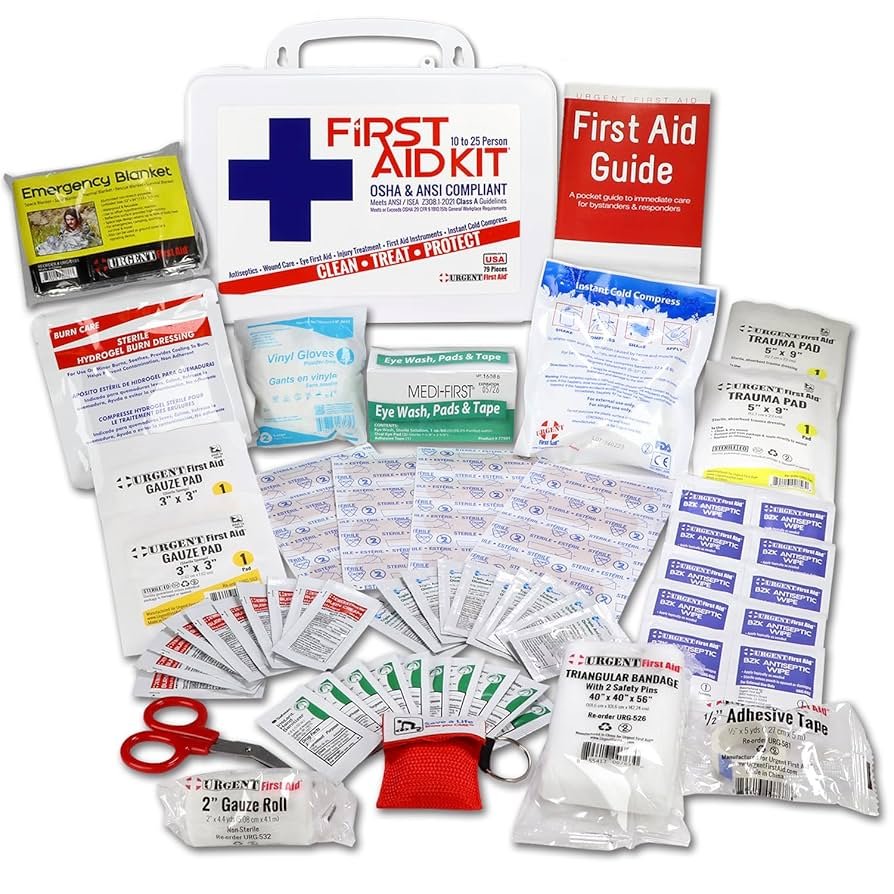
All workplaces, regardless of industry, must include the following core items to meet the ANSI Z308.1-2023 baseline required by OSHA. These supplies address the most common workplace injuries, from minor cuts to severe bleeding:
- Assorted adhesive bandages (including fabric and waterproof variants for high-moisture environments like food service or construction sites)
- Sterile gauze pads (2×2 and 4×4 inch sizes) and gauze rolls for wound packing and pressure application to stop bleeding
- Alcohol-free antiseptic wipes and antibiotic ointment packets to reduce infection risk for minor wounds
- Non-latex medical-grade disposable gloves for universal precautions, protecting both employees and injured parties from bloodborne pathogen exposure
- Blunt-tip scissors, splinter forceps/tweezers, and safety pins for wound care and supply management
- Adhesive surgical tape for securing gauze dressings and bandages
- Burn gel packets and sterile burn dressings for minor thermal and chemical burns
- Triangular bandages for use as slings or pressure dressings for sprains and severe bleeding
- Non-reusable instant cold packs for swelling and pain management from sprains, strains, and impact injuries
- ANSI-compliant first aid instruction card with CPR and emergency response guidelines
Over-the-counter pain relievers (ibuprofen, acetaminophen) and antihistamines for allergic reactions are recommended but not strictly required by OSHA, though they are standard in nearly all compliant workplace kits.
 A compliant kit includes core bandaging, antiseptic, and trauma supplies for common workplace injuries.
Accessibility, Placement, and Storage Rules (Often Overlooked Requirements)
Even a fully stocked, hazard-appropriate first aid kit is non-compliant if it cannot be accessed quickly during an emergency. OSHA enforces strict placement rules to eliminate response delays:
- Kits must be located within a 3-5 second walk from any area where employees work, with no locked doors, blocked pathways, or required security clearance between work areas and the kit. A common mistake in safety audits is storing kits in locked supply closets "to prevent theft," which violates OSHA rules; use a break-glass cabinet if theft is a concern.
- Multi-story workplaces must have at least one kit on each floor, and outdoor work sites must use weatherproof kits stored in shaded, dry locations to protect supplies from rain, dust, and extreme temperatures.
- All kits must have high-visibility ANSI-compliant signage with a white cross on a green background, so employees can locate them instantly even in low-light conditions.
- Kits must never be stored in locations where they could be contaminated by food, chemicals, or extreme heat (e.g., next to a break room microwave, industrial oven, or chemical storage area). For office workplaces, slips and falls in break rooms are one of the most common first aid incidents, and proper food storage in airtight compartment containers reduces spill risks and foodborne illness that could require first aid.
Industry-Specific Kit Customization Guide
OSHA explicitly requires kits to be tailored to the unique hazards of each worksite, so generic all-purpose kits are almost never fully compliant for high-risk industries. Use the guide below to identify required additions for your workplace:
| Industry | Required Additional Supplies | Common Use Cases |
|---|---|---|
| Construction | Chemical splash eyewash (16oz minimum), heavy-duty trauma dressings, tourniquets, SAM splints, snakebite kits (for outdoor sites) | Cuts from power tools, falls from height, chemical exposure, insect bites |
| Manufacturing | Eye wash solution, burn gel, sterile finger splints, hazmat disposal bags, cut-resistant gloves for first responders | Machine-related lacerations, thermal burns from equipment, chemical splashes to skin/eyes |
| Food Service | Waterproof adhesive bandages (for wet hands), finger cots, burn dressings, biohazard disposal bags | Cuts from kitchen tools, burns from hot surfaces/liquids, contamination risks |
| Healthcare | CPR masks with one-way valves, bloodborne pathogen cleanup kits, additional antiseptic supplies, sharps disposal containers | Needlestick injuries, patient falls, exposure to bodily fluids |
| Laboratories | Sterile saline eyewash, chemical neutralization supplies, absorbent spill pads, acid/base burn treatments | Chemical splashes to eyes/skin, lab spills, exposure to hazardous materials |
| Office/Retail | Additional adhesive bandages for minor paper cuts, cold packs for slip-and-fall injuries, instant heat packs for muscle strains | Paper cuts, slips in break rooms, repetitive strain injuries from desk work |
For small office teams, individual portion-controlled food storage for employee meals keeps break room counters clear of clutter, reducing tripping hazards that lead to slip-and-fall injuries. For outdoor construction sites with temporary break areas, heavy-duty locking food storage keeps food sealed and rodent-proof, preventing contamination that could cause stomach illness requiring first aid. Commercial kitchens can store employee meals separately from food inventory using tall space-saving food storage that fits under counters, reducing cross-contamination risks that could lead to foodborne illness.
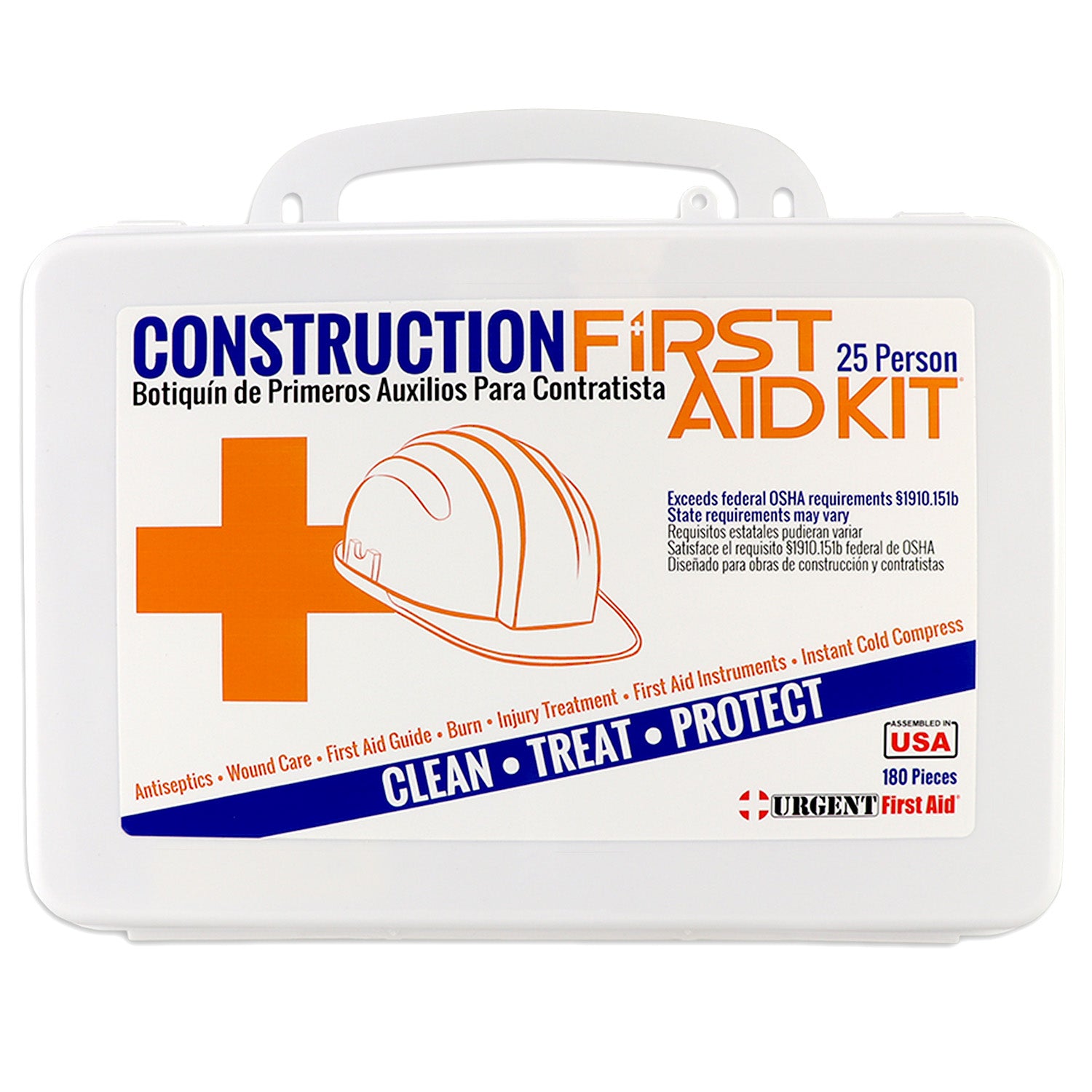 Weatherproof, portable kits are required for outdoor work sites to protect supplies from rain, dust, and extreme temperatures.
Inspection, Maintenance, and Replenishment Protocols
OSHA requires regular inspections to ensure all first aid kits are fully stocked and all supplies are usable. Neglecting inspections leads to expired medications, damaged dressings, and missing items that can cost valuable time during an emergency. Follow these protocols to stay compliant:
- Inspection frequency: Conduct a full inspection at least monthly for all workplaces, with weekly inspections required for high-hazard sites (construction, manufacturing, labs, food service) where supplies are used more frequently or exposed to harsh conditions that degrade materials faster.
- Inspection checklist: Check expiration dates on all medications, ointments, and antiseptic wipes; inspect bandage and dressing packaging for tears or moisture damage; confirm all required items are present; test instant cold packs to ensure they have not been accidentally activated.
- Replenishment rules: Any used or expired item must be replaced immediately, no exceptions. Keep a 20% overstock of core items on hand to avoid delays in restocking.
- Documentation: Keep a physical or digital log of each inspection, noting the date, inspector name, items replaced, and any issues found. This log must be available for OSHA auditors upon request. Assign a specific team member (e.g., the site safety officer) to be responsible for inspections, rather than making it a shared task that no one prioritizes. When inspecting your kit, store it in a cool, dry location away from direct sunlight and food storage areas; extra supplies like gauze rolls and bandage packs can be kept in large dry food storage bins to keep them dust-free and protected.
Employee Training and Emergency Response Requirements
Providing a compliant first aid kit is only half of OSHA's requirements: employers must also ensure all employees know how to use the supplies and respond to emergencies. OSHA's training rules include:
- Initial onboarding training: All new employees must receive first aid training during their first week of work, covering how to locate the kit, use core supplies for common injuries (cuts, burns, falls, allergic reactions), and when to call 911 versus providing on-site care.
- Annual refresher training: All employees must complete a 1-2 hour refresher course each year to update their skills and learn about any changes to OSHA requirements or kit contents. For high-hazard sites, add quarterly hands-on drills to practice skills like wound wrapping, tourniquet application, and CPR.
- Recordkeeping: Employers must keep records of all first aid training for at least 3 years, and make them available to OSHA upon request. A common mistake employers make is only training designated first aid responders, but OSHA requires all employees, including those on late or overnight shifts, to know how to access the kit and provide basic first aid until professional help arrives.
Legal and Financial Risks of Non-Compliance
Non-compliance with OSHA first aid kit requirements carries significant financial and operational risks that far outweigh the cost of maintaining a compliant kit. As of 2026, OSHA fines for first aid kit violations range from $1,000 for minor, de minimis issues to over $150,000 per willful or repeated violation, where an employer knowingly ignored requirements after a prior citation. Beyond fines, non-compliance creates substantial liability: if an employee suffers a severe injury that could have been mitigated with proper first aid supplies, the employer can face workers' compensation claims, personal injury lawsuits, and insurance premium increases of 20-30% after a documented safety violation. OSHA citations for first aid kit non-compliance are consistently among the top 20 most cited general industry violations, with penalties varying based on the severity of the gap and the employer's prior citation history. To mitigate risk, schedule quarterly audits of your first aid program, including kit inspections, training records, and accessibility checks, to catch gaps before an OSHA inspection or emergency occurs.
Frequently Asked Questions
What are OSHA first aid kit requirements?
OSHA requires all workplaces to provide a first aid kit that is accessible to all employees during all shifts, stocked with supplies aligned to the ANSI Z308.1-2023 baseline, and customized to the specific hazards of the worksite. Kits must be inspected monthly (weekly for high-hazard sites) and restocked immediately after any use or expiration.
How often should OSHA first aid kits be inspected?
OSHA requires a minimum of monthly inspections for all workplaces, with weekly inspections required for high-hazard sites (construction, manufacturing, labs, food service) where supplies are used more frequently or exposed to harsh conditions that degrade materials faster.
What items must OSHA first aid kits include?
All compliant kits must include core supplies: assorted adhesive bandages, sterile gauze pads and rolls, antiseptic wipes, non-latex disposable gloves, scissors, tweezers, surgical tape, burn gel, triangular bandages, instant cold packs, and a first aid instruction card. Industry-specific additions are required based on worksite hazards (see the customization guide above for details).
Are there OSHA penalties for missing first aid kits?
Yes. As of 2026, penalties range from $1,000 for minor violations to over $150,000 per willful or repeated violation. Employers may also face liability for injury-related lawsuits and increased insurance premiums if a missing or non-compliant kit contributes to a severe employee injury.
Do I need a first aid kit for remote or hybrid work teams?
Yes. OSHA requires employers to ensure all employees, including remote and hybrid workers, have access to a compliant first aid kit at their work location. This can be a personal kit provided by the employer, or confirmation that the employee's home workspace has a fully stocked, up-to-date kit.
Can I use a personal first aid kit instead of a workplace-provided one?
For remote workers, yes, if the employer verifies that the personal kit meets all OSHA requirements and is fully stocked with hazard-appropriate supplies for the employee's remote work tasks. For on-site employees, the employer is required to provide the kit, as personal kits may not be tailored to the worksite's specific hazards.
Do ANSI Z308.1-2023 kits need to include COVID-19 or respiratory protection supplies?
No. The 2023 ANSI update does not require COVID-19-specific supplies like masks or tests, though many employers choose to add them as a voluntary measure to reduce the spread of respiratory illness in the workplace, which can reduce first aid requests for severe illness.
Conclusion
Meeting OSHA first aid kit requirements is a low-cost, high-impact part of a comprehensive workplace safety program that protects employees and reduces employer liability. The core steps to full compliance are straightforward: assess your worksite's specific hazards to select the right core and industry-specific supplies, place kits in accessible, high-visibility locations with clear signage, conduct monthly (or weekly for high-hazard sites) inspections and restock immediately after any use or expiration, train all employees on kit location and basic first aid response, and keep detailed records of inspections and training to demonstrate compliance during OSHA audits. If you are updating your workplace first aid program this quarter, start by auditing your current kits against the ANSI Z308.1-2023 checklist to identify any gaps in supplies or accessibility.

I’m Abby Lu, a passionate home cook who loves simplifying everyday meals. At PlugChef.com, I share product reviews and cooking guides to help you find the best tools for your kitchen.
Related posts:
 Is Nylon Cooking Utensils Safe? Unveiling the Truth
 Is Bamboo Good for Cooking Utensils: Discover the Benefits
 Can You Cut Raw Meat on a Wood Cutting Board Safely?
 Harbor Freight First Aid Kit: Essential Safety Gear for Emergencies
 First Aid Kit Supplies Refills: Essential Items You Must Restock
 10 Person First Aid Kit: Essential Gear for Emergencies

