
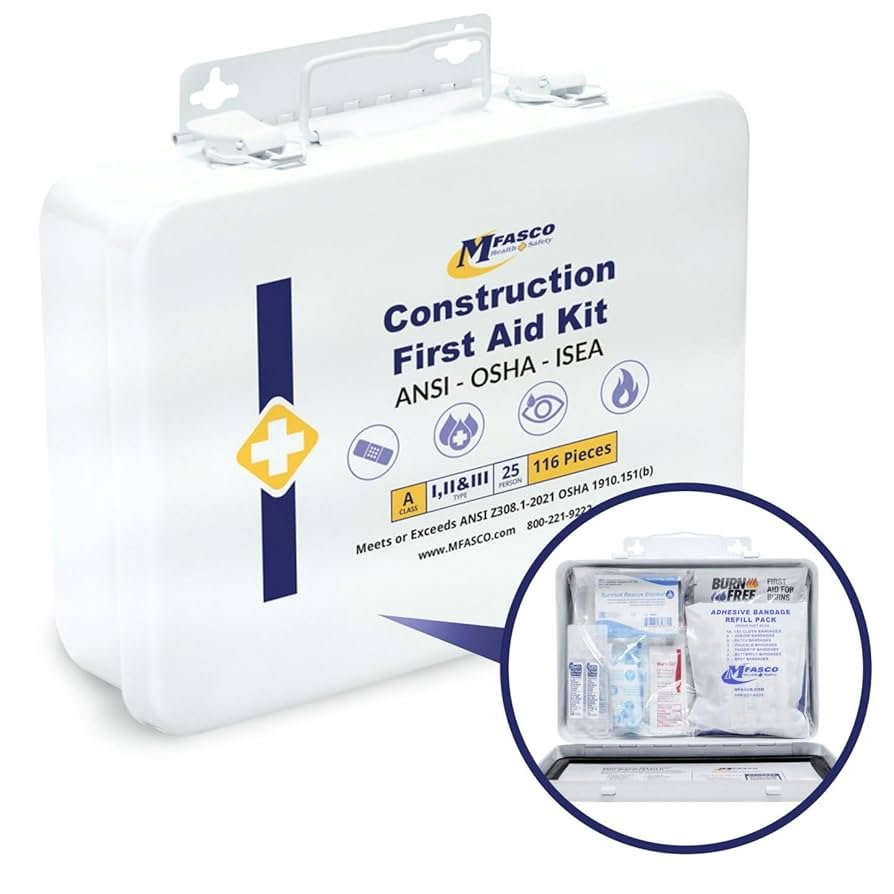
When you’re working on a construction site, accidents can happen in the blink of an eye. Having the right first aid kit nearby isn’t just a good idea—it could save a life.
You might think a basic kit is enough, but construction sites need something more prepared for the unique risks you face every day. You’ll discover exactly what your first aid kit should have and why it’s crucial for keeping you and your team safe.
Don’t wait for an emergency to realize you’re not ready—read on to protect your site now.

Credit: www.amazon.com
Key Components
Construction sites are bustling environments with inherent risks. A well-stocked first aid kit is crucial. It ensures quick response to injuries and helps in emergencies. Knowing the key components is essential for effective preparedness.
Basic Medical Supplies
Basic medical supplies are the backbone of any first aid kit. They include bandages, antiseptic wipes, and gauze pads. These items help treat minor cuts and abrasions. Adhesive tape secures bandages and gauze. Scissors and tweezers assist in precise handling. Pain relief medication offers immediate comfort.
Specialized Construction Items
Construction sites have unique hazards. Specialized items are necessary for specific injuries. Eye wash solutions help with debris in the eyes. Cold packs reduce swelling from sprains. Burn dressings are vital for minor burns. Finger splints support fractures. Wound closures and butterfly strips are useful for lacerations.
Personal Protective Equipment
Personal protective equipment (PPE) is vital. It prevents further injuries. Gloves protect hands during first aid procedures. Masks offer safety when handling blood. Safety goggles shield eyes from debris and chemicals. Reflective vests ensure visibility in emergency situations. Hard hats are essential for head protection.

Credit: www.amazon.com
Choosing The Right Kit
Choosing the right first aid kit for a construction site is vital for safety and quick response. The kit must meet the specific needs of the site and workers. A well-chosen kit can reduce injury severity and save lives. Consider several factors to ensure the kit is effective and practical.
Assessing Site Risks
Start by identifying common hazards on the construction site. Different sites have different dangers, such as cuts, burns, or falls. Think about the number of workers and the types of machinery used. Include items for treating injuries typical to your work environment. This focus makes the kit more useful in emergencies.
Kit Size And Portability
Choose a kit size that fits the site’s scale and workforce. Large sites may need multiple kits or bigger ones with more supplies. Small sites might only require compact kits. Portability matters too. The kit should be easy to carry and store in accessible places. Quick access saves critical time during accidents.
Compliance With Regulations
Every construction site must follow local and national safety rules. Ensure the first aid kit meets these legal requirements. Check for standards related to contents, labeling, and maintenance. Regularly inspect the kit to replace used or expired items. Compliance avoids fines and keeps workers safe.
Maintenance Tips
Keeping your first aid kit in top shape is crucial for safety on construction sites. Maintenance isn’t just about having supplies available—it’s about ensuring every item is ready to use when an emergency strikes. Neglecting upkeep can lead to expired materials or missing essentials, which might cost valuable time and health.
Regular Inspections
Set a schedule to check your first aid kit at least once a month. Open the kit and look for any damaged, expired, or missing items. Pay special attention to items like antiseptic wipes and adhesive bandages that often get used up quickly.
Ask yourself: Are all the supplies still within their expiration dates? If you find anything outdated, replace it immediately to avoid surprises during emergencies.
Restocking Essentials
Keep a checklist of critical supplies to restock promptly after use. Bandages, gloves, burn creams, and pain relievers are some items that often need quick replacement. Don’t wait until your stock runs out completely—top up early to stay prepared.
Try assigning a responsible person on your site to monitor and restock the kit regularly. This small step can prevent gaps in your safety readiness and keep everyone protected.
Storage Best Practices
Store the first aid kit in a clean, dry, and easily accessible location on the site. Avoid areas exposed to extreme heat or moisture, which can damage the contents. Make sure everyone knows where the kit is and can reach it quickly during an emergency.
Consider weatherproof containers if your site is outdoors. Label the kit clearly and update the storage spot if your site layout changes to keep accessibility consistent.
Training For Effective Use
Proper training is essential for using first aid kits effectively on construction sites. Workers must know how to act quickly and confidently during injuries. Training helps reduce panic and improves outcomes. It ensures that help is immediate and appropriate.
Basic First Aid Skills
Teaching workers basic first aid skills is the first step. They learn how to treat cuts, burns, and fractures. Skills include:
- Cleaning and dressing wounds
- Performing CPR
- Using bandages and splints
- Recognizing signs of shock
Simple, hands-on training makes it easy to remember these skills. This knowledge helps save lives before professional help arrives.
Emergency Response Planning
Every site needs a clear emergency response plan. Workers should know:
- Where first aid kits are located
- Who the designated first aid responders are
- How to call emergency services
- Steps to take during different types of injuries
Practicing this plan ensures quick and organized responses. It reduces confusion and delays in emergencies.
Worker Safety Drills
Regular safety drills keep first aid training fresh. Drills simulate real accidents to test readiness. They help workers:
- React calmly under pressure
- Use first aid kits correctly
- Work together during emergencies
Drills improve confidence and teamwork. They prepare everyone to handle injuries effectively on site.
Benefits Of Well-equipped Kits
Having a well-equipped first aid kit on a construction site is more than just a regulatory requirement—it can be a game changer in how emergencies are handled. These kits are designed to provide immediate care, which can significantly influence the outcome of workplace injuries. But what exactly makes a well-equipped kit so valuable to your construction site?
Reducing Injury Severity
Quick access to the right supplies can stop a minor injury from becoming a major problem. Items like sterile bandages, antiseptic wipes, and burn creams help control bleeding and prevent infections right at the source.
Imagine a worker who cuts their hand on a sharp tool. If you have a kit that includes pressure bandages and antiseptic solution, you can treat the wound immediately, reducing the risk of complications.
How much could early intervention lower the number of severe injuries on your site?
Enhancing Worker Confidence
Knowing that first aid supplies are readily available gives your team peace of mind. Workers feel safer and more valued when they see that their health and safety are prioritized.
This confidence can boost morale and encourage a culture where safety is taken seriously by everyone on site. It also empowers workers to act quickly if an accident happens, potentially saving lives.
Could your team’s confidence and productivity improve simply by upgrading your first aid resources?
Minimizing Downtime
Injuries can halt work, causing costly delays. A well-stocked first aid kit allows for swift treatment, helping workers recover faster and get back on the job.
For example, a sprain treated immediately with cold packs and compression can reduce swelling and pain, shortening recovery time.
Think about how much smoother your project timeline would be if minor injuries didn’t slow you down.

Credit: www.amazon.com
Frequently Asked Questions
What Essential Items Should A Construction First Aid Kit Have?
A construction first aid kit must include bandages, antiseptic wipes, burn cream, scissors, gloves, and pain relievers. It should also contain eye wash, CPR masks, and emergency contact info to handle common site injuries effectively and promptly.
How Often Should Construction Site First Aid Kits Be Checked?
First aid kits on construction sites should be inspected monthly. Regular checks ensure all supplies are stocked, unexpired, and ready for emergencies. This practice helps maintain safety compliance and quick response capability.
Are There Legal Requirements For First Aid Kits On Construction Sites?
Yes, OSHA mandates adequate first aid supplies at construction sites. Employers must provide kits tailored to site size and hazards. Compliance ensures worker safety and reduces liability risks.
Where Should First Aid Kits Be Placed On Construction Sites?
First aid kits should be easily accessible and clearly marked at multiple locations. Place them near high-risk areas and central spots to ensure quick access during emergencies.
Conclusion
A well-stocked first aid kit keeps workers safe on construction sites. Quick access to supplies can prevent small injuries from becoming serious. Every site should have kits checked and refilled regularly. Training workers to use these kits boosts confidence and safety.
Safety starts with being prepared for emergencies. Don’t wait for accidents to happen. Protect your team and reduce downtime with proper first aid. Safety matters every day on the job.

I’m Abby Lu, a passionate home cook who loves simplifying everyday meals. At PlugChef.com, I share product reviews and cooking guides to help you find the best tools for your kitchen.
Related posts:
 What Type of Cooking Utensils are Safe: Expert Picks
 What Innovations Could Blenders Make: Unleashing Future Tech
 Smart Strategies to Organize a Small Kitchen: Maximize Space
 How to Organize a Kitchen Cabinet: Expert Tips & Tricks
 How to Organize Kitchen Drawers: Expert Tips and Tricks
 How to Organize a Corner Kitchen Cupboard: Expert Tips

