Scrambling through a cluttered kitchen cabinet to find a matching lid, or wading through a stack of warped, unmatched containers, is a universal frustration for home cooks. Properly organizing your food storage container collection doesn’t just cut down on daily annoyance — it reduces food waste, speeds up meal prep, and makes your entire kitchen feel more functional without requiring a full remodel. This guide breaks down the most effective, budget-friendly solutions for every cabinet size and container collection, plus pro tips to keep your system working long-term.
Assess Your Cabinet Space and Container Collection First
Before buying any storage tools, take 10 minutes to audit your existing setup to avoid wasting money on organizers that don’t fit your needs:
- Measure your cabinet interior: Note the width, depth, height, and shelf spacing. If your cabinet has a door that swings inward, make sure any organizers you choose don’t block it from closing fully.
- Sort your containers by type and size: Group nesting sets together, separate round vs. square lids, and pull out any broken, cracked, or unmatched pairs to donate or recycle. A common mistake is holding onto "just in case" lids that haven’t matched a container in years — these take up valuable space for no reason.
- Note your pain points: Do you struggle most with mismatched lids, bulky nesting containers, or loose small items like snack packets and seasoning pouches? This will help you prioritize which organizers to buy first.
Top Organization Solutions for Food Storage Containers
The right organizer for your cabinet depends on your space constraints, container collection, and budget. Below are the most effective options for every use case:
Adjustable Drawer Caddies for Lids and Small Containers
Drawer caddies are the most popular solution for lid storage, as they keep lids separated by size to prevent cracking and make matching to containers fast. Look for models with adjustable dividers that you can reconfigure as your collection grows. For more on this, see our guide on lunch box food storage containers.
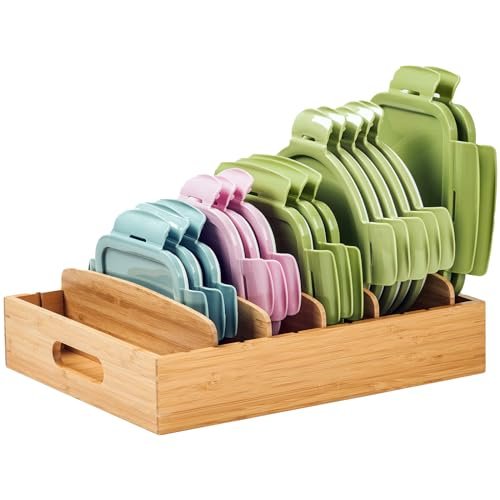
For eco-conscious shoppers, the Umilife Kitchen Cabinet Organizer is made from renewable, moisture-resistant bamboo that won’t warp from kitchen humidity. Its adjustable dividers fit lids up to 10 inches wide, and its compact design fits in shallow upper cabinets where larger organizers won’t work. The only downsides are its limited natural finish (which may stand out in dark cabinet interiors) and the required divider assembly, which takes 5-10 minutes to complete.
If you prefer a lightweight plastic option, the YouCopia StoraLid features the same customizable divider design with tool-free assembly, and its low 3-inch profile fits even the shallowest cabinet shelves. It works well for mixed lid collections, though it won’t accommodate extra-large stockpot or baking sheet lids.
For people with dozens of lids of varying sizes, the SWOMMOLY Expandable Lid Organizer stretches to fit cabinets from 12 to 17.3 inches wide, and comes with preprinted size labels to sort lids by diameter quickly. Its included writable labels also let you mark oversized lids for specific pots or meal prep containers.
 Adjustable dividers in this caddy accommodate lids of all sizes, from small takeout containers to large stockpot lids.
 The YouCopia StoraLid’s tool-free assembly takes under 5 minutes to set up.
 Preprinted size labels cut down on rummaging time for large lid collections.
Over-the-Cabinet Door Organizers for Underutilized Space
Most people forget that the interior of their cabinet doors is empty, unused storage space. Over-the-door organizers hang over the top of the cabinet door, so they don’t take up any shelf space at all — a game-changer for small, shallow cabinets.
The Pensino 2 Pack Adhesive Cabinet Door Organizer is a renter-friendly option that sticks to smooth cabinet surfaces with heavy-duty adhesive, no drilling required. Its clear design lets you see lids or small items at a glance, and its compact 7.87-inch width fits most cabinet doors without blocking hinges. The only caveats are that it won’t stick to textured laminate cabinet surfaces, and it’s only rated for lids up to 8 inches wide.
In practice, these caddies work best for storing flat round lids, small seasoning packets, condiment containers, or portion control snack packs that get lost in deep shelves. For lower cabinets accessible to young children, pair these organizers with no-drill childproof cabinet locks to keep small containers and lids out of reach.
 Over-the-cabinet door organizers add 2-3 square feet of storage without reducing shelf space.
Stackable Clear Bins for Categorized Storage
Clear stackable bins are the most versatile solution for organizing nested containers, dry goods, and small loose items. Their transparent design lets you see contents at a glance, and their stackable construction maximizes vertical shelf space you’d otherwise leave empty.
The Vtopmart 8 Pack Food Storage Organizer Bins feature four compartment bins that are perfect for sorting small items like spice packets, baby food pouches, and condiment containers that get lost in large cabinets. Their durable BPA-free plastic construction holds up to daily use, and they’re compact enough to fit on even narrow pantry shelves.
If you have a mix of small and large items, the Mpotmiy 8 Pack Pantry Organizers come with adjustable dividers to customize compartment sizes for everything from single-serve snack containers to large family-sized storage bins. They’re also fridge-safe, so you can use them for meal prep containers and produce storage as well.
For bulkier items, the Hudgan 8 Pack Stackable Bins come in three sizes to accommodate everything from small spice jars to large cereal containers, and built-in handles make them easy to pull out from deep shelves. The ClearSpace 2 Pack Organizers are a compact, multi-use option that works equally well in kitchen cabinets and refrigerators for storing meal prep containers and leftovers.
To keep bins free of crumbs and sticky residue, scrub them with a stiff-bristled kitchen cleaning brush set to avoid scratching the plastic.
 Four compartment bins let you sort small items like spice packets, baby food, and condiments without clutter.
 Included dividers let you customize compartment sizes for different types of pantry items.
 These versatile bins work in both kitchen cabinets and refrigerators for all your food storage needs.
 Three size options and built-in handles make these bins perfect for storing items of all shapes and sizes.
Airtight Canisters for Bulk Dry Goods
If you buy flour, sugar, cereal, pasta, or nuts in bulk, airtight canisters are non-negotiable for keeping food fresh and preventing pantry pests. Per USDA food storage guidance, airtight containers are the most effective way to block moisture and air exposure that causes spoilage.
Look for canisters with silicone gaskets and locking clips for the tightest seal, and BPA-free plastic for food safety. The Vtopmart 24 Piece Airtight Canister Set includes 24 writable labels to mark contents and expiration dates, cutting down on food waste from forgotten items. The set’s stackable design fits easily on cabinet shelves, and the containers are dishwasher safe for easy cleaning.
For smaller spaces, the Vtopmart 15 Piece Airtight Set has a more compact footprint, and includes the same labeling system and dishwasher-safe construction. Both sets are available in black, which hides stains and fits most kitchen aesthetics.
If you want to avoid smudged handwritten labels, try these smudge-proof labeling tricks for your containers to keep your pantry looking neat long-term.
 Silicone gaskets and locking clips create an airtight seal to keep cereal and flour fresh for up to 6 months longer than standard containers.
 Included writable labels let you mark contents and expiration dates to reduce food waste.
Pro Tips for Long-Term Cabinet Organization
The best organization systems fail without simple maintenance habits to keep them functional over time. Follow these tips to avoid clutter building up again:
Nest and Sort Containers First
Most food storage containers are designed to nest inside each other to save space, so stack them by size with the largest at the bottom and smallest on top. If you have mismatched sets, group them by brand to avoid chipping or cracking when stacking. Store the most frequently used containers (like lunch containers or meal prep sets) on the middle shelf at eye level for easy access, and move rarely used items (like holiday baking dishes or large stockpot containers) to the top or bottom shelf.
Prioritize Lid Matching
Before organizing, go through all your lids and pair them with their matching containers. Toss any cracked, warped, or stained lids that don’t have a matching container — a common mistake is keeping these "just in case", but they almost never get used and just take up space. Store extra unmatched lids in your adjustable caddy or door organizer, or donate them to a local community kitchen if they’re in good condition.
Maximize Vertical Space
If your cabinet has tall vertical clearance, use a tiered shelf organizer to double your storage capacity, letting you store two layers of containers in the space of one. For shallow cabinets, stick to low-profile caddies (under 3 inches tall) to avoid blocking the cabinet door from closing fully. Add non-slip shelf liners to the bottom of your shelves and organizers to prevent containers from sliding around when you open and close the cabinet.
Label Everything
Even with clear bins, labels eliminate guesswork and help every member of the household put items back in the right place. Use a label maker or the included writable labels that come with most organizers, and mark not just the contents, but also the date you stored the food (especially for meal prep). For households with young kids, add picture labels to bins so they can put away their own snack containers independently.
Rotate Stock Regularly
Every 1-2 months, do a quick tidy of your cabinet to move older food items to the front of shelves and match any loose lids to their containers. A full deep clean and reorganization every 6-12 months will help you purge broken or unused containers and adjust your layout as your collection changes, preventing clutter from building up again.
Safety Considerations for Organized Cabinets
Organized food storage cabinets are safer than cluttered ones, but there are a few key precautions to take, especially if you have young children or pets:
- Loose lids and small containers are choking hazards for toddlers, so store them in lower cabinets with kitchen drawer safety latches to keep them closed when not in use.
- Avoid storing heavy glass containers or bulk dry goods on high shelves, where they could fall and cause injury. Stick to lightweight plastic containers for upper cabinet storage.
- If you use adhesive door organizers, check the adhesion every 3-6 months to make sure they haven’t peeled loose, especially in humid kitchen environments. Reapply adhesive strips as needed to avoid organizers falling and spilling contents.
Frequently Asked Questions
What is the best way to organize mismatched food storage container lids?
The most efficient method is to use an adjustable lid caddy with movable dividers, which lets you sort lids by size and shape (round, square, rectangular) without wasting space. If you have dozens of extra lids that don’t match any containers, consider donating them to a local food bank or community kitchen to reduce clutter.
How can I organize food storage containers in a tiny cabinet?
Focus on vertical and underutilized space: use stackable clear bins to maximize shelf capacity, mount an adhesive door organizer for lids, and stick to nesting containers to reduce bulk. Avoid bulky organizers that take up more than 10% of your cabinet’s interior volume, and purge any containers you haven’t used in the last 6 months to free up space.
Are bamboo cabinet organizers better than plastic ones?
Bamboo is a renewable, moisture-resistant material that holds up well to kitchen humidity, and it’s a more sustainable choice than virgin plastic if you prioritize eco-friendly products. Plastic organizers are typically more affordable, lighter, and easier to clean, so the best choice depends on your budget, aesthetic preferences, and sustainability goals.
How do I keep food storage containers from sliding around in my cabinet?
Add non-slip shelf liners to the bottom of your cabinet shelves and the base of any organizers or bins. For extra grip, you can attach small adhesive felt pads to the bottom of lightweight caddies to prevent them from shifting when you open and close the cabinet door.
How often should I reorganize my food storage cabinet?
Do a quick tidy every 1-2 months to match any loose lids to their containers and rotate older food items to the front. A full deep clean and reorganization every 6-12 months will help you purge broken or unused containers and adjust your layout as your collection changes, preventing clutter from building up again.
Conclusion
Organizing your food storage container cabinet doesn’t have to be expensive or time-consuming. Even small changes — like adding a low-cost lid caddy or stackable bins — can cut down on daily kitchen frustration, reduce food waste, and make meal prep faster and more enjoyable.
The best system is the one that fits your specific cabinet size, container collection, and household needs: if you have kids, prioritize safety latches and low, accessible storage; if you buy in bulk, invest in airtight canisters; if you have a tiny cabinet, focus on door organizers and stackable bins to maximize every inch of space.
Ready to tackle your cabinet clutter? Start by sorting your containers this weekend to identify what you actually use, then pick 1-2 organizers that solve your biggest pain points. For more space-saving kitchen tips, check out our full library of kitchen organization guides to transform every corner of your kitchen.

Hi, I’m Daniel Brooks—a food lover and kitchen gear enthusiast. I enjoy testing cookware, utensils, and gadgets to see what really works in everyday cooking. At PlugChef.com, I share honest reviews, comparisons, and simple guides to help you choose the best tools for a safer, smarter, and more enjoyable kitchen.
Related posts:
 Best Kitchen Gadgets Under $20: Affordable Tools for Every Culinary Task
 Under Cabinet Hidden Kitchen Outlets: Revolutionize Your Space-Saving Solutions
 Shelf for Under Kitchen Sink: Maximize Space with Pull-Out Organizers
 Best Beeswax Wraps for Zero Waste Kitchen: Eco-Friendly Food Storage Solution
 Best Water Filter for Pod Coffee Maker: Enhance Your Coffee Experience
 Best Kitchen Counter Compost Bin: Top Picks for Odor-Free Recycling