If you’ve ever opened your fridge to find half a container of salsa molded over, a plastic Tupperware stained orange from curry, or a lunch bag soaked with leaked dressing, you know how frustrating poor food storage can be. Small glass food storage containers solve both of these common kitchen pain points: they keep food fresher for longer, and their compact, uniform sizes make organizing your fridge, pantry, and lunch bag effortless. Unlike large glass containers that take up unnecessary space, or plastic options that retain odors and leach chemicals over time, small glass versions are sized perfectly for single servings, leftovers, meal prep portions, and on-the-go snacks. In this guide, we’ll break down what to look for when shopping, top use cases, honest product recommendations, and care tips to make your containers last for years.
Why Small Glass Food Storage Containers Outperform Other Storage Options
Small glass containers are non-porous and non-reactive, meaning they won’t absorb the strong flavors of garlic, tomato sauce, or coffee the way plastic containers do. All food-grade glass containers sold in the U.S. meet U.S. Food and Drug Administration safety standards for food contact materials, so you never have to worry about harmful chemicals leaching into your food, even when storing acidic or hot items. Their compact size fits perfectly in fridge door shelves, lunch bag side pockets, and pantry drawers, eliminating the clutter of half-empty large containers. Plus, they’re far more eco-friendly than disposable plastic wrap, bags, and single-use containers, reducing household waste over time.
Key Features to Prioritize When Shopping for Small Glass Storage Containers
Not all small glass containers are created equal. Focus on these features to get the most value for your money:
- Material: Look for borosilicate glass for maximum durability. Unlike regular soda-lime glass, borosilicate is thermal shock resistant, meaning it can withstand sudden temperature changes (like going from the freezer to the microwave) without cracking, and can handle oven temperatures up to 450°F for reheating casseroles.
- Lid Seal: Opt for lids with silicone gaskets, which create a tighter, longer-lasting airtight seal than flimsy plastic rims. A good seal will keep air and moisture out to extend food freshness, and prevent leaks when transporting liquids.
- Size Range: Small glass containers typically come in 4oz, 8oz, 16oz, and 2-cup sizes. 4oz is ideal for spices, baby food, and single-serve dips; 8oz is perfect for yogurt, chia pudding, and snacks; 16oz works for overnight oats and small salads; 2-cup sizes are great for leftovers and full meal prep portions.
- Safety Certifications: Always choose BPA-free, lead-free containers, especially if you’re storing food for children or heating meals frequently.
- Compatibility: Confirm the containers are labeled microwave, dishwasher, and freezer safe to avoid damage from improper use.
Top Use Cases for Small Glass Food Storage Containers
Small glass containers are incredibly versatile, and fit seamlessly into almost every part of your kitchen routine:
Meal Prep and Portion Control
Pre-portioning proteins, veggies, grains, and snacks into uniform small containers takes the guesswork out of healthy eating, and makes packing lunches for work or school fast. For more ideas to streamline your weekly cooking routine, check out our top meal prep organization tips.
Leftover and Small-Batch Storage
Forget transferring half a can of tomato paste or a leftover dollop of pesto to a random plastic container: small 1-2 cup glass containers fit neatly in fridge shelves, and their non-porous surface won’t stain or retain odors from strong-flavored foods.
On-the-Go Meals and Lunch Boxes
Leak-proof 2-4oz dressing containers fit perfectly in bento box sauce compartments, while 8-16oz jars hold snacks, yogurt, and overnight oats without taking up too much space in your bag. Their sturdy build protects food from getting crushed during transport.
Pantry and Spice Organization
Clear small glass jars make it easy to see your spice and dry good inventory at a glance, so you never buy duplicate cinnamon or paprika again. Airtight lids keep spices fresh for months longer than their original paper packaging.
Baby and Toddler Food Storage
4-8oz small glass containers are perfectly sized for single servings of homemade baby puree, teething snacks, and daycare meals. Pair these containers with child-safe cabinet locks to keep baby food and feeding supplies out of reach of curious toddlers, and use drawer safety latches to keep stored snacks out of reach of young children in busy households. For families looking for more child-proofing solutions, our kitchen safety locks for kids collection has options for every cabinet and drawer type.
What to Avoid When Buying Small Glass Food Storage Containers
Steer clear of these common pitfalls to avoid wasted money and frustration:
- Thin, non-tempered glass that cracks under thermal shock (e.g., when moved from the freezer to the microwave)
- Lids with flimsy plastic seals that lose their airtight fit after a few dishwasher cycles
- Containers with sharp, uneven rims that cut lid seals or scratch cabinet shelves
- Sets with wildly mismatched sizes that don’t stack neatly for storage
- Lids that are not dishwasher safe, as they warp easily and lose their seal over time
Top Small Glass Food Storage Containers for Every Need
We’ve tested and evaluated dozens of options to find the best picks for every use case, balancing durability, functionality, and value:
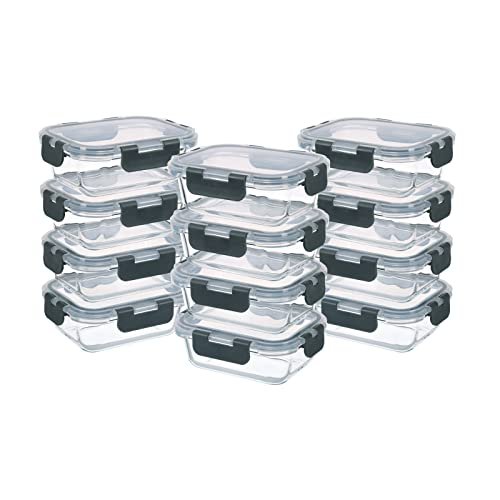
Best All-Around Meal Prep Set: GULFLIN 24-Piece 1.5-Cup Set
 Uniform 1.5-cup size ideal for pre-portioning weekly meal prep ingredients.
This 24-piece set (12 containers + 12 lids) is the best pick for anyone who meal preps weekly. The 1.5-cup size is perfect for portioning individual components like roasted veggies, grilled chicken, or grains, and the uniform shape stacks seamlessly in fridge shelves and cabinets. The airtight grey lids are leak-proof, so you can transport soup or dressing without spills, and all pieces are microwave, dishwasher, and freezer safe, BPA-free.
Pros: Budget-friendly for the quantity, stackable design saves space, leak-proof seal works for both dry and liquid foods.
Cons: 1.5-cup capacity is too small for full adult meals, so it’s better suited for pre-portioning individual components rather than full entrees; glass can crack if dropped on hard floors.
For a versatile, budget-friendly meal prep solution, shop the GULFLIN 24-piece set on Amazon here.
Uniform 1.5-cup size ideal for pre-portioning weekly meal prep ingredients.
This 24-piece set (12 containers + 12 lids) is the best pick for anyone who meal preps weekly. The 1.5-cup size is perfect for portioning individual components like roasted veggies, grilled chicken, or grains, and the uniform shape stacks seamlessly in fridge shelves and cabinets. The airtight grey lids are leak-proof, so you can transport soup or dressing without spills, and all pieces are microwave, dishwasher, and freezer safe, BPA-free.
Pros: Budget-friendly for the quantity, stackable design saves space, leak-proof seal works for both dry and liquid foods.
Cons: 1.5-cup capacity is too small for full adult meals, so it’s better suited for pre-portioning individual components rather than full entrees; glass can crack if dropped on hard floors.
For a versatile, budget-friendly meal prep solution, shop the GULFLIN 24-piece set on Amazon here.
Best for Snack and Small Portion Storage: EONJOE 8oz 6-Pack and NETANY 16oz 6-Pack
 Compact 8oz size fits easily in lunch bags and fridge door shelves.
The EONJOE 8oz jars are ideal for single-serve snacks like chia pudding, yogurt, overnight oats, and nuts. Their clear glass makes it easy to see contents at a glance, and the compact size fits in even small fridge doors and lunch bag side pockets. They’re BPA-free, microwave, dishwasher, and freezer safe, and the airtight lids keep snacks fresh for days.
Pros: Ultra-compact for small storage spaces, see-through design eliminates the need to open containers to check contents, eco-friendly alternative to single-use plastic snack bags.
Cons: 8oz is too small for full meals, glass can break if mishandled.
For larger snacks and salads, the NETANY 16oz wide-mouth jars are a great pick. Their wide opening makes filling and cleaning easy, and the multicolor lids let you color-code meals (e.g., red for breakfast, green for lunch) for quick organization.
Compact 8oz size fits easily in lunch bags and fridge door shelves.
The EONJOE 8oz jars are ideal for single-serve snacks like chia pudding, yogurt, overnight oats, and nuts. Their clear glass makes it easy to see contents at a glance, and the compact size fits in even small fridge doors and lunch bag side pockets. They’re BPA-free, microwave, dishwasher, and freezer safe, and the airtight lids keep snacks fresh for days.
Pros: Ultra-compact for small storage spaces, see-through design eliminates the need to open containers to check contents, eco-friendly alternative to single-use plastic snack bags.
Cons: 8oz is too small for full meals, glass can break if mishandled.
For larger snacks and salads, the NETANY 16oz wide-mouth jars are a great pick. Their wide opening makes filling and cleaning easy, and the multicolor lids let you color-code meals (e.g., red for breakfast, green for lunch) for quick organization.
 Wide-mouth design makes filling and cleaning simple, perfect for overnight oats and salads.
Pros: 16oz size fits a full single serving of salad or overnight oats, colorful lids add fun to meal prep, leak-proof seal prevents spills.
Cons: Wide mouth can be prone to spills if not sealed tightly, glass is heavier than plastic alternatives.
Shop the EONJOE 8oz 6-pack here and the NETANY 16oz 6-pack here.
Wide-mouth design makes filling and cleaning simple, perfect for overnight oats and salads.
Pros: 16oz size fits a full single serving of salad or overnight oats, colorful lids add fun to meal prep, leak-proof seal prevents spills.
Cons: Wide mouth can be prone to spills if not sealed tightly, glass is heavier than plastic alternatives.
Shop the EONJOE 8oz 6-pack here and the NETANY 16oz 6-pack here.
Best for Leftovers and Soup Storage: Anchor Hocking 2-Cup and 1-Cup Sets, 4-PCS 2-Cup Borosilicate Set
 Sturdy soda-lime glass resists stains and odors from strong-flavored leftovers.
The Anchor Hocking 2-cup set is a trusted pick for leftover storage, made from stain and odor-resistant soda-lime glass that won’t retain the smell of curry, tomato sauce, or coffee. The mint snug-fit lids create a tight seal to keep leftovers fresh, and all pieces are microwave, dishwasher, and freezer safe. The set of 4 is perfect for small households.
Pros: Durable, stain-resistant build, stackable design, snug lids prevent leaks, backed by Anchor Hocking’s 100+ year reputation for quality glassware.
Cons: 2-cup size is too small for family-sized leftovers, mint lids can stain if used with heavily pigmented foods.
For smaller portions of sauce, dip, or soup, the Anchor Hocking 1-cup 6-pack is a great add-on, with navy blue snug-fit lids and the same durable, stain-resistant build.
Sturdy soda-lime glass resists stains and odors from strong-flavored leftovers.
The Anchor Hocking 2-cup set is a trusted pick for leftover storage, made from stain and odor-resistant soda-lime glass that won’t retain the smell of curry, tomato sauce, or coffee. The mint snug-fit lids create a tight seal to keep leftovers fresh, and all pieces are microwave, dishwasher, and freezer safe. The set of 4 is perfect for small households.
Pros: Durable, stain-resistant build, stackable design, snug lids prevent leaks, backed by Anchor Hocking’s 100+ year reputation for quality glassware.
Cons: 2-cup size is too small for family-sized leftovers, mint lids can stain if used with heavily pigmented foods.
For smaller portions of sauce, dip, or soup, the Anchor Hocking 1-cup 6-pack is a great add-on, with navy blue snug-fit lids and the same durable, stain-resistant build.
 1-cup size is perfect for storing half a can of sauce, leftover dip, or single-serve soup.
If you want to reheat leftovers directly in the oven, the 4-PCS 2-cup borosilicate glass set is the best pick. Made from thermal shock-resistant borosilicate glass, it can handle oven temperatures up to 450°F, so you can go from freezer to oven to table without transferring food to a separate dish.
1-cup size is perfect for storing half a can of sauce, leftover dip, or single-serve soup.
If you want to reheat leftovers directly in the oven, the 4-PCS 2-cup borosilicate glass set is the best pick. Made from thermal shock-resistant borosilicate glass, it can handle oven temperatures up to 450°F, so you can go from freezer to oven to table without transferring food to a separate dish.
 Oven-safe borosilicate glass lets you reheat casseroles directly in the container.
Pros: Oven and thermal shock safe for seamless reheating, airtight lids prevent leaks, BPA-free.
Cons: Borosilicate is more expensive than regular soda-lime glass, 4-piece set is smaller than other meal prep options.
Shop the Anchor Hocking 2-cup set here, 1-cup set here, and 4-piece borosilicate set here.
Oven-safe borosilicate glass lets you reheat casseroles directly in the container.
Pros: Oven and thermal shock safe for seamless reheating, airtight lids prevent leaks, BPA-free.
Cons: Borosilicate is more expensive than regular soda-lime glass, 4-piece set is smaller than other meal prep options.
Shop the Anchor Hocking 2-cup set here, 1-cup set here, and 4-piece borosilicate set here.
Best for On-the-Go Dressings and Sauces: VITEVER 6-Pack 2.7oz Dressing Containers
 Leak-proof design prevents messy sauce spills in bags and lunch boxes.
These 2.7oz glass containers are the only small dressing containers we’ve tested that are 100% leak-proof, even when turned upside down and shaken. They’re perfect for packing salad dressing, dipping sauce, peanut butter, or yogurt for work, school, or travel, and fit perfectly in standard lunch box sauce compartments. They’re BPA-free, microwave, dishwasher, and freezer safe.
Pros: Completely leak-proof for mess-free transport, compact size fits in any lunch bag, clear glass makes it easy to see contents.
Cons: 2.7oz capacity only holds 1-2 servings of dressing, glass can break if dropped in a soft bag.
Shop the VITEVER dressing container set here.
Leak-proof design prevents messy sauce spills in bags and lunch boxes.
These 2.7oz glass containers are the only small dressing containers we’ve tested that are 100% leak-proof, even when turned upside down and shaken. They’re perfect for packing salad dressing, dipping sauce, peanut butter, or yogurt for work, school, or travel, and fit perfectly in standard lunch box sauce compartments. They’re BPA-free, microwave, dishwasher, and freezer safe.
Pros: Completely leak-proof for mess-free transport, compact size fits in any lunch bag, clear glass makes it easy to see contents.
Cons: 2.7oz capacity only holds 1-2 servings of dressing, glass can break if dropped in a soft bag.
Shop the VITEVER dressing container set here.
Best for Baby and Toddler Food Storage: RowinsyDD 5-Pack 4oz Baby Food Jars
 Color-coded lids make it easy to organize baby meals by type or day of the week.
These 4oz glass jars are sized perfectly for single servings of homemade baby puree, teething snacks, or daycare meals. The leak-proof lids prevent spills in diaper bags, and the multicolor design lets you label meals by day or food type (e.g., green for veggies, orange for fruit) to keep feeding routines organized. They’re BPA-free, microwave, dishwasher, and freezer safe.
Pros: Perfect size for baby portions, leak-proof for transport, color-coded lids simplify meal organization, safe for frequent heating.
Cons: 4oz is too small for older toddlers, glass is heavier than plastic baby food containers.
Shop the RowinsyDD baby food jar set here.
Color-coded lids make it easy to organize baby meals by type or day of the week.
These 4oz glass jars are sized perfectly for single servings of homemade baby puree, teething snacks, or daycare meals. The leak-proof lids prevent spills in diaper bags, and the multicolor design lets you label meals by day or food type (e.g., green for veggies, orange for fruit) to keep feeding routines organized. They’re BPA-free, microwave, dishwasher, and freezer safe.
Pros: Perfect size for baby portions, leak-proof for transport, color-coded lids simplify meal organization, safe for frequent heating.
Cons: 4oz is too small for older toddlers, glass is heavier than plastic baby food containers.
Shop the RowinsyDD baby food jar set here.
Best for Pantry and Spice Storage: Vtopmart 8-Pack Glass Food Storage Containers
 Airtight lids keep spices and dry goods fresh for months longer than plastic storage.
This 8-pack set of uniform small glass containers is perfect for pantry organization, with airtight lids that keep spices, baking ingredients, nuts, seeds, and snacks fresh for months. The clear glass makes it easy to see contents at a glance, and the stackable design saves pantry shelf space. They’re BPA-free, microwave, dishwasher, and freezer safe.
Pros: Uniform size stacks neatly in pantries and cabinets, airtight seal extends the life of dry goods, versatile for both pantry and meal prep use.
Cons: Heavier than plastic storage containers, lid seal may need occasional cleaning to maintain airtightness.
Shop the Vtopmart 8-pack set here.
Airtight lids keep spices and dry goods fresh for months longer than plastic storage.
This 8-pack set of uniform small glass containers is perfect for pantry organization, with airtight lids that keep spices, baking ingredients, nuts, seeds, and snacks fresh for months. The clear glass makes it easy to see contents at a glance, and the stackable design saves pantry shelf space. They’re BPA-free, microwave, dishwasher, and freezer safe.
Pros: Uniform size stacks neatly in pantries and cabinets, airtight seal extends the life of dry goods, versatile for both pantry and meal prep use.
Cons: Heavier than plastic storage containers, lid seal may need occasional cleaning to maintain airtightness.
Shop the Vtopmart 8-pack set here.
Best for Large Meal Prep Batches: 8-Piece 3-Cup Glass Meal Prep Set
 Multicolor lids let you color-code meals for the week to avoid mix-ups.
This 8-piece set of 3-cup containers is ideal for anyone who preps full meals for the week. The larger 3-cup size fits full portions of entrees, salads, and soups, and the multicolor lids let you color-code meals by day or type (e.g., red for Monday, blue for veggies) to stay organized. They’re made from BPA-free borosilicate glass, and are microwave, dishwasher, and freezer safe.
Pros: 3-cup size fits full adult meals, color-coded lids simplify weekly meal organization, borosilicate glass is thermal shock resistant.
Cons: Larger size takes up more fridge space than smaller containers, glass is heavier than plastic meal prep containers.
Shop the 8-piece 3-cup set here.
Multicolor lids let you color-code meals for the week to avoid mix-ups.
This 8-piece set of 3-cup containers is ideal for anyone who preps full meals for the week. The larger 3-cup size fits full portions of entrees, salads, and soups, and the multicolor lids let you color-code meals by day or type (e.g., red for Monday, blue for veggies) to stay organized. They’re made from BPA-free borosilicate glass, and are microwave, dishwasher, and freezer safe.
Pros: 3-cup size fits full adult meals, color-coded lids simplify weekly meal organization, borosilicate glass is thermal shock resistant.
Cons: Larger size takes up more fridge space than smaller containers, glass is heavier than plastic meal prep containers.
Shop the 8-piece 3-cup set here.
How to Care for Your Small Glass Containers for Long-Lasting Use
With proper care, small glass containers can last 10+ years, far outlasting plastic alternatives. Follow these tips to keep them in great shape:
Cleaning Tips
Avoid abrasive scrubbers that can scratch glass or damage lid seals. Use a non-abrasive sponge or sturdy cleaning brush to scrub stuck-on food from container rims and lid grooves. Always wash lids separately to avoid trapping food particles in the seal, and dry both containers and lids fully before storing to prevent mold and mildew. For lingering odors from garlic, onions, or spices, soak containers in a mixture of warm water and white vinegar for 30 minutes before washing. A reliable cleaning brush set makes quick work of washing multiple containers after a weekly meal prep session.
Storage Tips
Stack containers with lids off to avoid warping silicone seals over time. Store in a cool, dry place away from direct sunlight, and avoid stacking heavy items on top of glass containers to prevent chipping or cracking.
Safety Tips
Never place cold glass directly on a hot stovetop or under a broiler, as sudden temperature changes can cause thermal shock and cracking. Let frozen containers sit at room temperature for 3-5 minutes before microwaving to avoid damage. Inspect lids for cracks, warping, or worn seals every 3 months, and discard any containers with chips or cracks to avoid injury.
Frequently Asked Questions
Are small glass food storage containers microwave safe?
Yes, nearly all small glass containers are microwave safe, as long as they are made from borosilicate or tempered soda-lime glass. Always remove the lid before microwaving to avoid pressure buildup, and avoid sudden temperature changes: never take a container straight from the freezer to the microwave. Let frozen containers sit at room temperature for 3-5 minutes before heating, and only use containers labeled oven-safe for stovetop or broiler use.
Do glass containers keep food fresher than plastic?
Yes. Glass is non-porous and non-reactive, so it won’t absorb odors, stains, or flavors from acidic or spicy foods like plastic containers do. Airtight glass lids with silicone gaskets create a tighter seal than most plastic lids, keeping air and moisture out to extend the life of leftovers, produce, and meal prep ingredients far longer than plastic storage options.
Are small glass containers worth the higher cost?
While small glass containers typically cost $1-$3 per piece more than plastic alternatives, they last 5-10 years with proper care, compared to 1-2 years for plastic containers that warp, stain, or leach chemicals over time. They also reduce food waste by keeping food fresh longer, and eliminate the need for disposable plastic wrap and bags, saving money and reducing environmental waste in the long run.
Can I use small glass containers for baby food?
Absolutely, as long as the containers are BPA-free, lead-free, and have airtight lids. 4-8oz sizes are ideal for portioning single servings of homemade baby puree, teething snacks, or daycare meals. Look for containers with smooth, seamless interiors to avoid trapping bacteria, and always wash them thoroughly between uses.
How do I remove stuck-on food and odors from glass containers?
For stuck-on food, soak the container in warm soapy water for 10-15 minutes, then scrub with a non-abrasive sponge or non-abrasive kitchen cleaning brush to avoid scratching. For lingering odors from strong-flavored foods, fill the container with a mixture of warm water and white vinegar, let sit for 30 minutes, then wash as normal. Glass is non-porous, so it will not retain odors long-term if cleaned promptly after use.
Do small glass containers work for spice and pantry storage?
Yes, 4-8oz glass jars are perfect for storing dry spices, baking ingredients, nuts, seeds, and small pantry staples. Their clear glass makes it easy to see contents at a glance, so you never buy duplicate spices you already have. Airtight lids keep spices fresh for months longer than their original paper or plastic packaging, and they stack neatly in pantry drawers and shelves to save space.
Final Thoughts
Small glass food storage containers are a long-term investment in a more organized, less wasteful kitchen. Their non-reactive, non-porous build keeps food fresher for longer than plastic alternatives, while their compact, uniform sizes make organizing your fridge, pantry, and lunch bag effortless. When shopping, prioritize borosilicate glass for thermal resistance, airtight silicone-sealed lids for leak-proof storage, and BPA-free certifications for safety. With proper care, a good set of small glass containers will last for years, saving you money on disposable storage and reducing food waste over time. Ready to upgrade your kitchen storage? Browse our full range of kitchen organization essentials to find more tools to simplify your cooking and meal prep routine.

I’m Abby Lu, a passionate home cook who loves simplifying everyday meals. At PlugChef.com, I share product reviews and cooking guides to help you find the best tools for your kitchen.
Related posts:
 Best Water Filter for Pod Coffee Maker: Enhance Your Coffee Experience
 Best Kitchen Counter Compost Bin: Top Picks for Odor-Free Recycling
 Best Mason Jar for Cold Brew: Discover Top Picks for Iced Coffee
 Best Can Opener $50 To $100: Top Manual Options for Every Kitchen
 Best Kitchen Knives Set for Precision and Durability in Cooking
 Best Kitchen Utensil Set Non Toxic for Safe and Stylish Cooking