For most small-kitchen homeowners, the countertop real estate battle is real: that half-used blender, air fryer, and stand mixer that live permanently on your counters eat up precious space meant for food prep, and shoving them into cabinets leads to tangled cords, scratched surfaces, and frustration when you need to pull them out mid-cook. The good news is you don’t need to renovate your kitchen or get rid of your favorite gadgets to reclaim space — with targeted, zone-specific storage solutions, you can keep every small appliance accessible, protected, and out of the way when not in use. This guide covers practical, tested ideas for every corner of your kitchen, plus safety tips for homes with kids or pets, to help you build a functional, clutter-free cooking space.
First: Assess Your Appliance Storage Needs
Before buying organizers, take 10 minutes to audit your small appliances to prioritize storage. Sort items into three categories: daily-use (coffee makers, toasters, electric kettles) that need easy counter access; weekly-use (blenders, air fryers, hand mixers) that can be stored in cabinets but should be easy to reach; and occasional-use (stand mixers, food processors, can openers) that can go in high or low, less accessible storage. Note the dimensions of your largest appliance (most stand mixers are 12–16 inches tall, for example) to avoid buying organizers that are too small. This step eliminates wasted spending on products that don’t fit your specific space, and ensures you’re optimizing storage for the items you actually use, not just filling space with generic organizers.
Countertop Storage Solutions for Small Kitchens
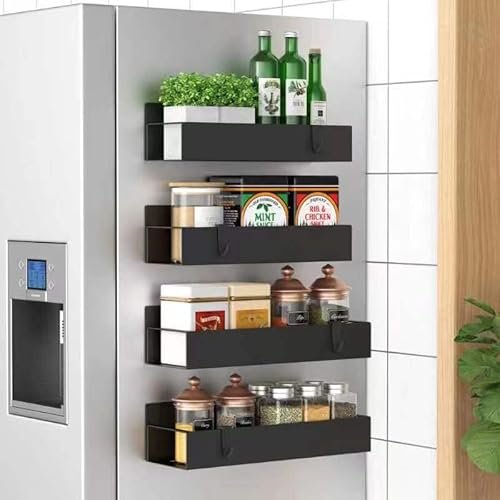
Countertop space is the most valuable real estate in a small kitchen, so the goal here is to free up as much flat surface as possible while keeping daily-use appliances accessible. For small appliance accessories (coffee pods, spice jars for your air fryer, handheld frother attachments), magnetic wall or fridge-mounted organizers are a no-drill, space-saving pick. These attach to any metal surface — including the side of your fridge, oven, or even a metal stand mixer base — to keep small items off your counter without taking up drawer space. They’re especially useful for renters who can’t drill holes in walls or cabinet fronts.
 Magnetic racks attach to metal surfaces like fridge sides to store small appliance accessories without drilling.
The 4-pack HuggieGems magnetic spice rack is a durable, affordable option for this use case: its strong magnetic base stays secure on stainless steel and painted metal surfaces, and the slim profile fits in tight gaps between your fridge and wall. The only tradeoff is that it’s not suitable for larger spice jars or heavy accessories, so reserve it for lightweight, frequently used items.
Tangled cords are the second biggest culprit of cluttered countertops, and they’re also the main reason people avoid tucking appliances into cabinets. Adhesive cord organizers attach directly to the back or side of appliances like stand mixers, pressure cookers, and coffee makers to coil cords neatly, so you can tuck the full device into a cabinet without the cord snagging on other items. A common mistake is wrapping cords too tightly around organizers, which can strain internal wiring over time — leave a little slack to avoid damage.
Magnetic racks attach to metal surfaces like fridge sides to store small appliance accessories without drilling.
The 4-pack HuggieGems magnetic spice rack is a durable, affordable option for this use case: its strong magnetic base stays secure on stainless steel and painted metal surfaces, and the slim profile fits in tight gaps between your fridge and wall. The only tradeoff is that it’s not suitable for larger spice jars or heavy accessories, so reserve it for lightweight, frequently used items.
Tangled cords are the second biggest culprit of cluttered countertops, and they’re also the main reason people avoid tucking appliances into cabinets. Adhesive cord organizers attach directly to the back or side of appliances like stand mixers, pressure cookers, and coffee makers to coil cords neatly, so you can tuck the full device into a cabinet without the cord snagging on other items. A common mistake is wrapping cords too tightly around organizers, which can strain internal wiring over time — leave a little slack to avoid damage.
 Cord winders attach to appliance exteriors to keep cords neatly coiled for tucking into cabinets.
The 6-pack Daisyhome cord organizer set is a good pick for most households: its peel-and-stick adhesive works on smooth plastic and metal appliance surfaces, and the neutral black, white, and grey options match any kitchen décor. The only downside is that adhesive may not hold on textured surfaces like wooden appliance bases, so opt for a reusable silicone cord wrap for those devices.
Cord winders attach to appliance exteriors to keep cords neatly coiled for tucking into cabinets.
The 6-pack Daisyhome cord organizer set is a good pick for most households: its peel-and-stick adhesive works on smooth plastic and metal appliance surfaces, and the neutral black, white, and grey options match any kitchen décor. The only downside is that adhesive may not hold on textured surfaces like wooden appliance bases, so opt for a reusable silicone cord wrap for those devices.
 Multi-pack cord organizers let you manage cords for all your small appliances in one go.
For households with 5+ small appliances, an 8-pack cord organizer set like the Lancord option covers more devices, and its durable plastic construction holds up to daily use. For longer cords on devices like stand mixers or air fryers, you may need two organizers per appliance to coil excess cord neatly.
Multi-pack cord organizers let you manage cords for all your small appliances in one go.
For households with 5+ small appliances, an 8-pack cord organizer set like the Lancord option covers more devices, and its durable plastic construction holds up to daily use. For longer cords on devices like stand mixers or air fryers, you may need two organizers per appliance to coil excess cord neatly.
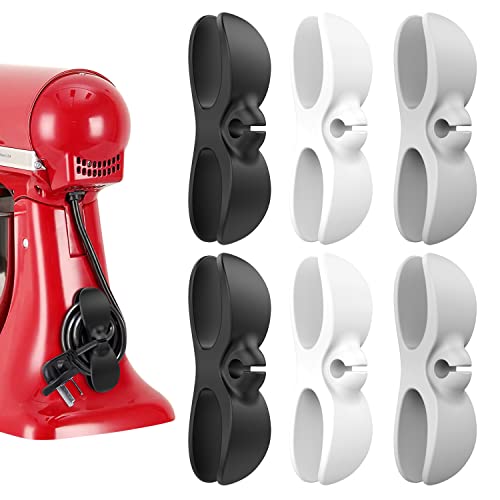 Universal cord keepers fit most small kitchen appliances for easy cord management.
Cabinet and Drawer Storage for Bulky Small Appliances
Deep lower cabinets are ideal for storing heavier, less frequently used small appliances like stand mixers, blenders, and food processors, but they often become black holes for items pushed to the back. The first upgrade for these spaces is adjustable pull-out shelving, which lets you customize shelf height to fit your tallest appliance, and slide the shelf out to access items without crawling into the cabinet. For evidence-based small kitchen layout guidelines, the National Kitchen + Bath Association recommends prioritizing zoned storage for frequently used items to reduce clutter and improve workflow NKBA small kitchen planning.
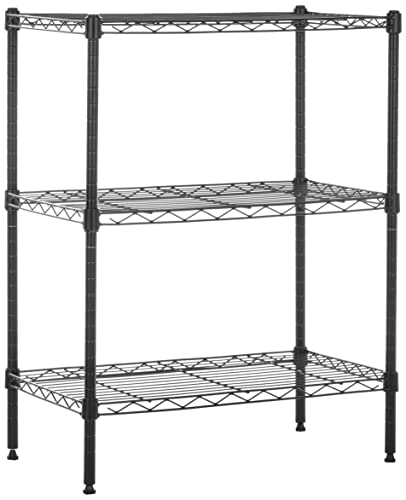 Adjustable wire shelves let you customize height for bulky appliances like stand mixers and blenders.
The Amazon Basics 3-shelf adjustable steel wire rack is a budget-friendly pick for this use case: its heavy-duty construction supports up to 200 lbs per shelf, so it can hold even the heaviest stand mixer with a metal bowl attached. The only tradeoff is its 30-inch height, which may not fit in kitchens with very low cabinet clearance, so measure your cabinet interior before purchasing.
For narrow cabinet gaps or under-sink spaces, a sliding pull-out organizer is a better fit than a full shelf unit. These slide out fully to give you access to items stored in the back of the cabinet, eliminating the need to rummage through clutter. The 2-pack Realinn under-sink organizer is a versatile option: it fits under most standard sinks, and its sturdy construction supports up to 50 lbs per shelf, making it ideal for storing hand-held appliances like immersion blenders, hand mixers, and electric can openers alongside cleaning supplies. The only downside is its limited 11-inch width, which may not fit larger items like full-size blenders.
Adjustable wire shelves let you customize height for bulky appliances like stand mixers and blenders.
The Amazon Basics 3-shelf adjustable steel wire rack is a budget-friendly pick for this use case: its heavy-duty construction supports up to 200 lbs per shelf, so it can hold even the heaviest stand mixer with a metal bowl attached. The only tradeoff is its 30-inch height, which may not fit in kitchens with very low cabinet clearance, so measure your cabinet interior before purchasing.
For narrow cabinet gaps or under-sink spaces, a sliding pull-out organizer is a better fit than a full shelf unit. These slide out fully to give you access to items stored in the back of the cabinet, eliminating the need to rummage through clutter. The 2-pack Realinn under-sink organizer is a versatile option: it fits under most standard sinks, and its sturdy construction supports up to 50 lbs per shelf, making it ideal for storing hand-held appliances like immersion blenders, hand mixers, and electric can openers alongside cleaning supplies. The only downside is its limited 11-inch width, which may not fit larger items like full-size blenders.
 Slide-out under-sink organizers let you access stored small appliances without crawling under the sink.
The 2-pack Pougny under-sink organizer is a similar alternative with added hanging hooks, perfect for storing small appliance attachments like blender jars or food processor blades alongside the main device. If you have young children, install childproof cabinet latches to keep heavy appliances like stand mixers out of reach. For additional childproofing tips, our guide to kitchen safety locks for kids covers all high-risk areas in your cooking space.
Slide-out under-sink organizers let you access stored small appliances without crawling under the sink.
The 2-pack Pougny under-sink organizer is a similar alternative with added hanging hooks, perfect for storing small appliance attachments like blender jars or food processor blades alongside the main device. If you have young children, install childproof cabinet latches to keep heavy appliances like stand mixers out of reach. For additional childproofing tips, our guide to kitchen safety locks for kids covers all high-risk areas in your cooking space.
 Two-tier under-sink baskets are ideal for storing hand-held appliances and cleaning supplies.
Vertical Space Solutions to Free Up Floor and Counter Space
When floor and counter space are at a premium, vertical storage is your best friend. The most underutilized vertical space in most small kitchens is the area above the microwave, which is usually empty dead space. An expandable microwave stand fits over your existing microwave to add a second tier of storage, perfect for holding small appliances like toaster ovens, coffee makers, or even a set of small gadget attachments.
 Expandable microwave stands use dead vertical space above your microwave for extra storage.
The Dolalike expandable microwave rack is a sturdy pick for this use case: its carbon steel construction supports up to 60 lbs, so it can hold even a small toaster oven, and the included hooks let you hang oven mitts, utensil holders, or small appliance cords to save even more space. The only tradeoff is its limited height, which may not fit larger countertop appliances like full-size coffee makers, so measure your microwave and the appliances you want to store before purchasing.
For wasted corner counter space, a 3-tier corner shelf is a space-efficient alternative to a full countertop island. These fit snugly into 90-degree corners to hold multiple small appliances on different tiers, keeping them off your main prep area but still within easy reach. The JayRex 3-tier rustic brown corner shelf is a lightweight, stylish option: its 26.75-inch width fits most standard kitchen corners, and the moveable design lets you reposition it if you rearrange your kitchen layout. The only downside is its 25 lb weight capacity per shelf, so it’s best for lightweight appliances like toasters, coffee makers, and small air fryers.
Expandable microwave stands use dead vertical space above your microwave for extra storage.
The Dolalike expandable microwave rack is a sturdy pick for this use case: its carbon steel construction supports up to 60 lbs, so it can hold even a small toaster oven, and the included hooks let you hang oven mitts, utensil holders, or small appliance cords to save even more space. The only tradeoff is its limited height, which may not fit larger countertop appliances like full-size coffee makers, so measure your microwave and the appliances you want to store before purchasing.
For wasted corner counter space, a 3-tier corner shelf is a space-efficient alternative to a full countertop island. These fit snugly into 90-degree corners to hold multiple small appliances on different tiers, keeping them off your main prep area but still within easy reach. The JayRex 3-tier rustic brown corner shelf is a lightweight, stylish option: its 26.75-inch width fits most standard kitchen corners, and the moveable design lets you reposition it if you rearrange your kitchen layout. The only downside is its 25 lb weight capacity per shelf, so it’s best for lightweight appliances like toasters, coffee makers, and small air fryers.
 Corner countertop shelves fit in wasted kitchen corners for multiple small appliances.
Specialized Storage for Niche Small Appliances
Small, frequently used gadgets like electric kettles, handheld milk frothers, and can openers often end up cluttering the counter because they don’t fit in standard cabinets. For these items, a rustproof sink caddy is a clever storage pick: it sits next to your sink to hold small appliances you use near the sink, keeping them off the counter and protected from water damage. The Cisily 304 stainless steel sink caddy is a durable, rust-resistant option that fits most standard sink sizes, with slots for a sponge, soap dispenser, and small appliance. Its only tradeoff is its compact size, which won’t fit larger gadgets like electric kettles, so reserve it for tiny items like frothers, can openers, and garlic presses.
 Rustproof sink caddies keep small countertop appliances like electric kettles away from water damage.
For small appliance attachments (blender jars, food processor blades, stand mixer beaters) that get lost in deep drawers, a customizable drawer divider is a must-have. These fit into standard kitchen drawers to create separate slots for each attachment, so you can find what you need in seconds without rummaging through clutter.
Rustproof sink caddies keep small countertop appliances like electric kettles away from water damage.
For small appliance attachments (blender jars, food processor blades, stand mixer beaters) that get lost in deep drawers, a customizable drawer divider is a must-have. These fit into standard kitchen drawers to create separate slots for each attachment, so you can find what you need in seconds without rummaging through clutter.
Safety and Maintenance Tips for Stored Small Appliances
Storing small appliances correctly extends their lifespan and reduces household hazards. The U.S. Consumer Product Safety Commission advises unplugging all small appliances when not in use to reduce fire risk, especially for devices with frayed or damaged cords CPSC appliance safety. Never wrap cords tightly around appliance bodies, as this can kink internal wiring and create a fire hazard over time. Avoid storing appliances in damp areas like under the sink unless they’re in a waterproof organizer, as moisture can cause rust and electrical damage. Before storing any appliance, wipe down its exterior and interior with a professional kitchen cleaning brush to remove food residue and grease that can attract pests or cause odors. For tougher grime on appliance exteriors, a heavy-duty kitchen scrub brush works well for scrubbing baked-on food without scratching surfaces. For a full set of organizational tools, check out our kitchen storage blog for more small-space hacks.
Frequently Asked Questions
How do I store small kitchen appliances in a tiny kitchen with no extra cabinet space?
Prioritize daily-use appliances for countertop storage with tiered organizers to free up flat surface area, use magnetic racks for small appliance accessories, and store occasional appliances on high shelves or in under-sink pull-out organizers. Adhesive cord organizers let you tuck appliances into narrow cabinet gaps without tangled cords getting in the way.
Are adhesive cord organizers safe for all kitchen appliances?
Yes, as long as the appliance is unplugged when applying the organizer, and you don’t wrap the cord so tightly that it strains the internal wiring. Avoid using standard adhesive organizers on appliances that generate high heat, like toaster ovens, unless the organizer is explicitly rated as heat-resistant.
Can I store heavy appliances like stand mixers in under-sink organizers?
Yes, if you use a heavy-duty pull-out organizer like the Realinn 2-pack, which is rated for up to 50 lbs per shelf. Make sure the organizer is securely mounted to the cabinet walls with included screws to prevent tipping when fully extended.
How do I keep small appliance cords from tangling when stored in cabinets?
Use stick-on cord winders to coil cords neatly before storing, and avoid wrapping cords around the appliance body, which can kink wiring over time. For longer cords, use a reusable silicone cord tie to secure the coil instead of the adhesive organizer, which may not hold extra length.
Conclusion
Maximizing storage for small kitchen appliances doesn’t require a full renovation or a huge budget — it just requires prioritizing your most-used items, leveraging dead vertical space, and choosing organizers that fit your specific kitchen layout. Simple upgrades like a magnetic rack for accessories, a set of cord winders, and a pull-out under-sink shelf can reclaim 3–5 square feet of counter and cabinet space, making your kitchen feel larger and more functional overnight. For homes with kids or pets, pairing these storage solutions with childproof cabinet latches adds an extra layer of safety, keeping heavy appliances out of reach of curious little hands. With these ideas, even the smallest galley kitchen can be organized, efficient, and enjoyable to cook in.

Hi, I’m Daniel Brooks—a food lover and kitchen gear enthusiast. I enjoy testing cookware, utensils, and gadgets to see what really works in everyday cooking. At PlugChef.com, I share honest reviews, comparisons, and simple guides to help you choose the best tools for a safer, smarter, and more enjoyable kitchen.
Related posts:
 Best Kitchen Gadgets Under $20: Affordable Tools for Every Culinary Task
 Under Cabinet Hidden Kitchen Outlets: Revolutionize Your Space-Saving Solutions
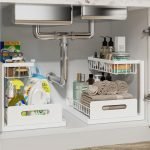 Shelf for Under Kitchen Sink: Maximize Space with Pull-Out Organizers
 Best Beeswax Wraps for Zero Waste Kitchen: Eco-Friendly Food Storage Solution
 10 Portable Kitchen Air Cleaner: Powerful, Quiet Range Hoods for Smoke-Free Cooking
 Mr Muscle Kitchen Cleaner: Ultimate Solution for Sparkling Clean Surfaces