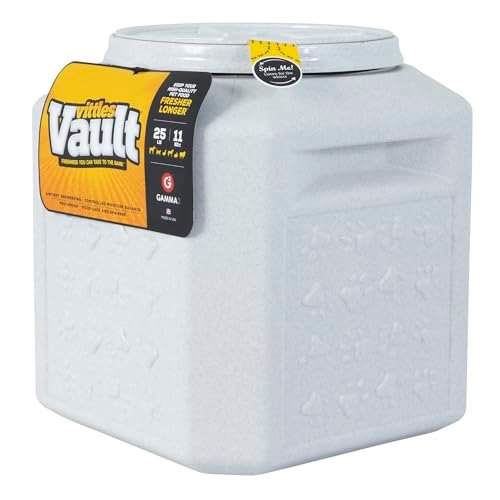
Every pet owner has faced the frustration of dumping out stale, pest-ridden kibble after leaving a pet food bag unsealed for just a few days. Beyond wasted money, contaminated pet food can cause digestive upset, vitamin deficiencies, and even exposure to harmful mold or mycotoxins. Animal proof food storage containers solve this problem by creating an airtight, pest-resistant barrier that locks in freshness and keeps unwanted critters out of your home.
The U.S. Food and Drug Administration (FDA) warns that dry pet food exposed to air, moisture, or high temperatures can spoil quickly, losing nutritional value and growing dangerous mold FDA pet food storage guidelines. Whether you store food in a kitchen pantry, garage, or outdoor shed, the right container will protect your pet’s meals and your home from infestations. Below, we break down the key features to look for, top picks for every household size, and pro tips to get the most out of your storage solution.
Why Standard Pet Food Storage Falls Short
Most pet owners default to storing dry food in its original flimsy bag, folded over with a chip clip, or tucked into a regular plastic storage bin. Neither option offers real protection: original bags are not airtight, so moisture and air seep in within days, causing kibble to go stale and fats to turn rancid. They also offer zero resistance to pests: mice can chew through paper and thin plastic in minutes, and ants will crawl through even the tiniest gaps to reach the food inside.
Regular plastic bins also lack the structural integrity to withstand chewing from determined raccoons or rodents, and many are made with BPA, a chemical that can leach into food when exposed to heat, posing long-term health risks to pets. A common mistake is assuming a "snap-tight" lid is enough to keep food fresh, but these seals often fail over time, especially if the bin is moved frequently or stored in a hot garage.
Key Features to Look for in Animal Proof Food Storage Containers
Not all containers marketed as "pet proof" are created equal. Prioritize these features to ensure you’re getting a product that will actually keep food fresh and secure:
- Airtight, locking seal: Look for containers with a rubber gasket and locking lid (twist-lock or latch-style) rather than a simple snap lid. The seal should be tight enough that you have to apply pressure to open it, and no air or scent should escape when you press on the lid.
- Chew-resistant, BPA-free construction: Thick, high-density plastic is far more durable than thin, flexible bins, and will resist chewing from rodents and raccoons. BPA-free materials ensure no harmful chemicals leach into your pet’s food, even if the container is stored in a warm space.
- Opaque or UV-resistant material: Clear containers may look convenient for checking food levels, but UV light breaks down sensitive vitamins (A, E, and B complex) in kibble over time. Opaque or tinted containers block light to preserve nutritional value.
- Capacity matched to your needs: Measure how much food you buy at once (most standard bags are 15, 25, 30, or 40lb) and choose a container that fits that amount with a little extra room for easy scooping. Avoid buying a container that’s too large, as it will trap excess air inside every time you open it, accelerating spoilage.
- Mobility features: For full 50+lb containers, look for built-in wheels or reinforced handles to avoid straining your back when moving heavy loads between the garage and house.
- Easy-to-clean design: Smooth, seamless interiors with no hard-to-reach corners make cleaning between refills simple, preventing old kibble crumbs from building up and attracting pests.
For tough, stuck-on kibble residue, a heavy-duty scrub brush will scrub away crumbs without scratching the plastic interior.
Top Animal Proof Food Storage Containers for Every Need
We’ve organized the most popular, high-performing options by use case to help you find the right fit for your household.
Small Capacity Options (10–25 lbs, ideal for single small pets or apartment dwellers)
Gamma2 Vittles Vault 10–15 Pound Pet Food Container
 Tiny footprint fits easily on apartment kitchen counters or small pantry shelves.
This ultra-compact container is perfect for studio apartments or households with a single cat that eats a 10–15lb bag of food every 4–6 weeks. It features Gamma2’s patented airtight seal, BPA-free construction, and is proudly made in the USA. At just 3.5lbs empty, it’s light enough to move even when full of kibble.
Tiny footprint fits easily on apartment kitchen counters or small pantry shelves.
This ultra-compact container is perfect for studio apartments or households with a single cat that eats a 10–15lb bag of food every 4–6 weeks. It features Gamma2’s patented airtight seal, BPA-free construction, and is proudly made in the USA. At just 3.5lbs empty, it’s light enough to move even when full of kibble.
- Pros: Airtight seal locks out moisture and pests, USA-made construction, compact size fits on countertops or small shelves, BPA-free.
- Cons: Limited 10–15lb capacity is too small for large dogs or multi-pet homes, gray finish may not match all decor. Shop this container on Amazon
Gamma2 Vittles Vault 20-Pound Pet Food Container
 Compact, USA-made container perfect for storing a single small pet's monthly food supply.
A step up in capacity, this 20lb model fits a standard medium bag of dog or cat food, with the same patented airtight seal and durable USA-made construction as the smaller model. Its 12"L x 13.75"H dimensions fit easily in most pantries or utility closets.
Compact, USA-made container perfect for storing a single small pet's monthly food supply.
A step up in capacity, this 20lb model fits a standard medium bag of dog or cat food, with the same patented airtight seal and durable USA-made construction as the smaller model. Its 12"L x 13.75"H dimensions fit easily in most pantries or utility closets.
- Pros: Airtight seal keeps food fresh for up to 6 months, USA-made quality, compact size, lightweight at 3.5lbs.
- Cons: 20lb capacity is insufficient for large breed dogs, gray finish may not suit all home aesthetics. For households with curious pets that dart into open pantries, pairing this container with pantry safety latches adds an extra layer of protection for both pet food and human snacks. Shop this container on Amazon
IRIS USA WeatherPro 10-Pound Airtight Pet Food Container
 Translucent design lets you monitor kibble levels at a glance without breaking the airtight seal.
This small, lightweight container is ideal for storing bird seed, small-bag cat food, or training treats. Its WeatherPro airtight seal keeps moisture and pests out, while the translucent body lets you check food levels at a glance without opening the lid. It’s made in the USA with BPA-free plastic, and weighs just 1.15lbs empty.
Translucent design lets you monitor kibble levels at a glance without breaking the airtight seal.
This small, lightweight container is ideal for storing bird seed, small-bag cat food, or training treats. Its WeatherPro airtight seal keeps moisture and pests out, while the translucent body lets you check food levels at a glance without opening the lid. It’s made in the USA with BPA-free plastic, and weighs just 1.15lbs empty.
- Pros: See-through design for easy level checks, WeatherPro seal blocks moisture and pests, lightweight, USA-made.
- Cons: 10lb capacity is too small for full bags of dog food, some users prefer fully opaque containers to block light. Shop this container on Amazon
Medium Capacity Options (20–30 lbs, ideal for single large pets or 2–3 small pets)
Gamma2 Vittles Vault 25-Pound Pet Food Container
 Compact footprint fits in most pantries while holding a full 25lb bag of premium kibble.
The original 25lb Gamma2 model is a workhorse for single large dog households, with a patented airtight seal that locks out moisture and pests, and a compact 12"L x 13.75"H footprint that fits in even small pantries. It’s made in the USA with BPA-free plastic, and weighs just 1lb empty, making it easy to lift and refill.
Compact footprint fits in most pantries while holding a full 25lb bag of premium kibble.
The original 25lb Gamma2 model is a workhorse for single large dog households, with a patented airtight seal that locks out moisture and pests, and a compact 12"L x 13.75"H footprint that fits in even small pantries. It’s made in the USA with BPA-free plastic, and weighs just 1lb empty, making it easy to lift and refill.
- Pros: Airtight seal keeps food fresh for up to 6 months, compact size fits in tight spaces, USA-made, lightweight.
- Cons: 25lb capacity is too small for multi-dog homes, gray finish may not match decor, not stackable. For pantry storage in homes with both pets and young children, no-drill cabinet locks can prevent unsupervised access to pet food and treats. Shop this container on Amazon
IRIS USA 30-Pound Airtight Pet Food Container with Wheels
 Built-in wheels make moving 30lb of kibble effortless, even for users with limited mobility.
This 30lb container is perfect for pet owners who store food in a garage or basement and struggle to lift heavy bags. It features a snap-lid airtight seal, BPA-free construction, attached wheels for easy rolling, and a translucent body to check food levels at a glance. It also has a one-hand opening mechanism, so you can refill your pet’s bowl while holding a leash or bag of treats.
Built-in wheels make moving 30lb of kibble effortless, even for users with limited mobility.
This 30lb container is perfect for pet owners who store food in a garage or basement and struggle to lift heavy bags. It features a snap-lid airtight seal, BPA-free construction, attached wheels for easy rolling, and a translucent body to check food levels at a glance. It also has a one-hand opening mechanism, so you can refill your pet’s bowl while holding a leash or bag of treats.
- Pros: Wheels eliminate heavy lifting, one-hand open design, translucent body, BPA-free.
- Cons: Black finish may not suit all decor, plastic construction is less durable than metal alternatives. Shop this container on Amazon
Large Capacity Options (40–60 lbs, ideal for multiple large pets or bulk buyers)
Mighty Tuff 54-Pound Airtight Pet Food Container
 Oversized 54lb capacity cuts down on weekly pet food runs for multi-dog households.
This massive 13-gallon container holds up to 54lb of kibble, making it ideal for households with 2+ large breed dogs that go through food quickly. It features a twist-lock airtight seal that is far more secure than standard snap lids, reinforced metal handles that don’t bend when full, and BPA-free construction, all made in the USA. The sandstone base and cool gray lid blend seamlessly with most garage or pantry decor.
Oversized 54lb capacity cuts down on weekly pet food runs for multi-dog households.
This massive 13-gallon container holds up to 54lb of kibble, making it ideal for households with 2+ large breed dogs that go through food quickly. It features a twist-lock airtight seal that is far more secure than standard snap lids, reinforced metal handles that don’t bend when full, and BPA-free construction, all made in the USA. The sandstone base and cool gray lid blend seamlessly with most garage or pantry decor.
- Pros: Twist-lid seal is 100% pest and moisture-proof, 54lb capacity reduces store runs, reinforced metal handles, USA-made BPA-free construction.
- Cons: Bulky 23" height is too tall for small pantries, weighs 12lbs when full, difficult for one person to lift without using the handles. Shop this container on Amazon
Gamma2 Vittles Vault Stackable 60-Pound Pet Food Container
 Stackable design maximizes vertical storage space in small garages or pantries.
For pet owners who buy food in bulk for 3+ large dogs, this 60lb stackable container is a space-saving solution. It features Gamma2’s signature airtight sealing lid, durable USA-made construction, and a stackable base that lets you add a second container on top for 120lb of total storage. At 19" tall, it fits under most garage shelves or pantry countertops.
Stackable design maximizes vertical storage space in small garages or pantries.
For pet owners who buy food in bulk for 3+ large dogs, this 60lb stackable container is a space-saving solution. It features Gamma2’s signature airtight sealing lid, durable USA-made construction, and a stackable base that lets you add a second container on top for 120lb of total storage. At 19" tall, it fits under most garage shelves or pantry countertops.
- Pros: 60lb large capacity, stackable design saves floor space, airtight seal, USA-made.
- Cons: 19" height is too tall for low shelves, weighs 6lbs when full, gray finish may not match decor. Shop this container on Amazon
IRIS USA WeatherPro 58-Pound Airtight Pet Food Container
 Attachable wheels let you roll heavy full containers across uneven garage floors easily.
This 58lb container is built for garage or shed storage, with a weatherproof airtight seal that blocks moisture from rain or humidity, and attachable wheels that make moving 58lb of kibble across uneven concrete floors effortless. The smoke gray opaque finish blocks UV light to preserve kibble nutrients, and it’s made in the USA with BPA-free plastic.
Attachable wheels let you roll heavy full containers across uneven garage floors easily.
This 58lb container is built for garage or shed storage, with a weatherproof airtight seal that blocks moisture from rain or humidity, and attachable wheels that make moving 58lb of kibble across uneven concrete floors effortless. The smoke gray opaque finish blocks UV light to preserve kibble nutrients, and it’s made in the USA with BPA-free plastic.
- Pros: Weatherproof seal for garage/shed use, attachable wheels for easy mobility, opaque finish blocks light, 58lb large capacity.
- Cons: Bulky footprint takes up more floor space, wheels are not suitable for stairs. Shop this container on Amazon
Multi-Pack and Value Options
Mighty Tuff 5-Gallon (21-Pound) Pet Food Container 2-Pack
 Two-pack lets you store two different types of kibble (e.g., adult and puppy) separately to avoid cross-contamination.
This value 2-pack is perfect for households with pets on different diets, such as a senior dog on joint support kibble and a puppy on growth formula. Each 5-gallon (21lb) container has a twist-lid airtight seal, reinforced metal handles, and BPA-free construction, so you can store each diet separately without worrying about cross-contamination.
Two-pack lets you store two different types of kibble (e.g., adult and puppy) separately to avoid cross-contamination.
This value 2-pack is perfect for households with pets on different diets, such as a senior dog on joint support kibble and a puppy on growth formula. Each 5-gallon (21lb) container has a twist-lid airtight seal, reinforced metal handles, and BPA-free construction, so you can store each diet separately without worrying about cross-contamination.
- Pros: Two separate containers for different diets, twist-lid airtight seal, reinforced metal handles, value pack.
- Cons: Not stackable, takes up more floor space than a single large bin. Shop this 2-pack on Amazon
IRIS USA 30-Pound Airtight Pet Food Container 2-Pack
 Two-pack set is ideal for multi-pet homes that need separate storage for dog and cat food.
This matching 2-pack includes two 30lb containers, each with an attached wheel set, snap-lid airtight seal, and one-hand opening mechanism. The clear/black finish lets you easily tell which container holds dog food and which holds cat food, no labeling required. It’s made in the USA with BPA-free plastic.
Two-pack set is ideal for multi-pet homes that need separate storage for dog and cat food.
This matching 2-pack includes two 30lb containers, each with an attached wheel set, snap-lid airtight seal, and one-hand opening mechanism. The clear/black finish lets you easily tell which container holds dog food and which holds cat food, no labeling required. It’s made in the USA with BPA-free plastic.
- Pros: Separate storage for different pet diets, wheels for easy mobility, one-hand open design, see-through design.
- Cons: Plastic construction is less durable than metal, takes up more floor space than a single large bin. Shop this 2-pack on Amazon
Pro Tips for Maximizing Pet Food Freshness and Security
Even the best animal proof container won’t work if you don’t use it correctly. Follow these expert tips to get the most out of your investment:
- Always transfer food out of the original bag: Original pet food bags are designed for shipping, not long-term storage. They are not airtight, and pests can chew through them in minutes. Empty the entire bag into your animal proof container, then seal the original bag and store it somewhere pest-free in case you need to reference lot numbers for recalls.
- Store containers in a cool, dry place: University of Minnesota Extension experts recommend keeping pet food in a space below 80°F to prevent fat rancidity and nutrient degradation UMN Extension pet food storage guide. Avoid garages that get extremely hot in summer or damp basements where moisture can seep into containers.
- Clean containers regularly: Empty and wash your container every 2–3 refills with warm, soapy water. Use a sturdy cleaning brush to scrub the seal gasket and interior corners where kibble crumbs build up, then air dry completely before refilling to avoid moisture buildup.
- Avoid overfilling: Leave 1–2 inches of space at the top of the container when refilling. This makes it easier to seal the lid tightly, and reduces the amount of air trapped inside that can accelerate spoilage.
- Don’t mix old and new food: Empty the last of the old kibble before refilling with a new bag. Mixing old and new food can spread any mold or bacteria from the stale food to the fresh batch.
Frequently Asked Questions
Do animal proof containers really keep pests out?
Yes. High-quality animal proof containers use thick, chew-resistant BPA-free plastic and locking airtight seals that block the strong scent of pet food, which is what attracts pests like ants, mice, raccoons, and even curious house cats. Unlike regular plastic bins, these containers have no gaps for small pests to chew through, and the airtight seal prevents moisture from entering, which also stops mold and mycotoxin growth that can make pets sick. In rural or pest-prone areas, twist-lid models outperform snap-lid options, as they create a tighter seal that even determined rodents cannot breach.
Can I store wet pet food in these containers?
Most animal proof pet food containers are designed for dry kibble, pellets, and treats only. Wet food has a high moisture content that can cause mold to grow inside sealed containers, even airtight ones. For unopened wet food cans, store them in a cool, dry pantry, and transfer opened cans to the refrigerator, using them within 3–5 days to avoid spoilage.
How often should I clean my pet food storage container?
Clean your container every 2–3 refills, or immediately if you notice stale odors, crumbs, or mold spots. Wash with warm, soapy water, scrub all corners and the seal gasket with a sturdy cleaning brush to remove stuck-on kibble residue, then air dry completely before refilling to prevent moisture buildup.
Are animal proof containers safe for outdoor use?
Yes, many models are rated for outdoor use in garages, sheds, or covered patios. Look for containers made with UV-resistant plastic and weatherproof seals to prevent cracking from sun exposure and moisture from rain or snow. Avoid leaving containers in direct sunlight for extended periods, as heat can warp plastic and degrade pet food nutrients faster.
Can I store other items like bird seed or livestock feed in these containers?
Absolutely. Most animal proof containers are versatile enough to store bird seed, horse feed, chicken scratch, and even dry human pantry items like rice or flour, as long as you clean the container thoroughly between uses to avoid cross-contamination of scents and allergens.
Conclusion
Storing pet food in a high-quality animal proof container is one of the simplest, most cost-effective ways to protect your pet’s health and keep pests out of your home. By locking out moisture, air, and unwanted critters, these containers preserve the nutritional value of your pet’s food, reduce waste from spoiled kibble, and eliminate the mess of pest infestations.
The right container depends on your pet’s size, how much food you buy at once, and where you plan to store it. For small apartments with a single cat, a 10–20lb compact model like the Gamma2 15lb vault is ideal. For multi-pet homes that buy in bulk, a 50+lb model with wheels like the IRIS USA 58lb WeatherPro will cut down on heavy lifting and store runs. For households with pets on different diets, a multi-pack of separate containers avoids cross-contamination of formulas.
For additional household safety solutions to keep your home tidy and hazard-free, browse our range of drawer and cabinet safety latches designed for both pet-proofing and childproofing.

I’m Abby Lu, a passionate home cook who loves simplifying everyday meals. At PlugChef.com, I share product reviews and cooking guides to help you find the best tools for your kitchen.
Related posts:
 Best Kitchen Gadgets Under $20: Affordable Tools for Every Culinary Task
 Under Cabinet Hidden Kitchen Outlets: Revolutionize Your Space-Saving Solutions
 Shelf for Under Kitchen Sink: Maximize Space with Pull-Out Organizers
 Best Beeswax Wraps for Zero Waste Kitchen: Eco-Friendly Food Storage Solution
 Industrial Kitchen Cleaning Products: Top Heavy-Duty Degreasers for Tough Grease
 Kitchen Hood Cleaning Spray: Top Degreasers to Eliminate Grease Fast