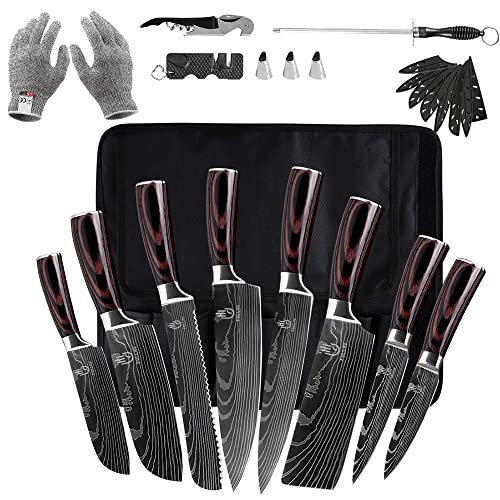
Whether you’re a weekend home cook or a professional line chef, the choice between Japanese and German kitchen knives can make the difference between effortless, precise prep and frustrating, uneven cuts. Both styles have earned global reputations for quality, but they are engineered for different cooking styles, maintenance preferences, and skill levels. In this guide, we’ll break down the core technical differences between the two, outline ideal use cases for each, review top-performing models across both categories, and share expert-backed care tips to keep your blades performing for years. By the end, you’ll be able to choose the perfect knife set to match your culinary needs and unlock the ultimate cutting precision in your kitchen.
Core Differences Between Japanese and German Kitchen Knives
Understanding the fundamental design and material differences between the two styles is the first step to choosing the right blade for your needs.
Blade Geometry and Edge Angle
Japanese-style knives feature a thinner, more delicate blade profile, sharpened to a 15–16° edge angle per side. This narrow edge slices through food with minimal drag, delivering clean, precise cuts ideal for delicate tasks like filleting fish or julienning vegetables. German-style knives, by contrast, have a thicker, more robust blade sharpened to a 20–22° edge angle per side. The wider edge is more durable and resistant to chipping, making it better suited for heavy-duty chopping and prying tasks.
Steel Composition and Hardness
Japanese knives typically use high-carbon steel alloys (such as VG10, SG2, or AUS-10) hardened to 60–65 on the Rockwell C scale (HRC). For official standards on cutlery materials and performance, the American Knife & Tool Institute publishes detailed guidance on steel grades and manufacturing best practices. This higher hardness delivers exceptional edge retention and sharpness, but also makes the blade more prone to chipping if used incorrectly. German knives most often use softer, more ductile stainless steel grades (such as 1.4116 or X50CrMoV15) hardened to 56–59 HRC. This lower hardness makes the blade more forgiving of rough use and easier to sharpen for beginners, though it will require more frequent honing to maintain its edge.
Handle Design and Ergonomics
Traditional Japanese knives often feature lightweight, compact handles made from pakkawood, composite materials, or ho wood, designed for maximum control and reduced hand fatigue during long prep sessions. Many have a partial tang design, where the blade extends only partway into the handle, keeping the overall weight low. German knives almost always use a full tang design, where the blade runs the entire length of the handle, paired with durable synthetic or hardwood handles. This construction adds weight for more powerful chopping motion and reduces the risk of the handle breaking under stress.
Weight and Balance
Japanese knives are significantly lighter on average, with most 8-inch chef’s knives weighing 6–8 ounces. This low weight enhances maneuverability for precise, detailed work. German knives typically weigh 8–12 ounces for the same blade length, with a balance point closer to the handle for more powerful, stable chopping. This extra weight reduces user fatigue for long prep sessions involving large quantities of food.
Ideal Use Cases for Each Style
There is no universal "better" style — the right choice depends entirely on how you cook.
When to Choose Japanese-Style Knives
Japanese-style knives are the best pick if your cooking prioritizes finesse and precision. They excel at delicate tasks: slicing sashimi to paper-thin consistency, mincing herbs without bruising, creating uniform julienne cuts of vegetables, and deboning soft fish. They are also ideal for cooks with smaller hands or limited counter space, thanks to their lightweight, maneuverable design. Keep in mind they require more careful maintenance: avoid cutting hard ingredients like frozen food, bone, or ceramic plates, and hand wash and dry immediately after use to prevent rust.
When to Choose German-Style Knives
German-style knives are the better choice if you need a versatile, low-maintenance workhorse for everyday cooking. They handle heavy-duty tasks with ease: breaking down whole chickens, chopping hard root vegetables like carrots and squash, crushing garlic, and prepping large batches of ingredients for meal prep. Their durable steel is forgiving of improper use and sharpening, making them ideal for beginner cooks, busy home chefs, and line cooks who need a reliable blade that can stand up to high-volume use. For context, FDA food safety guidance notes that sharp, well-maintained knives also reduce cross-contamination risk by making clean, smooth cuts that minimize food residue left on blades.
Top Picks for Japanese-Style Precision Knives
These models deliver the finesse and sharpness Japanese cutlery is known for, with modern durability upgrades for home use.
Hoshanho 7-Inch Nakiri Knife
 Classic Japanese nakiri design optimized for precise vegetable preparation
The nakiri is a staple of Japanese cutlery, designed exclusively for vegetable prep with a straight, thin blade that slices through produce without crushing it. This 7-inch model from Hoshanho is forged from Japanese high-carbon stainless steel hardened to 61 HRC, delivering exceptional sharpness and edge retention. The ergonomic pakkawood handle provides a secure, non-slip grip, and the knife weighs just 0.7 pounds to reduce hand fatigue during extended prep sessions.
Pros:
Classic Japanese nakiri design optimized for precise vegetable preparation
The nakiri is a staple of Japanese cutlery, designed exclusively for vegetable prep with a straight, thin blade that slices through produce without crushing it. This 7-inch model from Hoshanho is forged from Japanese high-carbon stainless steel hardened to 61 HRC, delivering exceptional sharpness and edge retention. The ergonomic pakkawood handle provides a secure, non-slip grip, and the knife weighs just 0.7 pounds to reduce hand fatigue during extended prep sessions.
Pros:
- Thin, straight blade delivers clean, even cuts of vegetables without bruising
- High-carbon steel holds an edge for months with regular honing
- Lightweight, ergonomic handle suitable for users with smaller hands
- Rust-resistant finish requires minimal maintenance for a Japanese-style knife Cons:
- 7-inch blade length is too short for large cutting boards or big prep tasks
- Thin edge is prone to chipping if used on hard ingredients like squash or bone Common use cases: Julienning carrots, slicing cucumbers for sushi, mincing herbs, prepping stir-fry vegetables. Shop the Hoshanho 7-Inch Nakiri Knife on Amazon to upgrade your vegetable prep routine.
Matsato 5.8-Inch Chef Knife
 Compact Japanese-style knife ideal for precision tasks and on-the-go use
This compact Japanese-style chef’s knife (also called a petty knife) is perfect for detail work, small-kitchen spaces, and even outdoor cooking. Its 5.8-inch blade is forged from high-carbon steel hardened to 62 HRC, delivering razor-sharp precision for tasks like peeling fruit, trimming meat, slicing small vegetables, and even prepping food while camping or at a BBQ. Weighing just 0.388 pounds, it’s easy to maneuver for users with limited hand strength or dexterity.
Pros:
Compact Japanese-style knife ideal for precision tasks and on-the-go use
This compact Japanese-style chef’s knife (also called a petty knife) is perfect for detail work, small-kitchen spaces, and even outdoor cooking. Its 5.8-inch blade is forged from high-carbon steel hardened to 62 HRC, delivering razor-sharp precision for tasks like peeling fruit, trimming meat, slicing small vegetables, and even prepping food while camping or at a BBQ. Weighing just 0.388 pounds, it’s easy to maneuver for users with limited hand strength or dexterity.
Pros:
- Ultra-sharp 62 HRC edge makes quick work of small, detailed prep tasks
- Lightweight, balanced design reduces hand fatigue during long use
- Compact size fits easily in kitchen drawers, camping gear, or BBQ toolkits
- Full tang construction adds durability for on-the-go use Cons:
- Small blade length is not suitable for chopping large quantities of food
- Hard edge requires careful storage and regular honing to maintain sharpness Common use cases: Trimming meat, peeling fruit, slicing small vegetables, camping meal prep. Shop the Matsato 5.8-Inch Chef Knife for a versatile, portable precision blade.
Top Picks for German-Style Durable Knives
These models deliver the durability and versatility German cutlery is known for, with low-maintenance designs for busy cooks.
KEEMAKE 3-Piece Santoku Knife Set
 Versatile German steel santoku set for everyday kitchen tasks
This 3-piece set from KEEMAKE combines the versatile santoku blade shape (a Japanese design popularized by German cutlery) with durable German 1.4116 stainless steel hardened to 57 HRC. The set includes a 5-inch utility knife, 7-inch santoku, and 8-inch chef’s knife, all with ergonomic pakkawood handles and full tang construction for balanced, stable chopping. The softer steel is highly resistant to chipping and easy to sharpen, making it perfect for everyday multi-purpose use.
Pros:
Versatile German steel santoku set for everyday kitchen tasks
This 3-piece set from KEEMAKE combines the versatile santoku blade shape (a Japanese design popularized by German cutlery) with durable German 1.4116 stainless steel hardened to 57 HRC. The set includes a 5-inch utility knife, 7-inch santoku, and 8-inch chef’s knife, all with ergonomic pakkawood handles and full tang construction for balanced, stable chopping. The softer steel is highly resistant to chipping and easy to sharpen, making it perfect for everyday multi-purpose use.
Pros:
- German 1.4116 steel is rust-resistant and durable for heavy use
- Full tang construction adds weight and balance for powerful chopping
- 3-piece set covers all common home cooking tasks
- Ergonomic pakkawood handles provide a secure, non-slip grip Cons:
- Softer steel requires more frequent honing than high-hardness Japanese blades
- Heavier weight may cause fatigue for users with smaller hands during long prep Common use cases: Chopping vegetables, slicing meat, mincing herbs, general meal prep. Shop the KEEMAKE 3-Piece Santoku Knife Set on Amazon for a low-maintenance, versatile everyday set.
WICKWILLOW 7-Inch Santoku Knife
 Full-tang German steel santoku built for heavy-duty kitchen work
This 7-inch santoku from WICKWILLOW is forged from DIN-certified 1.4116 German stainless steel hardened to 58 HRC, with a full tang construction for maximum balance and stability. The Granton edge (small grooves along the blade) reduces food drag, making it easy to slice through sticky ingredients like potatoes or cheese without them sticking to the blade. It comes in a gift box, making it a great pick for cooking enthusiasts.
Pros:
Full-tang German steel santoku built for heavy-duty kitchen work
This 7-inch santoku from WICKWILLOW is forged from DIN-certified 1.4116 German stainless steel hardened to 58 HRC, with a full tang construction for maximum balance and stability. The Granton edge (small grooves along the blade) reduces food drag, making it easy to slice through sticky ingredients like potatoes or cheese without them sticking to the blade. It comes in a gift box, making it a great pick for cooking enthusiasts.
Pros:
- DIN-certified German steel ensures consistent quality and rust resistance
- Full tang design adds weight for stable, powerful chopping of tough ingredients
- Granton edge reduces food drag for smoother slicing
- Ergonomic handle provides comfort during extended use Cons:
- 12.7-inch overall length may be too large for small kitchen storage spaces
- Softer edge requires regular honing to maintain sharpness for precision cuts Common use cases: Chopping root vegetables, slicing cheese, prepping large batches of ingredients, breaking down small cuts of meat. Shop the WICKWILLOW 7-Inch Santoku Knife for a durable, all-purpose workhorse.
Hybrid Japanese-German Knives for Balanced Performance
Many modern knife brands blend the precision of Japanese design with the durability of German steel, offering the best of both worlds for home cooks who don’t want to compromise.
FULLHI 14-Piece Knife Set
 Hybrid design combines Japanese-style blade profiles with German steel durability for everyday use
This 14-piece set from FULLHI uses premium German stainless steel (hardened to 58 HRC) forged into Japanese-inspired blade profiles, with ergonomic coffee wood handles for a traditional, comfortable grip. The set includes a chef’s knife, paring knife, bread knife, utility knife, and 10 steak knives, plus a storage block, making it a complete solution for home cooks. The rust-resistant steel is low-maintenance, while the thin blade profile delivers clean, precise cuts.
Pros:
Hybrid design combines Japanese-style blade profiles with German steel durability for everyday use
This 14-piece set from FULLHI uses premium German stainless steel (hardened to 58 HRC) forged into Japanese-inspired blade profiles, with ergonomic coffee wood handles for a traditional, comfortable grip. The set includes a chef’s knife, paring knife, bread knife, utility knife, and 10 steak knives, plus a storage block, making it a complete solution for home cooks. The rust-resistant steel is low-maintenance, while the thin blade profile delivers clean, precise cuts.
Pros:
- German stainless steel is rust-resistant and easy to sharpen
- Japanese-style blade profiles reduce food drag for clean cuts
- 14-piece set covers every common home cooking task
- Stylish coffee wood handles add aesthetic appeal to any kitchen Cons:
- Set is heavier than all-Japanese knife sets, which may cause fatigue for some users
- Lower hardness than pure Japanese steel means less long-term edge retention Common use cases: Everyday meal prep, hosting dinner parties, slicing bread, prepping steak for grilling. This set pairs perfectly with a heavy-duty cleaning brush for kitchen tools to keep blades and handles in top condition. Shop the FULLHI 14-Piece Knife Set on Amazon for a complete, low-maintenance kitchen solution.
HOSHANHO 16-Piece Knife Set with Built-In Sharpener
 Japanese-style precision with built-in maintenance for easy at-home care
This 16-piece set from HOSHANHO uses Japanese high-carbon stainless steel hardened to 61 HRC for exceptional sharpness, paired with a built-in sharpener in the storage block to simplify maintenance. The set includes 6 kitchen knives, 6 steak knives, kitchen scissors, and a sharpener, with ergonomic handles designed for comfortable, non-slip grip. It’s a great pick for users who want Japanese-style precision without the hassle of professional sharpening.
Pros:
Japanese-style precision with built-in maintenance for easy at-home care
This 16-piece set from HOSHANHO uses Japanese high-carbon stainless steel hardened to 61 HRC for exceptional sharpness, paired with a built-in sharpener in the storage block to simplify maintenance. The set includes 6 kitchen knives, 6 steak knives, kitchen scissors, and a sharpener, with ergonomic handles designed for comfortable, non-slip grip. It’s a great pick for users who want Japanese-style precision without the hassle of professional sharpening.
Pros:
- Japanese high-carbon steel delivers razor-sharp precision for detailed cuts
- Built-in sharpener makes at-home edge maintenance fast and easy
- 16-piece set covers every home and professional cooking need
- Ergonomic handles reduce hand fatigue during long prep sessions Cons:
- High-carbon steel requires more careful cleaning to prevent rust than German stainless
- Full block set takes up significant counter space in small kitchens Common use cases: Detailed vegetable prep, slicing meat, mincing herbs, hosting dinner parties. For households with young children, pair this set with easy-install cabinet locks for kids to keep sharp tools out of reach. Shop the HOSHANHO 16-Piece Knife Set on Amazon for a complete, low-hassle precision set.
Brewin CHEFILOSOPHI 5-Piece Japanese Chef Knife Set
 Professional-grade Japanese knife set with ergonomic red pakkawood handles
This 5-piece set from Brewin is designed for serious home cooks and professional chefs who want premium Japanese-style performance. The blades are forged from high-carbon stainless steel hardened to 62 HRC, with ultra-sharp edges that hold their sharpness for months with proper care. The ergonomic red pakkawood handles provide a secure, comfortable grip, and the set includes a chef’s knife, paring knife, utility knife, bread knife, and santoku for full prep versatility.
Pros:
Professional-grade Japanese knife set with ergonomic red pakkawood handles
This 5-piece set from Brewin is designed for serious home cooks and professional chefs who want premium Japanese-style performance. The blades are forged from high-carbon stainless steel hardened to 62 HRC, with ultra-sharp edges that hold their sharpness for months with proper care. The ergonomic red pakkawood handles provide a secure, comfortable grip, and the set includes a chef’s knife, paring knife, utility knife, bread knife, and santoku for full prep versatility.
Pros:
- 62 HRC hardness delivers exceptional sharpness and edge retention
- Ergonomic pakkawood handles reduce hand fatigue during long prep sessions
- 5-piece set covers all common professional and home cooking tasks
- Sleek red handles add a stylish touch to any kitchen Cons:
- High price point makes it a significant investment for casual home cooks
- Hard edges require careful use and regular honing to avoid chipping Common use cases: Professional kitchen use, gourmet home cooking, precise slicing of fish and meat, intricate garnish work. Shop the Brewin CHEFILOSOPHI 5-Piece Knife Set for premium, professional-grade performance.
67-Layer Damascus Chef Knife
 Premium 67-layer Damascus Japanese knife with natural olive wood handle
This single 8-inch chef’s knife is forged from 67 layers of Japanese high-carbon Damascus steel, a construction that delivers exceptional strength, corrosion resistance, and a distinctive wavy patterned finish. The blade is hardened to 63 HRC for ultra-sharp, long-lasting edge retention, and paired with a natural olive wood handle shaped for ergonomic grip. It comes in a wooden gift box, making it a perfect present for culinary enthusiasts.
Pros:
Premium 67-layer Damascus Japanese knife with natural olive wood handle
This single 8-inch chef’s knife is forged from 67 layers of Japanese high-carbon Damascus steel, a construction that delivers exceptional strength, corrosion resistance, and a distinctive wavy patterned finish. The blade is hardened to 63 HRC for ultra-sharp, long-lasting edge retention, and paired with a natural olive wood handle shaped for ergonomic grip. It comes in a wooden gift box, making it a perfect present for culinary enthusiasts.
Pros:
- 67-layer Damascus construction is highly durable and rust-resistant
- 63 HRC hardness delivers industry-leading sharpness and edge retention
- Unique patterned finish adds a premium aesthetic to any kitchen
- Natural olive wood handle provides a comfortable, secure grip Cons:
- Premium price point makes it a luxury purchase for most home cooks
- Hard edge requires careful maintenance to avoid chipping and rust Common use cases: Gourmet home cooking, professional precision tasks, gift-giving for cooking enthusiasts. Shop the 67-Layer Damascus Chef Knife for a premium, high-performance blade.
How to Care for Japanese and German Kitchen Knives
Proper maintenance will extend the life of your blades by years and keep them performing at their best. The care routine varies slightly between the two styles due to their different steel hardness.
Sharpening and Honing Best Practices
For Japanese-style high-carbon knives, use a 1000-grit whetstone for regular sharpening, and a 3000-grit whetstone for polishing the edge. Avoid pull-through sharpeners, which can chip the hard, thin edge. For German-style softer steel knives, a pull-through sharpener is acceptable for casual home use, but a whetstone will deliver a longer-lasting, more precise edge. For both styles, hone the blade with a honing steel every 2–3 uses to realign the edge and extend the time between full sharpenings. A common mistake is using a honing steel at the wrong angle — match the angle to your blade’s edge angle (15–16° for Japanese, 20–22° for German) for best results.
Cleaning and Storage Guidelines
Always hand wash both Japanese and German knives immediately after use with mild soap and warm water. Dishwashers can dull edges, corrode handles, and cause blades to bang against other utensils, leading to chips and nicks. Dry blades immediately with a soft cloth to prevent rust, especially for Japanese high-carbon steel which is more prone to oxidation than German stainless steel. For storage, use a knife block, magnetic wall strip, or blade guards to protect the edge and prevent accidental cuts. Never store knives loose in a drawer where they can be damaged or cause injury. If you have young children in the home, cabinet safety latches can keep sharp tools stored safely out of reach.
Long-Term Maintenance Tips
For Japanese knives, apply a thin layer of food-safe mineral oil to the blade once a month if you live in a humid climate to prevent rust. For German knives, occasional oiling of the handle (if wooden) will prevent cracking and drying. Have both styles professionally sharpened once every 1–2 years to maintain optimal edge performance. In practice, most home cooks find that German-style knives require sharpening only once or twice a year, while high-end Japanese knives need professional sharpening every 6–12 months depending on use.
Frequently Asked Questions
Are Japanese knives sharper than German knives?
Yes, typically. Japanese knives are forged to a 15–16° edge angle per side, compared to 20–22° for German knives. This thinner edge delivers finer, more precise cuts, but also makes Japanese blades more prone to chipping if used on hard surfaces like frozen food, bone, or ceramic plates.
Do German knives rust easily?
Most modern German knives use stainless steel (such as 1.4116) which is highly rust-resistant. However, they can still corrode if left wet for extended periods, so hand washing and immediate drying is recommended for both styles.
Can I use a Japanese knife for tough tasks like breaking down a chicken?
You can, but it is not recommended. The thin, hard edge of a Japanese knife is prone to chipping when prying, twisting, or cutting through hard bone. Use a German-style cleaver or boning knife for these tasks to preserve your Japanese knife’s edge.
Which style is better for beginner cooks?
German-style knives are generally better for beginners. Their softer, more durable steel is more forgiving of improper use and sharpening techniques, and their heavier weight provides more stability for new users still building confidence and knife skills. Pairing a new German knife set with a convenient soap-dispensing scrub brush makes post-prep cleanup fast and easy for new cooks still learning kitchen routines.
What is the difference between a santoku and a German chef’s knife?
Santoku knives, originating from Japan, have a shorter, wider blade with a Granton edge (small grooves) that reduce food drag, making them ideal for slicing, dicing, and mincing. German chef’s knives have a curved belly designed for rocking cuts, and are typically longer, making them better for chopping large quantities of food. Many modern santokus use German steel, blending the precision of Japanese design with the durability of German construction.
Do Japanese knives require special maintenance?
Japanese high-carbon knives require more careful care than German stainless steel models. Always hand wash and dry them immediately after use to prevent rust, avoid cutting hard ingredients that can chip the edge, and store them in a protective sheath or knife block. Regular honing every 2–3 uses and professional sharpening every 6–12 months will keep them performing at their best.
Conclusion
The choice between Japanese and German kitchen knives comes down to your cooking style, skill level, and willingness to perform regular maintenance. Japanese-style knives are the top pick for cooks who prioritize precision, delicate cuts, and finesse for tasks like sushi preparation, vegetable julienning, and fish filleting. German-style knives are the better option for home cooks and line chefs who need a durable, low-maintenance workhorse for heavy-duty chopping, meal prep, and everyday use. If you want the best of both worlds, hybrid models that combine Japanese blade geometry with German steel are an excellent middle ground. No matter which style you choose, investing in a high-quality knife set will transform your cooking experience, making prep faster, safer, and more enjoyable. For more tips to make your kitchen safer and more efficient, explore our full range of childproofing and kitchen organization tools to create a space that works for your whole family. Happy cooking!

Hi, I’m Daniel Brooks—a food lover and kitchen gear enthusiast. I enjoy testing cookware, utensils, and gadgets to see what really works in everyday cooking. At PlugChef.com, I share honest reviews, comparisons, and simple guides to help you choose the best tools for a safer, smarter, and more enjoyable kitchen.
Related posts:
 Best Cheap Espresso Machine: Affordable Picks for Perfect Home Brews
 Four Piece Kitchen Appliance Set: Elevate Your Culinary Experience Effortlessly
 Best Spinners for Salmon Fishing: Top Lures for Ultimate Catch Success
 Best Tool to Cut Pizza: Top Cutters for Perfect Slices Every Time
 Best Olive Oil Sprayers for Cooking, Air Fryer, Salad, and BBQ Use
 Kitchen Cleaning Scrub Brush: Ultimate Tools for Deep Grease and Grime Removal