
A clean bamboo cutting board looks great and keeps your kitchen safe. Bamboo is harder and less porous than many hardwoods, but it still needs gentle, regular care to avoid warping, stains, and bacteria-harboring knife grooves. This guide gives clear, practical steps for everyday cleaning, sanitizing after raw meat, deep-deodorizing, repairing and maintaining your bamboo board so it lasts for years.
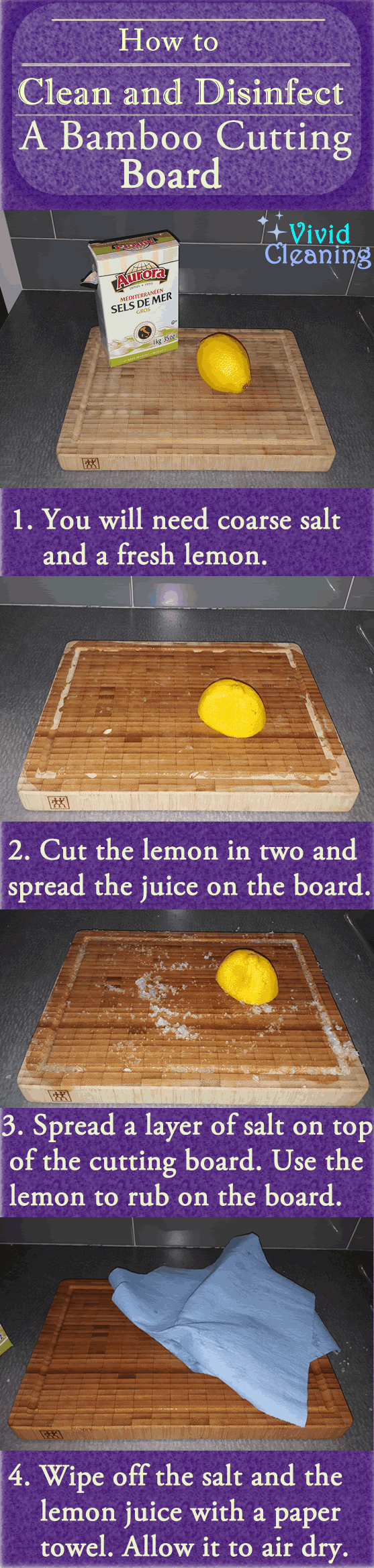
Credit: www.vividcleaning.ca
Quick rinse and gentle soap are the foundation of safe cleaning.
Quick overview: three routines depending on use
- Daily clean (vegetables, fruit, bread): mild soap + warm water, dry.
- After raw meat/fish/poultry: clean, then sanitize (see sanitizing steps).
- Monthly deep care: light sanding if needed, then oil or board cream.
For official, general guidance on food safety for kitchen surfaces see the CDC and for broader home food-safety resources consult the USDA — they cover cleaning vs. disinfecting and safe household sanitizers as part of food safety best practices (CDC Food Safety, USDA).
What you need
- Mild dish soap (non-abrasive).
- Warm water (not boiling).
- Soft sponge or cloth; optional soft-bristled brush for grooves.
- White vinegar and baking soda (for odors/stains).
- Household bleach (for occasional sanitizing after raw meat) or an EPA-registered sanitizer — use per label/CDC guidance.
- Food-grade mineral oil or a dedicated cutting board oil/cream (no olive or vegetable oil).
- Clean towel and a drying rack or vertical storage spot.
Daily hand-washing: step-by-step (under 5 minutes)
- Scrape off food scraps with a bench scraper or spatula.
- Rinse under warm running water to remove loose debris.
- Apply a small amount of mild dish soap to a soft sponge. Scrub the board in the direction of the grain (or use circular motions for surface dirt); focus on any discolored or sticky spots.
- Rinse thoroughly with warm water; remove all soap.
- Immediately dry both sides with a clean towel, then stand the board upright in a dish rack until fully air-dry. DO NOT soak or leave submerged.
In practice: drying immediately prevents water from seeping into the bamboo fibers and reduces chances of warping or mold.
Cleaning after raw meat, poultry, or seafood (safer approach)
- Clean first using the daily wash steps.
- Sanitize next: prepare a fresh diluted bleach solution or follow the sanitizer product instructions (CDC and USDA provide guidance on household sanitizers). A commonly used household bleach dilution for sanitizing food-contact surfaces is household bleach diluted in water — follow CDC/USDA directions and the bleach manufacturer’s label. Wipe the sanitizer over the board, let stand the recommended contact time, then rinse and dry thoroughly.
- Alternatively, use hot water and a reliable kitchen disinfectant labeled for food-contact surfaces — always follow label directions.
Important: Do not rely on vinegar alone to sanitize after raw meats — vinegar helps deodorize but is not a registered sanitizer for killing all pathogens.
Deep clean & deodorize (monthly or as needed)
- For stuck-on stains or odors: sprinkle baking soda over the surface, add a few drops of water to make a paste, gently scrub with a soft brush, then rinse and dry.
- For odors: rub the board with half a lemon (cut side down) then rinse and dry. The acid helps deodorize and remove light stains.
- For discoloration from juices: a paste of baking soda + water or a diluted white vinegar spray can lift stains — test on a small area first.
If odors persist after cleaning and sanitizing, consider sanding the surface (see repair section).
Repairing deep gouges and resurfacing
When knife grooves are deep they can trap bacteria and be difficult to clean. If cuts are noticeable or the surface is rough:
- Start with dry sanding using 120–150 grit sandpaper to remove high spots and grooves.
- Finish with 220 grit for a smooth surface. Sand with the grain.
- Wipe away dust with a damp cloth, let fully dry.
- Re-oil the board (see maintenance) to restore moisture and finish.
A resurfaced board looks and performs like new; the process takes 15–30 minutes depending on the board size.

Credit: www.wikihow.com
Oiling and conditioning (prevents cracking and makes water bead)
- How often: oil when you see water stop beading (typically every 1–3 months depending on use and climate). In dry climates or with heavy use, oil more often. Monthly is a good rule for frequent users.
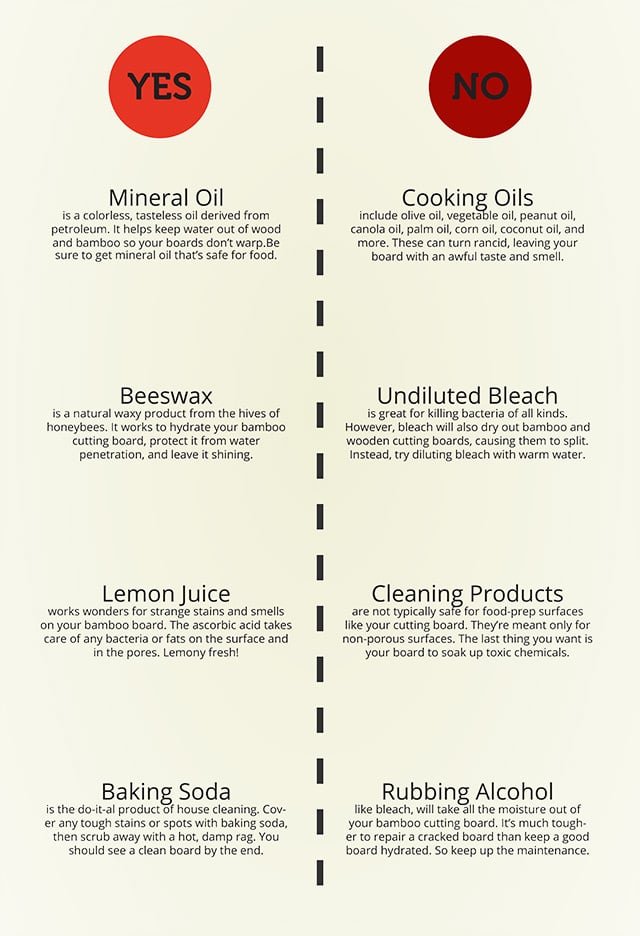
- What to use: food-grade mineral oil (odorless, tasteless) or a purpose-made board oil/board cream that contains beeswax or carnauba wax. Avoid culinary vegetable oils (olive, canola) — they can go rancid.
- How to oil:
- Make sure the board is clean and fully dry.
- Pour a small amount of oil onto the board and spread evenly with a soft cloth or paper towel, covering all surfaces and edges.
- Let oil soak in for at least 2 hours (overnight is fine).
- Wipe off excess oil and buff to a smooth finish.
For an extra protective finish, use a board cream (oil + wax) after oiling to add water resistance.

Credit: totallybamboo.com
Before-and-after of a board treated with mineral oil and board cream.
Storage and drying best practices
- Always dry completely before storing — moisture invites mold and warping.
- Store boards upright in a rack so both faces get air; do not stack while damp.
- Keep away from direct heat sources (stove, radiator) and direct sunlight — these can dry the board unevenly and cause cracks.
- If storing in a cabinet, ensure the area is dry and well-ventilated.
Common mistakes and how to avoid them
- Dishwasher: Never put bamboo boards in the dishwasher — heat + agitation + detergent will warp and split them.
- Soaking: Do not soak; long exposure to water causes swelling, delamination, and splitting.
- Using vegetable oils for conditioning: They oxidize and go rancid; use mineral oil or a proper board oil instead.
- Harsh scrubbing: Steel wool or harsh abrasives will scar the surface and increase bacteria-harboring grooves. Use soft brushes or sponges.
- Ignoring deep cuts: Deep, persistent grooves should be sanded out — they trap bacteria even with regular cleaning.
Quick troubleshooting
- Persistent odor after cleaning: sanitize per CDC/USDA guidance, then sand lightly and re-oil.
- White spots after oiling: wipe excess oil and buff vigorously — white haze is excess oil that didn’t absorb.
- Warped board: slight warps can sometimes be flattened by placing the board between flat weights and leaving it in a dry place for several days; severe warping usually means replacement.
When to replace your bamboo cutting board
Replace your board if:
- Cuts are so deep they can’t be sanded out easily.
- The board splits, delaminates, or has mold that won’t clean off.
- It’s become excessively thin or uneven, compromising safe cutting.
A well-cared-for bamboo board can last many years, but safety and hygiene come first.
Comparison: cleaning methods at a glance
| Situation | Clean | Sanitize? | Notes |
|---|---|---|---|
| Daily produce/bread | Mild soap + warm water | No | Dry immediately |
| Raw meat/fish/poultry | Soap + warm water | Yes (bleach solution or sanitizer per label) | Rinse off sanitizer and dry |
| Stains/odors | Baking soda paste or lemon scrub | Optional | Test first; sand if persistent |
| Deep gouges | Sand + oil | Yes after sanding if used with raw meat | Resurface and recondition |
FAQs (short answers)
Can I use vinegar to disinfect a bamboo board?
Vinegar helps deodorize and remove light grime, but it is not a registered sanitizer for killing all pathogens. Use vinegar for odors, and use an appropriate sanitizer (per CDC/USDA guidance) after raw meat.How long should I let oil soak in?
Let oil soak at least 2 hours; overnight is fine for best absorption. Wipe excess off afterward.Is bamboo more sanitary than plastic?
Bamboo is naturally antimicrobial to some extent and less porous than some woods, but sanitation depends on care — cleaning, drying, and resurfacing when needed. No material is inherently “self-cleaning.”Can I use cutting board oil alternatives like coconut oil?
Fractionated (refined) coconut oil is more stable, but standard coconut oil can solidify or go rancid; mineral oil or commercial board oils/creams are safest.
Conclusion — quick care checklist
- After every use: scrape, wash with mild soap + warm water, rinse and dry immediately.
- After raw meat: clean then sanitize following CDC/USDA guidance, rinse and dry.
- Monthly: inspect for deep cuts, sand if necessary, and oil or apply board cream when water no longer beads.
- Never soak or use the dishwasher; avoid vegetable oils.
Protect the look and safety of your bamboo cutting board with simple, consistent care. Try this 2-minute daily routine today: scrape, soap-scrub, rinse, towel-dry — and oil monthly for long-lasting results.

Hi, I’m Daniel Brooks—a food lover and kitchen gear enthusiast. I enjoy testing cookware, utensils, and gadgets to see what really works in everyday cooking. At PlugChef.com, I share honest reviews, comparisons, and simple guides to help you choose the best tools for a safer, smarter, and more enjoyable kitchen.
Related posts:
 How to Make a Fruit Basket for a Gift: Easy DIY Guide
 Do You Need a Basket? Essential Guide for Air Fryers
 How to Choose Kitchen Appliances: Expert Tips Revealed
 Kitchen Cabinets With Black Stainless Steel Appliances: Modern Elegance
 White Kitchen Cabinets Stainless Steel Appliances: Timeless Elegance
 Top 10 Best Non-Toxic Cooking Utensils – Safe & Durable Choices for Healthy Homes

