
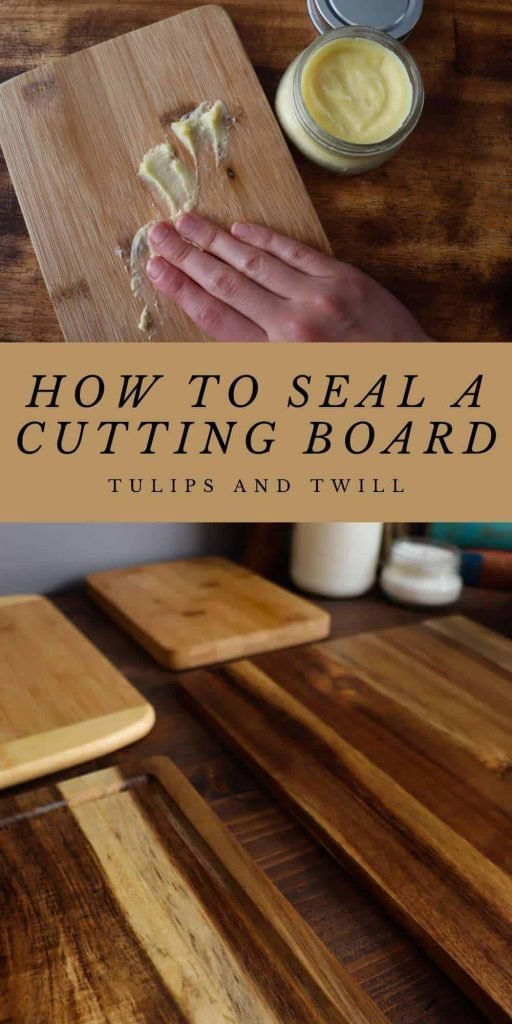
A well-sealed cutting board looks better, resists stains and odors, and lasts far longer. This guide walks you through proven, food-safe methods for sealing cutting boards, from prepping and choosing the right products to troubleshooting common problems and maintaining the finish. Read on for step-by-step instructions, practical trade-offs, and clear next steps so your board stays safe and beautiful for years.
Quick overview: why sealing matters
Sealing a cutting board:
- Reduces water absorption and warping.
- Limits bacteria-harboring cracks.
- Enhances grain and color without creating a brittle film. For boards you actually use for food prep, prefer penetrating, food-safe finishes (oils and wax blends) rather than surface film finishes like polyurethane, which can chip under knife use.
What finishes are best for cutting boards (and why)
Use finishes intended for direct food contact. Below is a concise comparison:
| Finish type | Typical products | Food-contact suitability | Durability | Notes |
|---|---|---|---|---|
| Penetrating mineral oil | USP food-grade mineral oil | Excellent | Moderate — needs reapplication | Odorless; won’t go rancid |
| Oil + wax (board butter) | Mineral oil + beeswax | Excellent | Higher than oil alone | Best balance of water resistance and repairability |
| 100% tung oil (fully cured) | Pure tung oil | Acceptable if fully cured | Good | Some products labeled “food-safe when cured” — follow manufacturer directions |
| Raw linseed, olive, vegetable oils | Flaxseed/olive | Not recommended | Poor | Can go rancid and stain |
| Film finishes (polyurethane, epoxy) | Polyurethane, cured epoxy | Not recommended for cutting surfaces | Very durable but brittle | OK for display-only boards, not for active cutting surfaces |
In practice, the simplest, most reliable choice for a daily-use cutting board is food-grade mineral oil or a mineral oil + beeswax board butter.
(Authoritative note: for food-safety and cleaning practices, follow guidance from food-safety authorities such as the U.S. Department of Agriculture and the U.S. Food and Drug Administration for safe handling of food-contact surfaces: USDA, FDA.)
Tools and materials you’ll need
- Food-grade mineral oil (USP or labeled “cutting board oil”)
- Beeswax pellets or pastilles (food-grade) for board butter
- Clean, lint-free cloths or paper towels
- Sandpaper: 120, 180, 220 grit (or a random-orbital sander)
- Vacuum or brush and tack cloth to remove dust
- Small saucepan and heat-safe bowl for melting beeswax (double-boiler)
- Measuring spoon or scale (for recipes)
- Rubber gloves and masking tape (optional)
Step-by-step: preparing the board (detailed)
- Clean the board. Wipe away crumbs, then wash with warm water and mild dish soap. Never submerge end-grain boards or run them in the dishwasher. Rinse, then towel-dry.
- Remove old finish or stains. If the board is raw or has old finish buildup, sand the surface. Start with 120 grit to level gouges, move to 180, then finish at 220 grit for a tactilely smooth surface. For severe stains, a light pass with 80–100 grit may be needed first.
- Sand with the grain. Always sand along the wood grain to avoid cross-grain scratches. When surfaces are even, round the edges slightly (1–2 mm radius) so they don’t feel sharp.
- Clean dust thoroughly. Vacuum and wipe with a tack cloth or damp microfiber. Wait until the board is fully dry (air-dry 30–60 minutes) before oiling. In practice, even small amounts of residual dust interfere with absorption and look.
Preparing properly reduces the number of oiling cycles to achieve a uniform finish.
Applying oil: recommended method and timings
Mineral oil doesn’t “cure” like varnish; it soaks in and needs periodic reapplication.
- Warm the oil (optional): place the oil bottle in warm water for 10 minutes to improve absorption.
- First coat — generous application: pour ~1–2 tablespoons per square foot directly on the board and rub in with a cloth, working along the grain. For end-grain boards, use a little more—end grain soaks oil quickly.
- Let it penetrate: allow 30–60 minutes for the oil to soak in. For very dry boards, you can let the first coat soak for several hours or overnight.
- Wipe off excess: after soaking, wipe the surface with a clean cloth until there’s no tacky residue. Excess oil sitting on the surface attracts dust.
- Repeat: apply a second and third coat (same method), letting each coat penetrate 30–60 minutes. Stop once the wood no longer soaks up oil. In practice most boards need 2–4 coats on first treatment.
- Final rest: let the board sit for 12–24 hours before heavy use. Mineral oil is food-safe immediately, but the board performs better after an overnight rest.
Common mistake: applying thin coats and not allowing penetration — it looks finished but the wood will quickly dry out. Be generous on the first treatment.
Making and applying board butter (oil + beeswax)
A beeswax layer provides extra surface protection and a silky feel.
Simple recipe (by volume): 1 part beeswax : 4 parts mineral oil. Example: 1 tbsp beeswax, 4 tbsp mineral oil.
How to make and use:
- Melt beeswax in a double boiler, then stir in warmed mineral oil until fully combined. Cool slightly and pour into a jar.
- To apply: use a soft cloth, rub a small amount of board butter in circular motion. Let it sit 20–30 minutes to penetrate, then buff off excess. For a deeper effect, apply a thin layer, warm the board slightly (sunlight or low hair dryer) to help penetration, then buff.
Board butter is best used as a maintenance coating after the initial oiling.
Alternatives and safety notes
- Tung oil: only use 100% pure tung oil products labeled food-safe when fully cured. These require long cure times and multiple coats.
- Avoid raw linseed oil, olive oil, or most vegetable oils — they can go rancid.
- Film finishes (polyurethane, lacquer, epoxy) are not recommended for a cutting surface because they chip and are difficult to repair; they are better for decorative boards that won’t be cut on.
- If you use cleaners or solvents: do not use them on the board surface unless followed by a thorough rinse and re-oiling. For stubborn sticky residue, lightly sand, clean, then reapply oil.
Maintenance schedule — how often to re-treat
- Light-use home board (vegetables, occasional meat): reapply oil every 2–3 months.
- Frequent-use board (daily food prep): reapply monthly. Check weekly for dryness.
- Board butter top-up: every 1–2 months or whenever the board looks dull.
A quick home test: sprinkle a few drops of water on the surface. If the water beads, the finish is performing well; if it darkens and soaks in quickly, re-oil.
Cleaning and sanitation (do’s and don’ts)
Do:
- Wash with warm water and mild soap, then dry immediately.
- Disinfect occasionally with 3% hydrogen peroxide or white vinegar — apply, let sit briefly, then rinse. The USDA and FDA provide guidance on safe food-contact surface handling for home kitchens.
- Use coarse salt and half a lemon to scrub and deodorize stains and odors.
Don’t:
- Don’t soak the board or put it in a dishwasher.
- Don’t use bleach regularly — it can degrade the wood and finishes.
- Don’t leave standing food debris on the board for long periods.
Repairing scratches, deep cuts, or cracks
- Small knife marks: sand lightly with 180–220 grit and re-oil.
- Deeper gouges: sand down to remove the gouge; if it compromises the board thickness, consider re-gluing end-grain strips (use a waterproof wood glue like Titebond III) or replacing the section.
- Long cracks: clean out loose fibers, glue with food-safe, waterproof glue, clamp until dry, sand flush, then re-oil.
If you’re unsure about a structural repair, test on a scrap, or consult a local woodworker.
Troubleshooting common issues
- Sticky surface after wax: you used too much wax or didn’t buff. Remove excess with a cloth and a little warm soapy water, then sand very lightly and reapply a thin coat.
- Uneven absorption: caused by uneven sanding or patchy grain—sand smooth and apply generous coats until absorption evens out.
- Rancid smell: likely vegetable oil was used — sand the surface down and switch to mineral oil or a board butter.
Frequently asked questions
Q: Can I use olive oil or coconut oil?
A: Avoid olive and most vegetable oils because they can oxidize and go rancid. Fractionated (liquid) coconut oil is more stable but not standard practice—prefer food-grade mineral oil or a board butter.
Q: Is mineral oil safe to eat?
A: Food-grade mineral oil (USP) is considered safe for incidental food contact and is widely recommended for cutting boards. Follow product labeling.
Q: How long does a sealed board last?
A: With proper care, a sealed hardwood cutting board can last many years. Lifespan depends on use, knife habits, and maintenance frequency.
Q: Can I seal butcher-block countertops the same way?
A: Yes — mineral oil and board butter are appropriate for wooden countertops, but larger surfaces may benefit from commercial maintenance oils and more frequent application. For commercial kitchens, follow local health codes.
Quick checklist before you start
- Board is clean, sanded to 220 grit, and dry.
- You have food-grade mineral oil and optional beeswax.
- You’ve set aside 1–2 hours for initial application and an overnight rest.
- You’re ready to reapply periodically based on use.
Try one simple action now: buy a small bottle of USP mineral oil and treat your board tonight—apply two liberal coats and let it rest overnight. Your board will look richer and resist stains better tomorrow.
Conclusion
Sealing a wooden cutting board correctly is straightforward and highly effective: prepare the surface, use a food-safe penetrating oil (or oil + beeswax), allow proper soak and rest times, and perform regular maintenance. These routines prevent warping, reduce bacteria-harboring cracks, and keep your board attractive and usable for years. Follow the steps above, avoid vegetable oils and dishwasher abuse, and you’ll extend the life and safety of your cutting board.
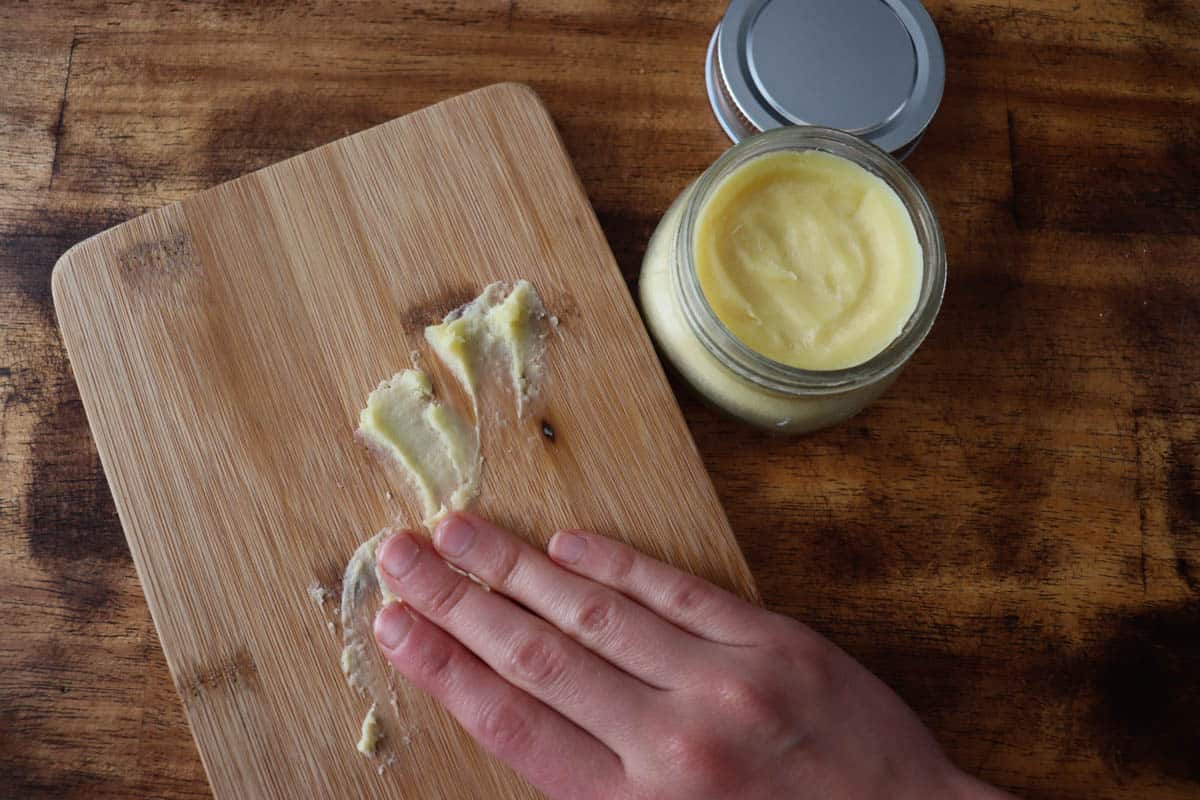 Applying a beeswax and mineral oil board butter to a wooden cutting board
Credit: tulipsandtwill.com
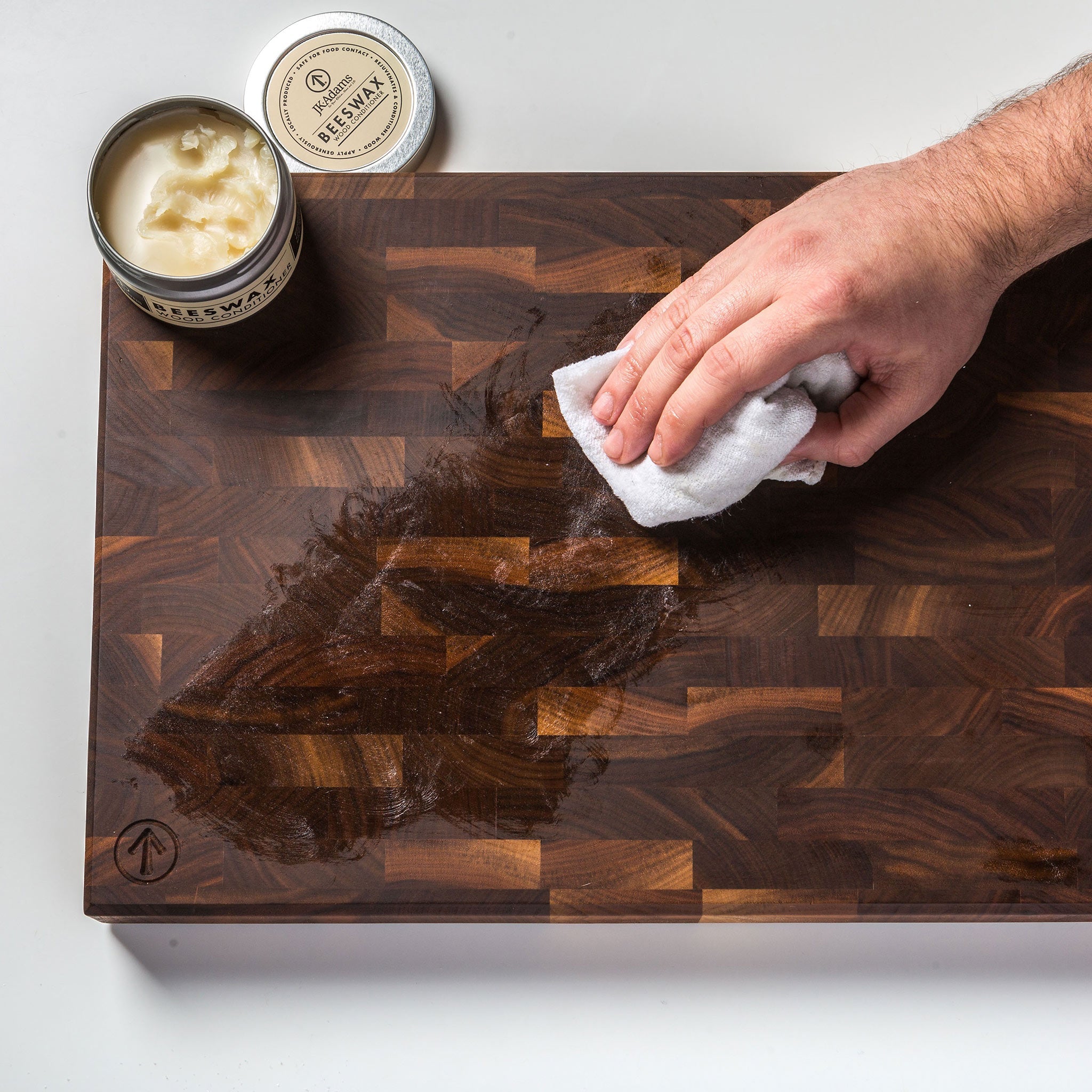 Rubbing warmed beeswax mixture onto the wood surface
Credit: www.jkadams.com
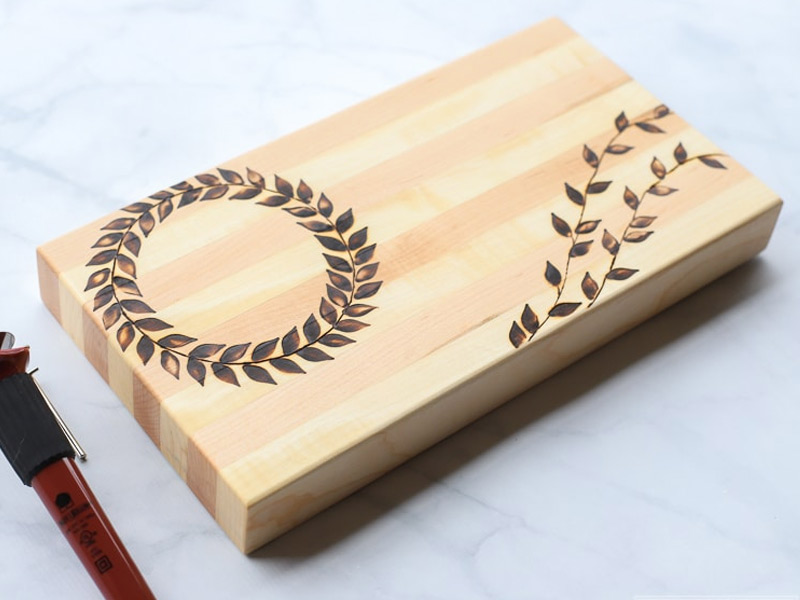 Final smoothing and oiling after sanding a cutting board
Credit: en.chefstudio.vn Small, practical reminders before you start your first treatment: always test new finishes on a scrap or an inconspicuous corner; work in a well-ventilated area when using concentrated products; and label any homemade board butter container with ingredients and date.
Final pro tip: keep a small bottle of mineral oil near your sink or pantry. In practice, boards that get a quick 1–2 minute oil rub once every couple of weeks stay in far better shape than those that wait until they show obvious wear. A fast weekly check (water bead test) and a monthly maintenance wipe will keep your board usable and sanitary without a lot of effort.
If you want step-by-step demonstration videos or manufacturer application guides, look for reputable makers of food-grade mineral oil and beeswax who provide application instructions. For handling and food-contact safety guidance applicable to home kitchens, consult current advice from food-safety authorities such as the U.S. Department of Agriculture and the U.S. Food and Drug Administration.
Take action: buy a small bottle of USP mineral oil and a jar of food-grade beeswax this week and give your cutting board its first full oiling—your board will look and perform better immediately.

Hi, I’m Daniel Brooks—a food lover and kitchen gear enthusiast. I enjoy testing cookware, utensils, and gadgets to see what really works in everyday cooking. At PlugChef.com, I share honest reviews, comparisons, and simple guides to help you choose the best tools for a safer, smarter, and more enjoyable kitchen.
Related posts:
 How to Make a Fruit Basket for a Gift: Easy DIY Guide
 Do You Need a Basket? Essential Guide for Air Fryers
 How to Choose Kitchen Appliances: Expert Tips Revealed
 Kitchen Cabinets With Black Stainless Steel Appliances: Modern Elegance
 White Kitchen Cabinets Stainless Steel Appliances: Timeless Elegance
 Top 10 Best Non-Toxic Cooking Utensils – Safe & Durable Choices for Healthy Homes

