
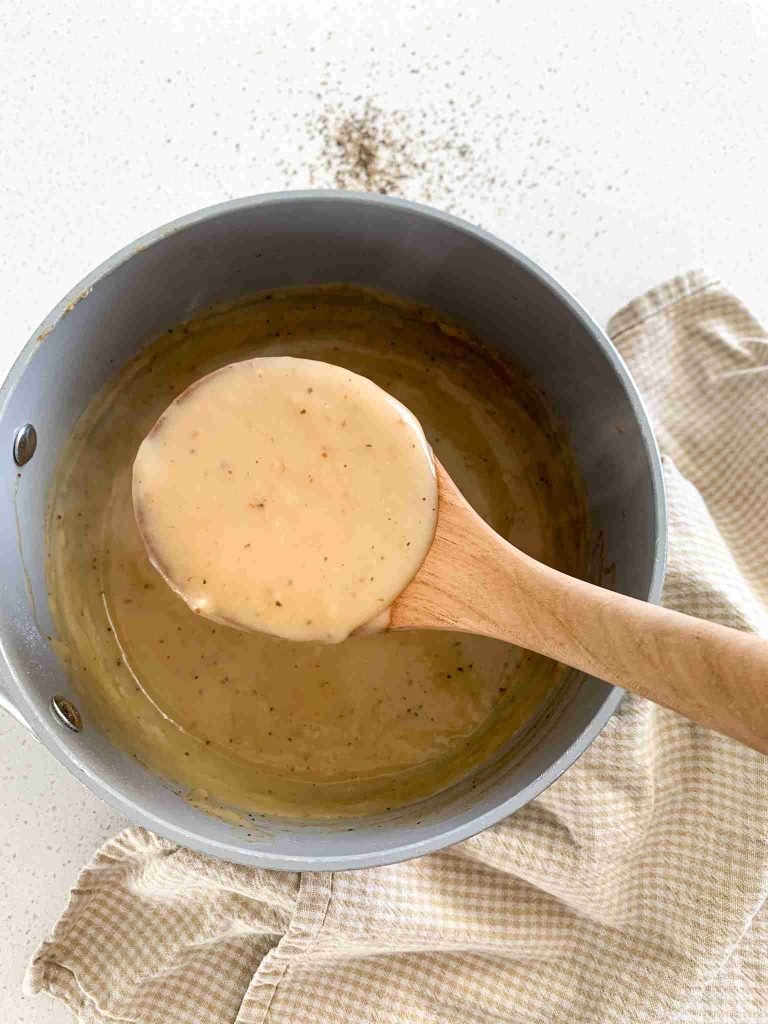
A thin, watery gravy can make a great meal feel unfinished. This guide shows reliable, kitchen-tested methods to fix runny gravy quickly and to prevent the problem in future batches. You’ll learn how different thickeners work, clear step-by-step techniques, troubleshooting for common problems, and storage/reheating advice so your gravy stays smooth and delicious.
Quick overview: Which fix to use when
- Need an instant fix: cornstarch slurry or arrowroot slurry.
- Want richer flavor and long-term stability: make or add a roux.
- Avoiding gluten: use cornstarch, arrowroot, potato starch, or pureed vegetables.
- Freezing required: tapioca or potato starch hold up better than cornstarch.
- Low-sodium or extra-flavor: reduce the gravy gently to concentrate taste.
Why gravy goes watery (the science, in plain language)
Gravy thickens when starch molecules absorb water and swell—a process called gelatinization. Proteins and emulsified fats also contribute to body. Common causes of thin gravy:
- Too much liquid (broth, pan juices, or added water).
- Not enough or improperly prepared thickener.
- Cooking at the wrong temperature (starches need heat to gelatinize, but some break down if boiled too hard).
- Over-reduction without fat or starch to round the texture.
In practice, a frequent mistake is adding dry flour directly to hot liquid—this creates lumps. Another is assuming leftovers will reheat to the same consistency; chilled gravy naturally gels and may separate if reheated too quickly.
The best thickeners: how they differ and when to use each
Below is a concise guide to common thickeners, their advantages, and trade-offs.
| Thickener | Form & Typical use | Pros | Cons |
|---|---|---|---|
| Cornstarch | Slurry (cold water + cornstarch) | Quick, glossy finish; neutral taste | Can thin again if boiled long or frozen |
| All-purpose flour | Roux (fat + flour) or slurry | Richer flavor; forgiving for reheating | Opaque finish; needs longer cooking to remove raw taste |
| Arrowroot | Slurry | Clear, shiny, works well with acidic liquids | Breaks down if boiled vigorously |
| Potato starch | Slurry | Smooth, neutral, freezes well | Can become pasty in excess |
| Tapioca (instant) | Stirred in or slurry | Stable in freezing; glossy | Slightly sweet at high amounts |
| Mashed/pureed vegetables | Stirred or blended in | Natural, adds nutrients & flavor | Changes color and flavor; may require blending |
| Egg yolk liaison | Tempered into sauce | Velvety texture and richness | Must temper carefully to avoid scrambling |
Note: These are practical guidelines. If you want technical background on starch behavior and safe reheating temperatures, see resources from major food-safety and extension sites such as the USDA and land-grant extension programs like the University of Minnesota’s extension. For example, the USDA recommends reheating leftovers to 165°F for safety (USDA Guide).
Step-by-step fixes for watery gravy
1) Fast: Cornstarch or arrowroot slurry (2–5 minutes)
- Measure: Start with 1 tablespoon cornstarch (or arrowroot) per cup of gravy you want to thicken (adjust to desired thickness).
- Make slurry: Mix the starch with an equal part of cold water until smooth (1:1 by volume).
- Temper: Stir a few tablespoons of hot gravy into the slurry to warm it, then pour the slurry back into the pot while whisking.
- Heat gently: Bring to a simmer — the gravy should thicken quickly. Do not boil hard for more than a minute with arrowroot.
- Finish: Taste and adjust seasoning. If it becomes too thick, thin with warm stock or pan juices.
Practical note: cornstarch gives a glossy, slightly translucent finish; arrowroot gives a very clear gloss and tolerates some acidity better.
2) Classic: Roux (adds flavor and stability)
- Make a roux: In a separate pan, melt equal parts butter (or fat) and flour (by volume or weight). Cook for several minutes—longer for a darker, nuttier flavor.
- Blend: Whisk hot gravy into the roux in small amounts until smooth.
- Simmer: Let the combined mixture cook briefly to remove raw flour taste and activate thickening.
Roux is ideal when you want a velvety mouthfeel and more flavor depth. It’s the most forgiving for extended reheating and serving.
3) Natural/whole-food: Pureed vegetables or mashed potatoes
- Blend cooked vegetables (cauliflower, carrots, or potatoes) until silky and stir into gravy a spoonful at a time.
- This method adds body and flavor while boosting nutrition. It’s excellent for family meals and gluten-free cooks.
4) Reduce: Concentrate by simmering (time-intensive but flavor-intense)
- Simmer uncovered on medium-low until excess water evaporates and flavors concentrate.
- Stir occasionally and monitor thickness; reduction also raises saltiness—taste before adding more seasoning.
Ratios and practical measurement cheatsheet
- Cornstarch slurry: 1 Tbsp cornstarch : 1 Tbsp cold water → thickens about 1 cup liquid (adjust).
- All-purpose flour roux: 1 Tbsp fat + 1 Tbsp flour → thickens roughly 1 cup liquid (cook longer for darker roux).
- Arrowroot slurry: 1 Tbsp arrowroot : 1 Tbsp cold water → use like cornstarch, avoid prolonged boiling.
- Potato starch: Treat like cornstarch; start with 1 tsp–1 Tbsp depending on batch size.
Always add thickeners gradually—the gravy’s true thickness reveals after a minute of simmering.
Troubleshooting common problems
- Lumpy gravy: Vigorously whisk and strain through a fine-mesh sieve. For stubborn lumps, use an immersion blender or make a smooth slurry/roux and reincorporate.
- Grainy or gritty texture: Frequently caused by undercooked flour or overheated sauce. Simmer briefly and whisk; if still grainy, blend and re-season.
- Too thick/gummy: Thin with warm stock, pan juices, or water a tablespoon at a time. Reheat gently while whisking.
- Broken or separated gravy (fat separates): Whisk in a small amount of hot water or stock, or emulsify with a tiny pat of cold butter off-heat. A tempered egg yolk can rebind and enrich (temper by whisking hot gravy into the yolk slowly, then add back to pot).
- Reheating makes gravy thin: Some thickeners like cornstarch can lose viscosity if boiled repeatedly. Re-thicken with a small slurry and simmer briefly.
Common mistake: adding thickener cold and then immediately serving without simmering. Starch needs brief simmering to finish gelatinization and to remove raw flavors.
Storage, reheating, and freezing tips
- Cool and refrigerate gravy within two hours of cooking. Reheat to 165°F for safety as recommended by the USDA (USDA guidance).
- Gravy thickens when chilled. Reheat slowly over medium-low, whisking and adding warm stock if needed.
- Freezing can change texture: tapioca and potato starch hold up better than cornstarch after freezing. If you plan to freeze, under-thicken slightly before freezing; re-thicken after thawing if needed.
- Repeated boiling can break down starch-thickened gravies. Reheat gently and re-stabilize with a small roux or slurry.
Tools that make thickening easier
- Whisk (flat or balloon) — best for integrating slurries and preventing lumps.
- Fine-mesh sieve — for straining lumps or giving a silky finish.
- Immersion blender — for smooth purees and to rescue lumpy gravy.
- Small saucepan — for making roux or finishing a slurry before adding.
Visual examples
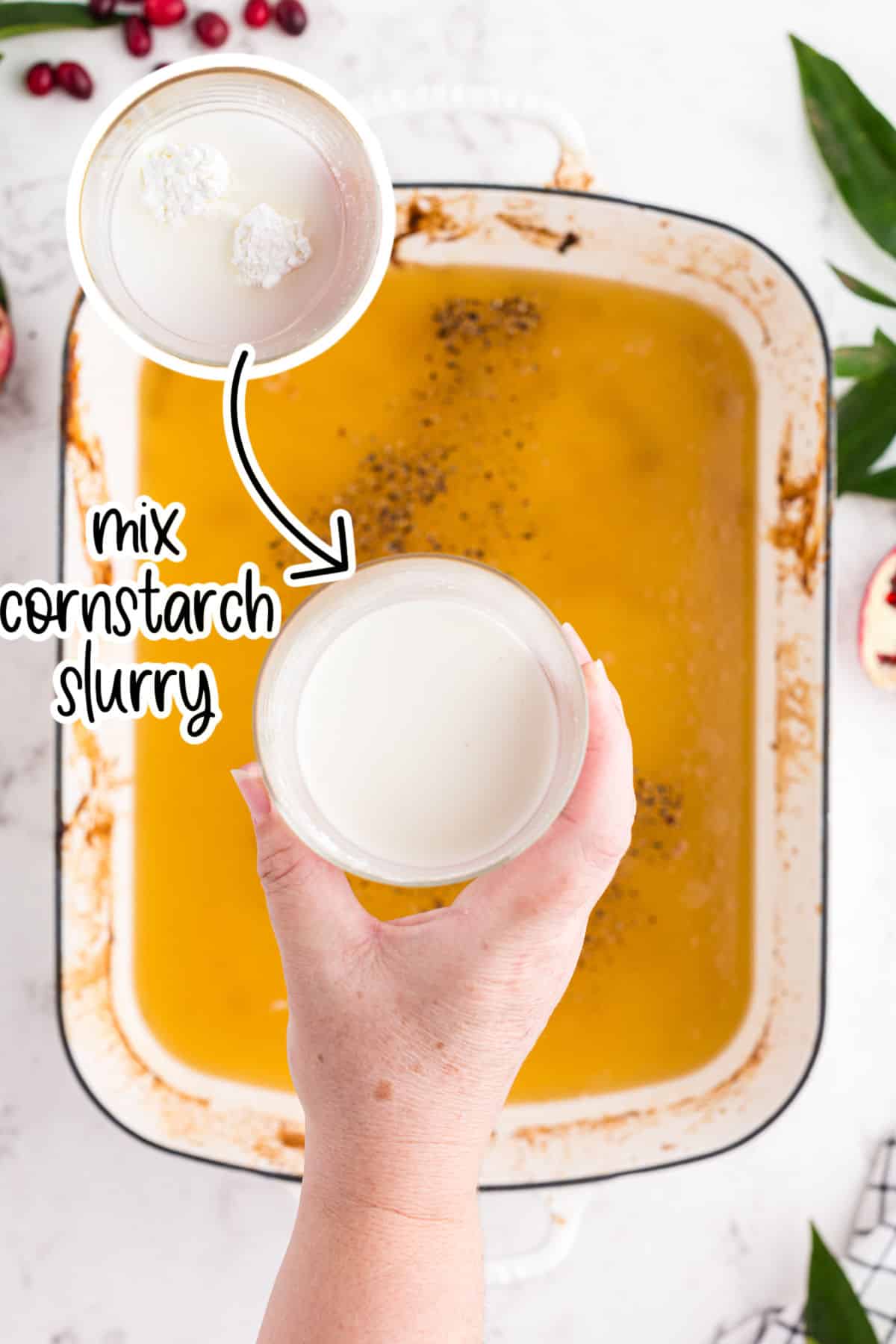 Credit: thegirlinspired.com
Showing a glossy gravy after adding starch slurry.
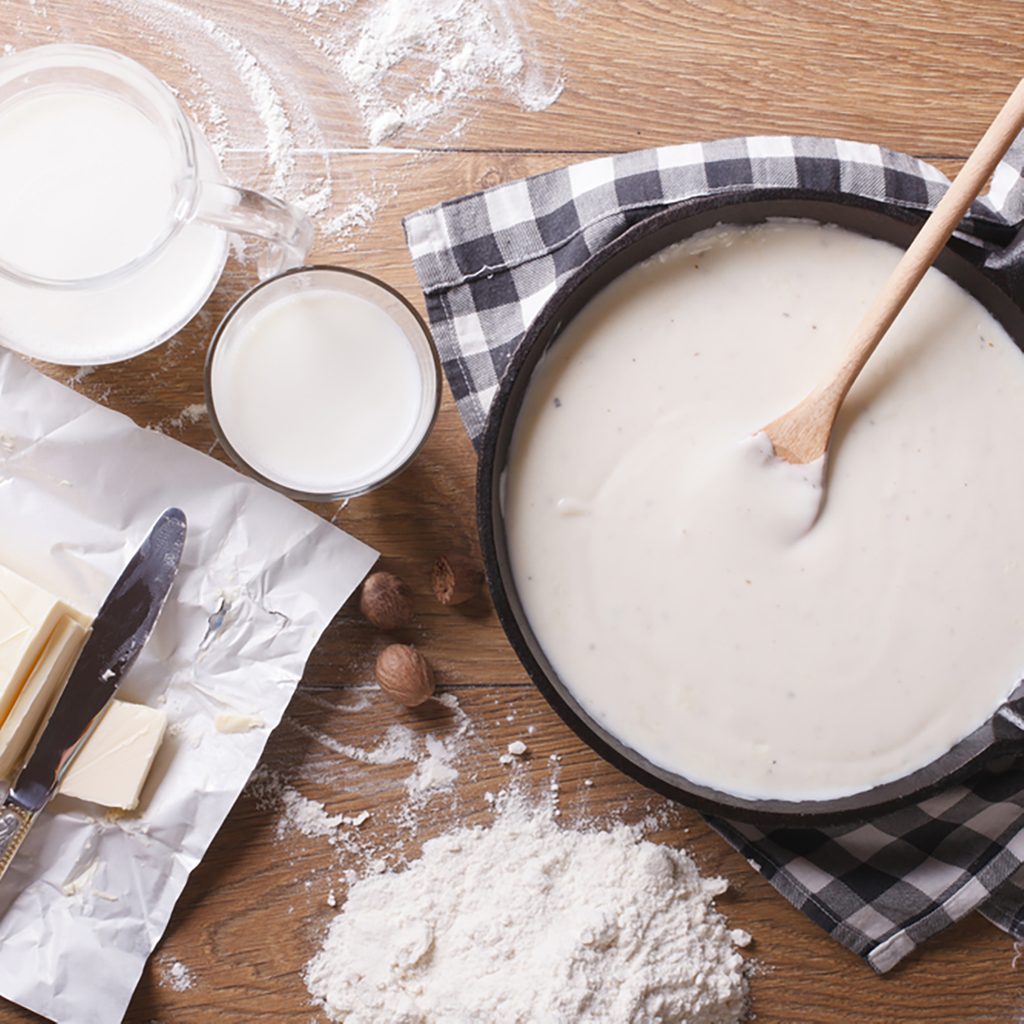 Credit: www.tasteofhome.com
Using a whisk to blend a slurry into hot gravy.
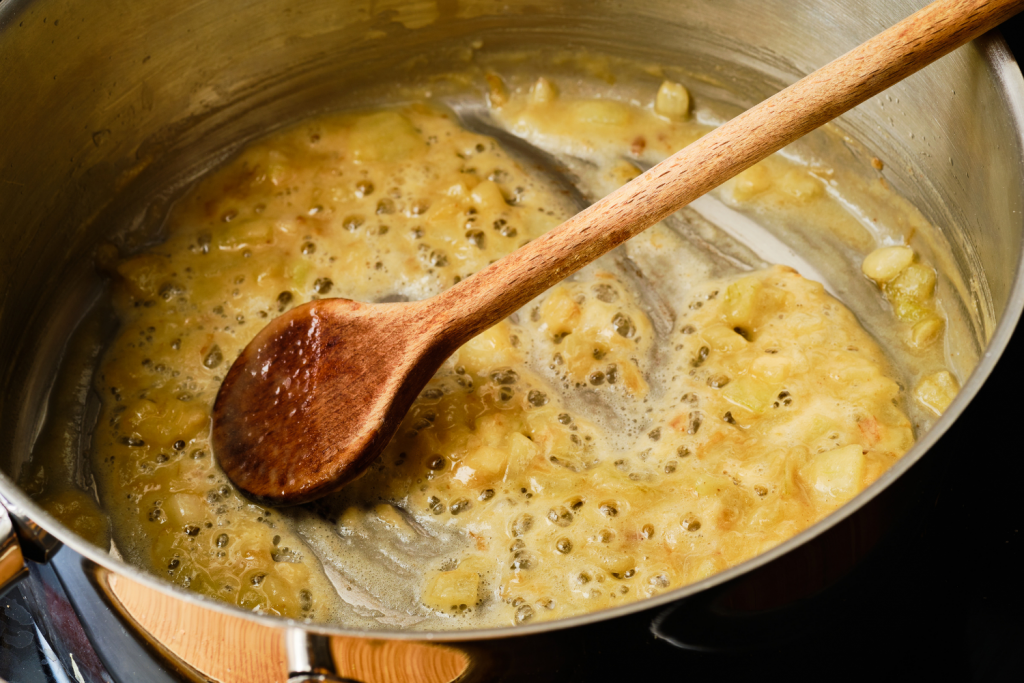 Credit: farmhouseharvest.net
Making a classic roux as a base thickener.
Frequently Asked Questions
Q: How quickly can I fix watery gravy? A: A cornstarch or arrowroot slurry can thicken gravy within a few minutes. Make a smooth slurry (equal parts starch and cold water), whisk into hot gravy, then simmer briefly until it thickens.
Q: Can I use flour if I’m gluten-free? A: No—substitute with cornstarch, arrowroot, tapioca, or potato starch. Pureed vegetables or mashed potato also work well for gluten-free gravy.
Q: Will the flavor change when I thicken gravy? A: Some thickeners (roux) add a nutty, rich flavor. Neutral thickeners like cornstarch or potato starch have minimal impact on taste but can slightly mute saltiness—adjust seasoning after thickening.
Q: How can I avoid lumps when using flour? A: Make a roux (cook flour with fat) before adding liquids, or create a smooth slurry with cold water and whisk it in gradually while stirring.
Q: Is there a safe final temperature for reheated gravy? A: Yes—reheat to an internal temperature of 165°F to ensure safety, per USDA guidance (USDA).
Conclusion — practical next steps
If you need a quick fix, mix a small cornstarch slurry and whisk it into simmering gravy. For best long-term results and flavor, learn to make a basic roux—it’s versatile and stabilizes sauces. Keep a small jar of cornstarch or arrowroot on hand for emergencies, and remember to add thickeners gradually. Try one of the methods above tonight and bookmark this page as your gravy troubleshooting cheat sheet.
Want a printable cheat sheet of ratios and troubleshooting tips? Save or print this page before your next holiday dinner.

Hi, I’m Daniel Brooks—a food lover and kitchen gear enthusiast. I enjoy testing cookware, utensils, and gadgets to see what really works in everyday cooking. At PlugChef.com, I share honest reviews, comparisons, and simple guides to help you choose the best tools for a safer, smarter, and more enjoyable kitchen.
Related posts:
 How to Make a Fruit Basket for a Gift: Easy DIY Guide
 Do You Need a Basket? Essential Guide for Air Fryers
 What Blenders Do Tropical Smoothie Use: Expert Insights
Stainless Steel Vs White Kitchen Appliances: Ultimate Showdown
What Blenders Do Tropical Smoothie Use: Expert Insights
Stainless Steel Vs White Kitchen Appliances: Ultimate Showdown
 Kitchen Appliances for Wedding Registry: Must-Have Essentials
 Top 10 Best Non-Toxic Cooking Utensils – Safe & Durable Choices for Healthy Homes

