
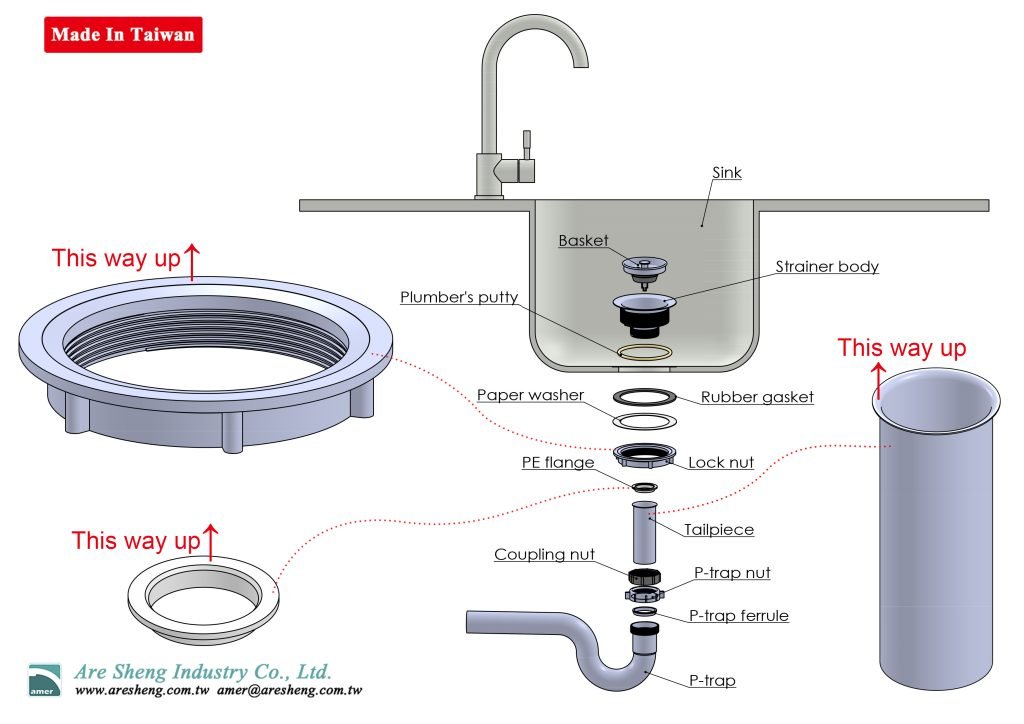
A leaking or damaged sink basket (also called a sink strainer) is one of the most common kitchen plumbing fixes. This guide gives a clear, practical, start-to-finish process for choosing the right replacement, removing the old strainer, installing the new one, testing for leaks, and troubleshooting problems you’ll likely encounter. Typical time: 30–90 minutes for most DIYers; longer if parts are seized or the sink is damaged.
Key outcomes: measure the drain opening first, choose the correct sealant for your sink material, use the proper tools (basin wrench), and test under pressure before calling it done.
Quick facts to know before you start
- Common kitchen drain opening: 3-1/2" (measure your opening inside-edge to inside-edge to confirm).
- Seal options: plumber’s putty (traditional, quick-removing) or 100% silicone/RTV (recommended for granite/composite/engineered stone).
- Leak locations: top flange (bad seal), locknut/gasket (compressed or cracked), or a corroded tailpiece.
- If your home is older and you suspect lead plumbing, review federal lead guidance before disturbing drain fittings by visiting the EPA’s lead information pages for homeowners. For design standards or code-affecting questions, consult the American Society of Plumbing Engineers for professional references.
Types of sink baskets and compatibility
- Standard basket strainer: common for kitchen sinks; tailpiece threads to standard slip-joint connections.
- Pop-up or snap-in strainers: mainly in bathroom sinks; different sizes (1-1/4" or 1-1/2").
- Waste assembly with garbage disposal: disposal has its own flange and usually replaces the strainer; check manufacturer requirements if switching between disposal and basket.
- Mounting style matters:
- Top-mount (drop-in): flange rests on the sink rim; usually uses putty or silicone.
- Undermount: may require a different gasket profile or adhesive seal per manufacturer.
In practice: match the basket diameter and tailpiece configuration to your existing trap and any appliance hookups (dishwasher, disposal). If you buy a universal strainer, confirm the included gasket and locknut match your sink type.
Tools and materials (what you'll need and why)
Tools
- Basin wrench — essential for the locknut in tight cabinets.
- Adjustable wrench and slip-joint pliers — for slip nuts and tailpiece.
- Putty knife or plastic scraper — removes old putty without scratching.
- Screwdriver — for clips or screws on some strainers.
- Bucket and rags — catch water and keep the area clean.
- Penetrating oil and rubber mallet — for seized locknuts (use gently).
- Flashlight or headlamp — improves visibility under the sink.
Materials
- Replacement sink basket/strainer sized to your measured opening.
- Plumber’s putty OR 100% silicone sealant (choose per sink material).
- Replacement rubber gasket and fiber washer (often included).
- New slip-joint washers for P-trap if existing ones are old.
- Thread seal tape (Teflon) only for threaded pipe joints if needed.
Tool tip: a basin wrench alone will save dozens of frustrating minutes. If the locknut is badly corroded, have replacement parts on hand rather than fighting a seized nut.
Safety and preparation
- Clear the area under the sink and place a bucket beneath the P-trap to catch water.
- Turn off local shutoff valves for hot and cold if you’ll disconnect supply lines (not usually required for drain work). If no local shutoffs are present, you don’t need to stop the main water for a drain-only job, but avoid working near energized appliances.
- Open the faucet to relieve pressure and drain water from lines.
- Protect the sink finish by placing a towel or rubber mat inside the basin while working.
- Take a quick photo of the current under-sink setup — it helps during reassembly.
Common mistake: starting without removing under-sink items. You’ll want free space and both hands available.
Step-by-step: remove the old sink basket and install the new one
Overview: follow steps in order for cleaner removal, safer installation, and easier testing.
Step 1 — Remove the P-trap and clear drain connections
- Put your bucket under the trap to catch residual water.
- Loosen slip nuts at both ends of the P-trap (hand-turn first; use pliers if needed).
- Remove the trap and inspect washers; set the trap aside.
- Disconnect dishwasher or disposal lines if they obstruct access — note orientation or photograph for reassembly.
Why: removing the trap gives room to reach the locknut and avoids making a mess.
Step 2 — Remove the sink basket (top and bottom approach)
From below (most common):
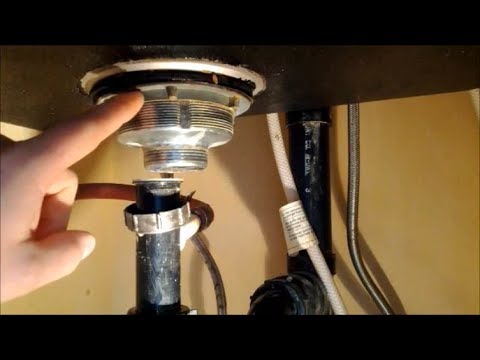
- Locate the large locknut that clamps the basket flange to the sink.
- Support the basket from above (pliers on the flange or hold it) so it won’t turn.
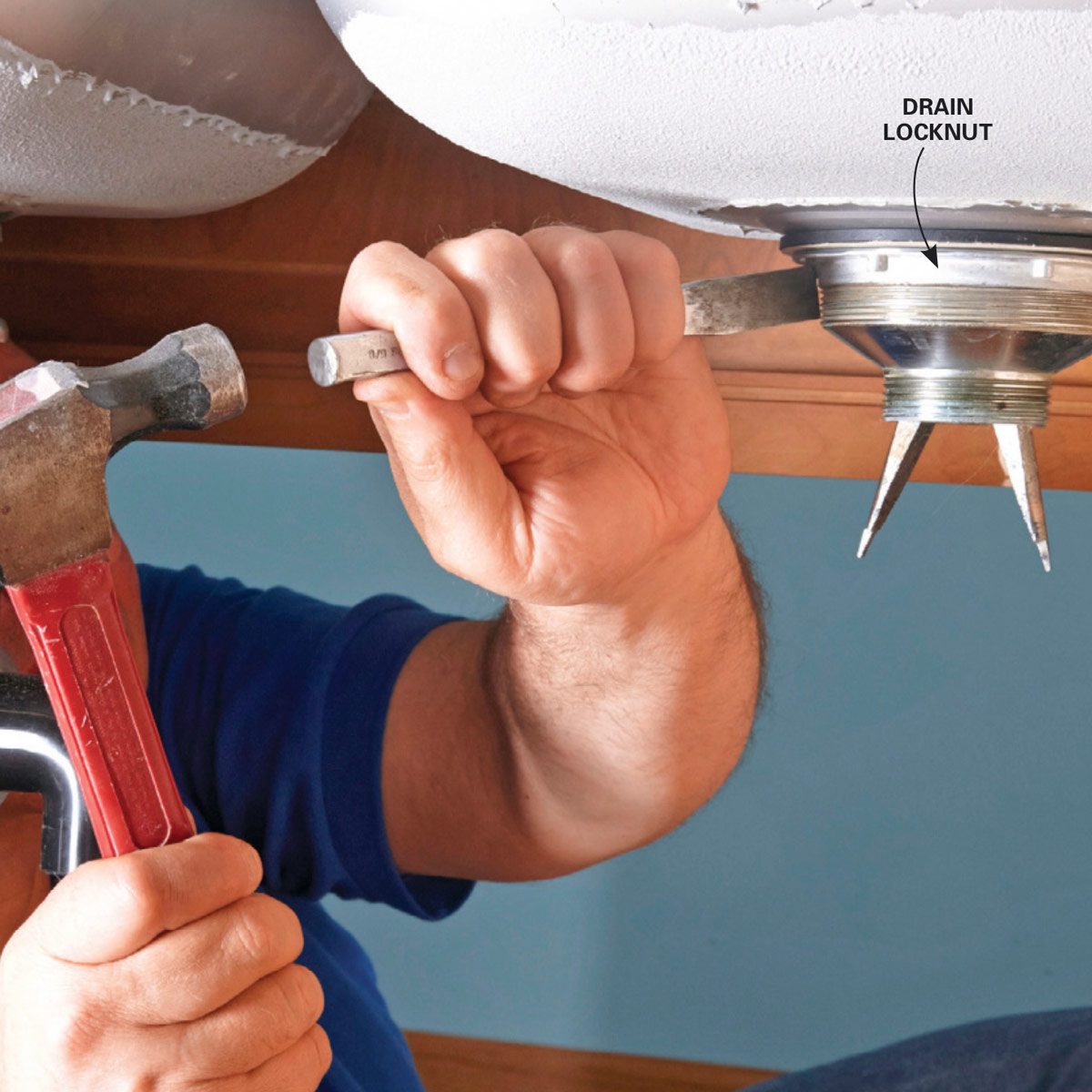
- Use the basin wrench to loosen the locknut. If corroded, apply penetrating oil and wait 10–15 minutes.
- After the locknut and washers are off, push the basket up and lift it out from above.
From above (when the sink interior gives access):
- Remove any visible screws or retaining clips on the strainer.
- Pry up hardened putty gently with a plastic scraper, then lift the strainer.
 Credit: www.youtube.com
Pro tips:
- If the basket spins as you loosen the locknut, hold the flange steady from inside while turning the nut below with the wrench.
- Avoid open flames to heat corroded parts; a hair dryer or warm water can be safer for softening old sealant.
Step 3 — Clean the sink opening thoroughly
- Scrape away old putty or cured silicone with a plastic scraper or putty knife.
- Clean with mild detergent and warm water; for mineral deposits use white vinegar on a rag.
- Dry completely and inspect the sink metal or stone for pitting, chips, or cracks around the flange.
Important: oil-based plumber’s putty can stain granite or engineered stone. If your sink is natural stone or composite, plan to use 100% silicone as the sealant.
Step 4 — Assemble and install the new sink basket
Decide seal method:
- Plumber’s putty: roll a rope roughly pencil-thickness and press under the flange. Putty gives immediate seal and is removable.
- 100% silicone/RTV: apply a continuous bead to underside of flange; smoother finish and recommended for stone sinks. Allow cure time per manufacturer (often 24 hours for a full cure).
Install steps:
- Lower the new basket into the drain hole from above, centering it.
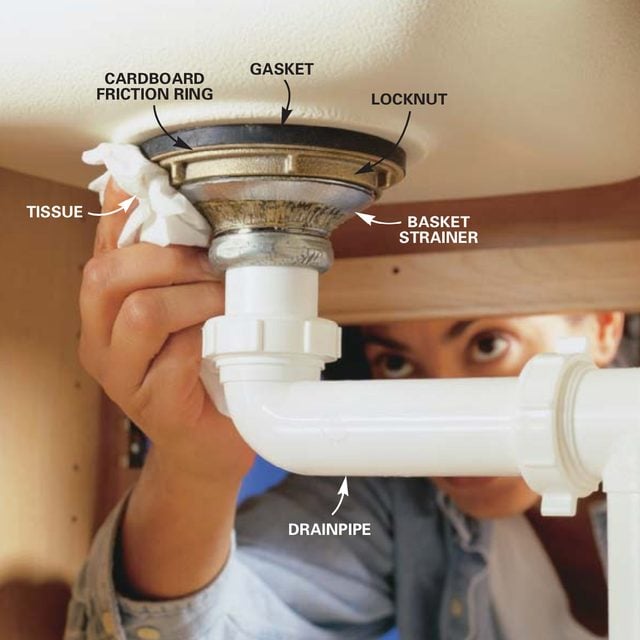
- From below, slide the rubber gasket and fiber washer onto the tailpiece and start the locknut by hand.
- Align the basket, then hand-tighten the locknut until snug.
- Use the basin wrench to finish tightening: snug plus a firm quarter-turn is usually enough. Do not over-tighten — over-torquing can deform gaskets or crack sink material.
- Wipe off excess putty or smooth excess silicone with a damp rag (follow cure instructions).
 Credit: www.familyhandyman.com
Practical note: if the tailpiece is too long, mark and cut it to fit so the trap aligns without compressing fittings unfairly.
Step 5 — Reconnect the trap and appliances
- Slide new slip-joint washers onto the tailpiece and reconnect the P-trap.
- Hand-tighten slip nuts, then snug slightly with pliers. For plastic nuts, avoid over-tightening.
- Reattach dishwasher or disposal hoses and ensure clamps are secure.
Thread seal tape is not needed for slip-joint connections; reserve tape for threaded pipe joints that specify it.
Step 6 — Test and verify leak-free installation
- Remove tools and rags from under the sink so you can observe joints.
- Turn on the faucet and let water run while you watch all connections.
- For a stronger test: plug the drain, fill the sink an inch or two, then hold for 1–2 minutes to see any seepage (this creates a modest static pressure).
- Use a dry paper towel to wipe joints and then check for damp spots to reveal small leaks.
 Credit: www.familyhandyman.com
If you find a leak:
- At flange: disassemble and reseat with fresh putty or silicone, ensuring even locknut tightening.
- At locknut/tailpiece: replace compressed rubber gaskets and retighten evenly.
- Persistent leaks after reseating indicate a damaged flange or a mismatched part; consider replacing the tailpiece or consulting a professional.
Troubleshooting: common problems and fixes
- Locknut won’t budge: apply penetrating oil, wait, use basin wrench. As a last resort, cut and replace the nut — it’s cheaper than risking damage to the sink.
- Flange rocks or won’t seal: check for debris or uneven sink surface; use a thin gasket if available and center the basket carefully.
- Basket rotates when tightening locknut: use one tool to hold the flange above and another to turn the nut below.
- Discoloration or stains on stone sinks: caused by oil-based putty; remove immediately and reseal with silicone.
- Garbage disposal mismatch: disposals use specific mounting kits—do not force a standard basket into a disposal opening.
In practice: replacing inexpensive tailpiece assemblies often resolves recurring leaks and avoids repeated disassembly.
Maintenance to extend service life
- Wipe the flange dry occasionally to prevent mineral ring buildup.
- Inspect under-sink fittings every 6–12 months for damp spots.
- Replace slip-joint washers at the first sign of compression or cracking.
- Avoid pouring grease or coffee grounds down the drain to reduce buildup around the basket and trap.
When to call a professional
Hire a licensed plumber if:
- Multiple fittings are corroded or damaged.
- The sink flange or countertop is cracked.
- You can’t access shutoffs or working will risk major water damage.
- You suspect lead plumbing — follow EPA guidance before disturbing old pipes: EPA lead information.
For design, code, or complex system changes (for example, converting to a different drain type or disposal), consult professional standards from the American Society of Plumbing Engineers.
Need help now? If you’re unsure, contact a licensed plumber to avoid water damage and ensure a long-lasting seal.
FAQ
Q: What size sink basket do I need? A: Measure the drain opening inside-edge to inside-edge. Kitchen sinks commonly use 3-1/2"; bathrooms use 1-1/4" or 1-1/2". Match the new strainer to your measurement and confirm tailpiece compatibility.
Q: Plumber’s putty or silicone — which is better? A: Use plumber’s putty for metal or porcelain sinks where staining isn’t a concern. Use 100% silicone for granite, quartz, or composite sinks and where manufacturers advise against putty. Silicone requires cure time (often 24 hours) for full strength.
Q: Can I change a sink basket without removing the P-trap? A: You can sometimes loosen the locknut without fully removing the trap, but removing the trap gives much better access and makes the job easier, especially if you need to replace washers.
Q: How tight should I make the locknut? A: Tighten snugly by hand, then use a basin wrench to add a firm quarter-turn. Over-tightening can damage gaskets or sink surfaces.
Q: How long will a replacement basket last? A: A good stainless steel basket installed properly will last many years. Lifespan depends on water chemistry, maintenance, and part quality.
Conclusion
Replacing a sink basket is a practical DIY job when you measure carefully, choose the correct sealant for your sink material, and use the right tools (especially a basin wrench). Work methodically: remove the trap, clean the flange, seat the new basket with the appropriate sealant, tighten carefully, and test under pressure. If fittings are corroded, the sink flange is damaged, or you’re uncomfortable, call a licensed plumber to prevent leaks and water damage.
Download or screenshot this checklist and a photo of your under-sink layout before you begin — it will save time and reduce mistakes.

I’m Abby Lu, a passionate home cook who loves simplifying everyday meals. At PlugChef.com, I share product reviews and cooking guides to help you find the best tools for your kitchen.
Related posts:
 How to Make a Fruit Basket for a Gift: Easy DIY Guide
 Do You Need a Basket? Essential Guide for Air Fryers
 How to Choose Kitchen Appliances: Expert Tips Revealed
 Kitchen Cabinets With Black Stainless Steel Appliances: Modern Elegance
 White Kitchen Cabinets Stainless Steel Appliances: Timeless Elegance
 Top 10 Best Non-Toxic Cooking Utensils – Safe & Durable Choices for Healthy Homes

