Organizing play kitchen food often feels like a never-ending battle: plastic carrots hide under the couch, pretend pizza slices go missing for weeks, and cleanup turns into a 20-minute tug-of-war with toddlers who can’t remember where their favorite play food belongs. As of 2026, parents and caregivers are prioritizing storage solutions that do more than just tidy up: they support child development, reduce household clutter, and work seamlessly in shared living spaces without ruining home decor. Stackable bins and rolling carts lead the pack for their versatility, kid-accessible design, and ability to scale as your child’s play food collection grows. For more tips on organizing all types of kitchen essentials, from real pantry items to kids’ play supplies, check out our full organization guide.
Why Play Kitchen Food Organization Matters
It’s easy to write off play kitchen clutter as a harmless part of childhood, but organized storage delivers tangible benefits for both kids and caregivers. Research from the CDC confirms that pretend play with realistic props like play food supports social-emotional and cognitive development in children ages 2–5, and easy-to-access storage makes these props far more likely to be used for daily, unstructured play. For kids, sorted play food builds early categorization and counting skills, teaches responsibility through independent cleanup, and reduces overwhelm that can cut play sessions short. For caregivers, organized storage cuts down on lost pieces (saving money on replacement play food), eliminates the need to step on scattered plastic produce, and reduces cleanup time by half or more, per feedback from parents of preschool-aged kids. A common mistake many families make is tossing all play food into a single toy bin, which makes it impossible for kids to find what they want and leads to messy, frustrating cleanup routines.
Top Storage Solutions for Play Kitchen Food
The best play kitchen storage solutions balance kid-friendly accessibility, durability, and space efficiency to fit both dedicated playrooms and shared living areas. Below are the most effective options, tailored to different space constraints and play styles.
Stackable Bins for Categorized, Space-Saving Storage
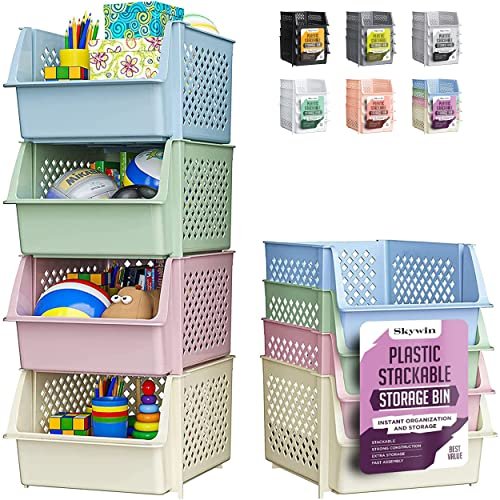
Stackable bins are the most popular choice for play kitchen food storage for good reason: their vertical design maximizes limited shelf space, and their uniform shape lets you build a custom storage tower that grows with your child’s collection. When selecting bins for play food, prioritize BPA-free, shatter-resistant plastic with smooth rounded edges to avoid injuries during play, and stackable locking rims that prevent bins from toppling when pulled by small hands. Clear bins let kids see contents at a glance for independent sorting, while color-coded bins make categorizing by food group (fruits, vegetables, pantry staples) or meal type (breakfast, dinner, snacks) intuitive for pre-readers. For small play collections, a 4-pack of 6-inch deep bins fits most standard 12-inch deep playroom shelves, while larger collections may benefit from 2–3 stacks of 3–4 bins each.
 These stackable bins sort play food by category for easy kid access and quick cleanup.
The TidyFriend 4-Pack Stackable Storage Bins are a reliable entry-level option for most families. The set fits comfortably on standard shelving units, and the multi-color design makes sorting intuitive for young kids. The durable plastic construction wipes clean easily after pretend cooking messes, and the stackable design lets you add additional bins as your child’s play food collection expands.
- Pros: Space-saving vertical design, durable BPA-free plastic, fits standard shelves, easy to clean
- Cons: Smaller bins aren’t ideal for oversized play food items like pretend pizzas or turkey platters, plastic construction may not match rustic or natural playroom decor Shop the TidyFriend Stackable Bins on Amazon to start sorting your play food today.
For families who want to combine storage and play, stackable play food sets like the Melissa & Doug Let’s Play House! Grocery Cans offer self-organizing storage. The 10 stackable cans mimic real grocery store packaging, and the removable lids let kids practice opening and closing containers to build fine motor skills. When not in use, the cans stack neatly on a shelf or in a larger storage bin for clutter-free storage.
 Stackable play food cans store themselves and encourage sorting skills during play.
Rolling Storage Carts for Flexible, Mobile Access
Rolling storage carts are the best choice for shared play spaces, small apartments, or families who need to tuck play supplies out of the way when not in use. Look for carts with lockable wheels to prevent rolling while in use, tiered shelves to separate different food types, and a total height of 24–32 inches to match the reach of kids ages 2–6. The middle shelf should sit at waist height for kids to access without climbing, while the top and bottom shelves work for rarely used or oversized play food items. Many carts also include side hooks for hanging play aprons, reusable shopping bags, or small loose play food pieces like fruit bunches.
 A rolling cart with lockable wheels keeps play food accessible and can be moved out of the way when not in use.
The Sonyabecca 3-Tier Rolling Storage Cart is a versatile pick for most play spaces. Its compact 12.4-inch width fits easily next to most standard play kitchens, and the 5 included S-hooks add extra storage for play utensils and accessories. The lockable wheels keep the cart stable during play, and the lightweight build lets even young kids move it around the playroom as needed.
- Pros: Mobile for flexible play spaces, tiered storage for sorted items, extra hanging hooks, compact for small areas
- Cons: Weight capacity is limited to ~25 pounds, so not ideal for heavy wooden play food sets, assembly takes 10–15 minutes with included tools Shop the Sonyabecca 3-Tier Rolling Cart on Amazon for flexible play kitchen storage.
Dedicated Play Kitchen Furniture with Integrated Storage
For families who want a cohesive, all-in-one play space, many play kitchen sets and complementary furniture come with built-in storage for play food, eliminating the need for separate bins and carts. These options are ideal for dedicated playrooms where you want a permanent, decorative play setup.
Play Kitchen Islands & Stands with Built-In Storage
Compact play kitchen islands are perfect for small play spaces and toddler users, as they combine play surfaces with built-in storage for included play food and accessories. The Learning Resources New Sprouts Prep ‘n’ Store Kitchen Island is designed for ages 2+, with a compact footprint that fits in even small apartment play corners. The built-in shelves and compartments store the included play food and cooking accessories so nothing gets lost, and the durable plastic construction wipes clean easily after messy play sessions.
- Pros: All-in-one play and storage solution, age-appropriate for toddlers, no separate storage needed
- Cons: Limited storage capacity for large play food collections, may need supplemental bins as kids add more play food
 Compact play kitchen islands with integrated storage are ideal for small play spaces and toddler users.
For kids who love role-playing as shopkeepers or farmers, wooden market stands with built-in storage bins add an extra layer of imaginative play. The Teamson Kids Little Helper Wooden Farmer’s Market Stand features a sturdy wooden frame that holds up to years of active play, plus 6 included plastic storage bins for sorting produce, baked goods, and market staples. The pretend cash register adds a math-learning element to role-play, making it a great pick for preschool-aged kids.
- Pros: Natural wood finish blends with home decor, encourages social play and early math skills, ample built-in storage
- Cons: Assembly takes 20–30 minutes, compact size may feel cramped for multiple kids playing at once
 Wooden market stands with built-in storage bins encourage role-playing and keep play food sorted.
Full-Size Play Kitchen Cupboards for Ample Storage
For families with large play food collections, a full-size play kitchen cupboard offers dedicated, ample storage for dozens of play pieces. The ECR4Kids Play Kitchen Storage Cupboard is made of sturdy natural wood that can hold heavy play food sets and kitchen accessories, with open shelves that let kids see all available items at a glance to spark creative play. Its neutral finish blends seamlessly with modern home decor, so it can stay out in main living areas without cluttering the space.
- Pros: Large storage capacity, durable for heavy use, doubles as a play kitchen prop for role-play
- Cons: Requires assembly, heavier than plastic storage options, may be too large for very small play spaces
 A full-size play kitchen cupboard offers dedicated storage for large play food collections.
Budget-Friendly Supplemental Storage Options
You don’t need to invest in expensive playsets to organize play kitchen food: affordable tiered shelving and no-drill wall baskets work just as well for most families. The Buzowruil 3-Tier Utility Shelving Unit is a compact, lightweight pick for small play corners, with a bright pink finish that adds a fun pop of color to play spaces. It works well for storing larger play food items, play kitchen appliances, and related books or activity kits.
- Pros: Affordable, lightweight, versatile for multiple uses
- Cons: Limited weight capacity, so not for heavy wooden play food sets, specific color may not match all decor
 Affordable tiered shelving works well for storing larger play kitchen items and books.
Storing Small Loose Play Food Pieces & Accessories
Small play food items like fruit, canned goods, and play utensils are the most likely to get lost, so dedicated small-item storage is a must for any organized play kitchen. Wall-mounted hanging baskets are the top pick for these items, as they keep pieces visible and off the floor where they can be stepped on or lost under furniture.
Wall-Mounted Hanging Baskets for Quick-Access Small Items
No-drill adhesive-mounted baskets are perfect for renters or families who don’t want to damage walls, and mesh designs let kids see what’s inside at a glance. The Joben Oligey 3 Set Hanging Wire Baskets can be mounted at different heights to separate different item types: top baskets for lightweight play fruit, middle baskets for canned play goods, and bottom baskets for play utensils. The durable metal construction holds up to high-moisture areas if you store the play kitchen in a bathroom or near a sink for messy play.
- Pros: No drilling required, versatile for multiple rooms, durable metal construction, space-saving design
- Cons: Adhesive may not stick well to textured walls, limited weight capacity so not for heavy play food items
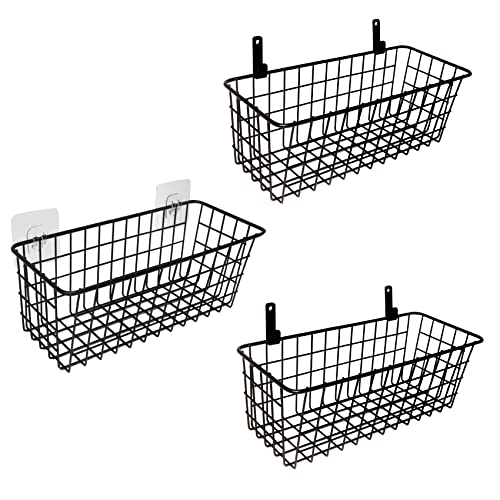 No-drill hanging baskets keep small play food items visible and off the floor for easy access.
Play Food Sets with Integrated Storage
Many modern play food sets come with built-in storage to simplify cleanup and encourage kids to put pieces away after play. The Laugigle 78-Piece Pretend Play Food Set includes a drawstring storage bag that lets kids easily toss all pieces in after play, and the wide variety of fruits, vegetables, and a play pizza encourages diverse pretend play scenarios. The 100-Piece Cutting Play Food Toy Set includes 2 storage baskets that let kids sort food by type as they clean up, building organizational skills while they tidy.
- Pros: Built-in storage reduces loose pieces, encourages imaginative play and fine motor skills, great for group play
- Cons: Small pieces require supervision for toddlers under 3, plastic construction is less eco-friendly than wood options
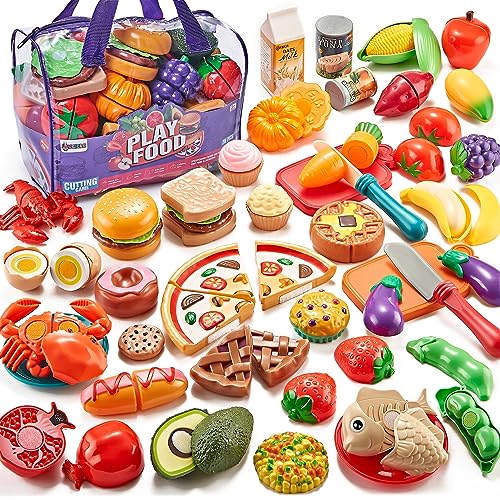 Play food sets with included storage bags make cleanup simple for young kids.
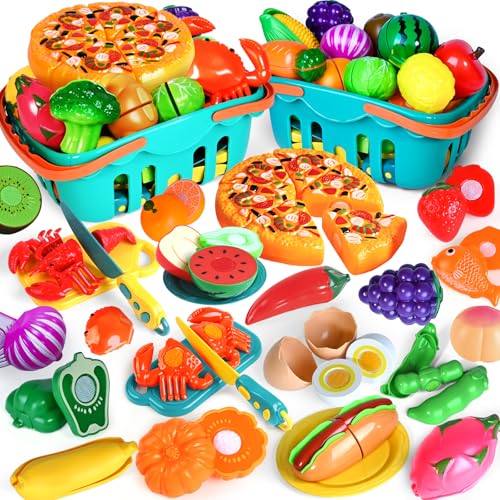 Included storage baskets let kids sort play food by type as they clean up.
Pro Tips for Organizing Play Kitchen Food in 2026
These actionable, caregiver-tested tips will help you build a storage system that lasts for years and grows with your child’s interests:
- Prioritize kid-height storage: All frequently used play food should be stored between 2–4 feet off the ground so kids can access it independently without climbing or asking for help. This builds autonomy and reduces cleanup pushback.
- Sort by play theme: If your child loves grocery store role-play, sort play food by store section (produce, bakery, dairy) in bins; if they love restaurant play, sort by meal type (breakfast, lunch, dinner) to spark more creative scenarios.
- Rotate seasonal play food: Store out-of-season play food (like Halloween candy sets or Christmas cookie kits) in labeled bins on a high shelf, and rotate in 1–2 new sets each month to keep play fresh without clutter.
- Choose easy-to-clean materials: Play food gets sticky from pretend spills, so opt for plastic or metal storage that can be wiped down with a damp cloth and a reliable kitchen cleaning brush to remove sticky residue quickly. Avoid fabric bins that trap crumbs and stains.
- Secure tall units to the wall: If you use tall shelving or rolling carts for play food storage, secure the unit to the wall with no-drill drawer locks to prevent tipping, per safety guidelines from the American Academy of Pediatrics. For lower cabinets with extra play food, add adjustable safety latches to keep items out of reach of younger siblings or pets.
- Involve kids in the process: Let them pick the color of bins or help label them with drawings; in practice, kids who help set up their storage systems are far more likely to stick to cleanup routines long-term. For stuck-on crumbs or pretend food residue on bin rims, a sturdy scrub brush makes quick work of messes.
Frequently Asked Questions
How do I organize play kitchen food effectively?
Start by sorting all play food into categories: produce, pantry staples, frozen goods, and small loose pieces. Use stackable bins for bulk sorted items, place small loose pieces in wall-mounted hanging baskets for easy access, and store rarely used or seasonal play food on a high shelf or in a rolling cart that can be tucked away. Involve your child in the sorting process to teach categorization skills, and use picture labels on bins for pre-readers to encourage independent cleanup. For large play food collections, add a tiered rolling cart next to the play kitchen for mid-height access.
What are stackable storage bins best used for in play kitchen storage?
Stackable bins are ideal for storing sorted bulk play food items, as their vertical design maximizes shelf space and lets you build a custom storage tower that grows with your child’s collection. Look for BPA-free, shatter-resistant bins with stackable locking rims to prevent tipping, and choose clear or color-coded options to make sorting intuitive for young kids. They work equally well for storing play kitchen accessories like play dishes, utensils, and small appliances when not in use.
Can rolling storage carts be used for play kitchens?
Yes, rolling storage carts are one of the most versatile play kitchen storage solutions, especially for shared or multi-use play spaces. Look for carts with lockable wheels to prevent rolling while in use, tiered shelves to separate different food types, and a height that matches your child’s reach (24–32 inches tall is ideal for ages 2–6). You can roll the cart next to the play kitchen during playtime and tuck it in a closet or corner when not in use, making them perfect for small apartments or homes where play space needs to be flexible.
Are wall-mounted baskets suitable for play food storage?
Wall-mounted hanging baskets are perfect for storing small, frequently used play food items like fruit, canned goods, and play utensils, as they keep items visible and off the floor where they can get lost or stepped on. No-drill adhesive-mounted baskets are ideal for renters or families who don’t want to damage walls, and mesh designs let kids see what’s inside at a glance. Just be sure to check the weight capacity of the adhesive mounting before filling baskets with heavier play food items.
Why use a toy shelf for play kitchen storage?
Toy shelves are ideal for storing larger play kitchen items that don’t fit in bins, such as play kitchen appliances, large play food platters, play cookbooks, and kitchen accessory sets. Open shelves let kids see all available items at a glance, which sparks more creative play scenarios, and many toy shelves are height-adjustable to grow with your child. For shared play spaces, a dedicated toy shelf keeps play kitchen items separate from other toys to reduce clutter and make cleanup faster.
What age is suitable for play kitchen toys and their storage?
Play kitchen toys and their accompanying storage solutions are suitable for children ages 2 and up, per guidelines from early childhood development experts. For toddlers ages 2–3, prioritize low, easy-to-access storage with no small detachable parts that could pose choking hazards, and opt for bins with smooth, rounded edges. For preschoolers ages 4–6, you can add more complex sorting systems, higher shelves, and small loose play food pieces to encourage more advanced role-play and organizational skills.
Conclusion
Organizing play kitchen food does far more than just make your play space look tidy: it supports your child’s cognitive and social development, reduces cleanup stress for caregivers, and makes pretend play more engaging and creative for kids. Stackable bins and rolling carts are the most versatile, budget-friendly solutions for most families, as they work in almost any space and scale easily as your child’s interests grow. For families with dedicated playrooms, integrated storage in play kitchen islands and cupboards offers a cohesive, decorative option that eliminates the need for separate storage pieces. No matter which solution you choose, prioritize kid-accessible, easy-to-clean designs and involve your child in the organization process to build lifelong tidying habits. Ready to transform your play kitchen clutter? Start with a set of stackable bins and a rolling cart to sort your existing play food in an afternoon, and add dedicated storage as your child’s collection grows. Always secure tall storage units to the wall with safety straps to prevent tipping, especially in homes with toddlers or multiple kids playing in the space.

I’m Abby Lu, a passionate home cook who loves simplifying everyday meals. At PlugChef.com, I share product reviews and cooking guides to help you find the best tools for your kitchen.
Related posts:
 Best Water Filter for Pod Coffee Maker: Enhance Your Coffee Experience
 Best Kitchen Counter Compost Bin: Top Picks for Odor-Free Recycling
 Best Mason Jar for Cold Brew: Discover Top Picks for Iced Coffee
 Best Can Opener $50 To $100: Top Manual Options for Every Kitchen
 Best Kitchen Knives Set for Precision and Durability in Cooking
 Best Tool for Cutting Wine Corks: Top-Notch Wine Foil Cutters Reviewed