Did you know the average U.S. household throws away nearly 30% of the fresh produce it buys every year, much of it due to poor kitchen storage? Improper vegetable storage is the silent culprit behind wasted money, spoiled ingredients, and cluttered countertops — not overbuying or lack of meal planning. The right storage solutions don’t just keep your kitchen tidy: they lock in freshness, preserve nutrients, and cut down on the time you spend digging for ingredients mid-meal prep. In this guide, we break down proven storage principles, innovative space-saving products for every kitchen size, and common mistakes to avoid, all focused on maximizing your kitchen’s storage potential while keeping produce fresh for longer.
Why Proper Vegetable Storage Is a Game-Changer for Your Kitchen
Beyond cutting down on food waste, thoughtful vegetable storage protects the nutritional value of your produce. Vegetables begin losing vitamins, antioxidants, and flavor within hours of being harvested, and exposure to excess moisture, light, and ethylene gas speeds this process dramatically. The EPA notes that reducing household food waste, much of which comes from spoiled fresh produce, is one of the simplest ways to lower grocery costs and reduce environmental impact. For most households, fixing storage habits alone can cut produce waste in half, saving $100 or more per month on grocery bills while ensuring your ingredients taste as fresh as the day you bought them.
Core Principles to Maximize Vegetable Freshness First
Before investing in storage products, follow these three evidence-based rules to get the most out of your produce, per USDA fresh produce storage guidance:
- Separate ethylene producers from sensitive produce: Fruits like apples, bananas, tomatoes, and onions release ethylene gas as they ripen, which speeds spoilage of sensitive vegetables like leafy greens, carrots, broccoli, and cucumbers. Store these groups in separate bins or drawers to avoid cross-contamination.
- Prioritize airflow for root and allium vegetables: Onions, garlic, and potatoes need cool, dark, well-ventilated spaces to prevent moisture buildup, which causes sprouting and rot. Never store these in sealed plastic bags.
- Match storage to vegetable type: Root vegetables thrive in cool, dry pantry spaces, while leafy greens and cut produce need moist, refrigerated environments. Tomatoes, cucumbers, and peppers ripen best at room temperature, away from direct sunlight.
Innovative Space-Saving Storage Solutions for Every Kitchen Layout
The right storage solution depends on your kitchen size, how much produce you buy, and your daily cooking habits. Below are the most effective options, organized by use case, with honest trade-offs to help you choose the best fit for your space.
Countertop Solutions for Small, High-Traffic Kitchens
For renters, small apartment dwellers, or anyone who wants daily access to produce without cluttering counter space, these countertop options deliver maximum functionality in a small footprint:
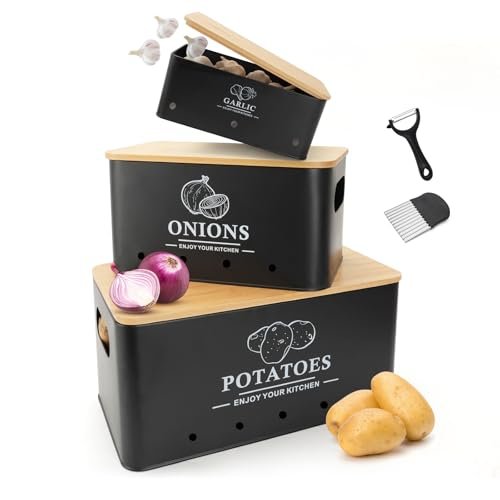
- Ventilated metal canisters: Sets like the Dekosilave 3-piece metal canister set feature small aerating holes to promote airflow for onions, garlic, and potatoes, while wooden lids keep out pests and lock in the right amount of moisture. Their sleek black design fits modern kitchen decor, and the durable metal construction holds up to daily use. The main trade-off is that they are not stackable, so they are best for households that buy produce in moderate quantities, not bulk.
 Ideal for storing onions, garlic, and potatoes in a cool, ventilated space.
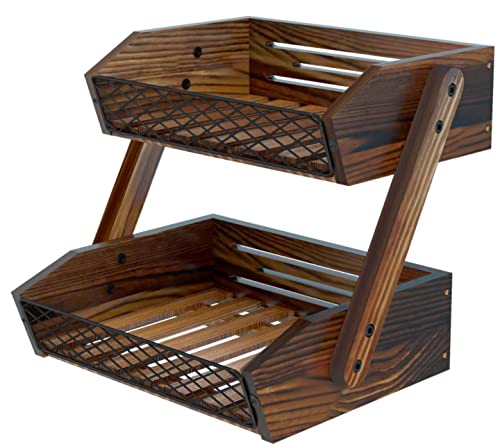
 - Tiered countertop baskets: Models like the Gillas 2-tier basket and Dorhors rustic wooden basket use vertical counter space instead of spreading produce across the surface, freeing up room for meal prep. Many include built-in banana hangers to prevent bruising, and detachable tiers for easy cleaning. The 2-tier design holds 2–3 times more produce than a single fruit bowl without taking up extra width, making them perfect for small counters. Larger 2-tier models may be too big for very compact kitchenettes, however.
Detachable tiers simplify cleaning, while banana hangers prevent bruising.
Wooden finish complements farmhouse and rustic kitchen decor styles.
- Hanging wire baskets: The GGIU 3-pack wire baskets mount directly under upper cabinets, eliminating counter footprint entirely for ultra-small kitchens. Their open wire design promotes airflow, and three separate baskets let you sort produce by type to avoid cross-contamination. They are limited by weight capacity, so they are best for lighter produce like onions, garlic, and fruit, not heavy items like winter squash.
Can be mounted under cabinets or placed on counters for flexible storage.
 Ideal for storing onions, garlic, and potatoes in a cool, ventilated space.
 Detachable tiers simplify cleaning, while banana hangers prevent bruising.
 Wooden finish complements farmhouse and rustic kitchen decor styles.
 Can be mounted under cabinets or placed on counters for flexible storage.
For households with young children, pair accessible produce storage with child safety locks for cabinets to keep hazardous cleaning products and sharp prep tools out of reach.
Rolling Carts for Bulk Storage and Flexible Kitchens
For families, bulk shoppers, or kitchens with extra floor space, rolling carts offer high-capacity, mobile storage that can be moved to your prep area when cooking and tucked away when not in use:
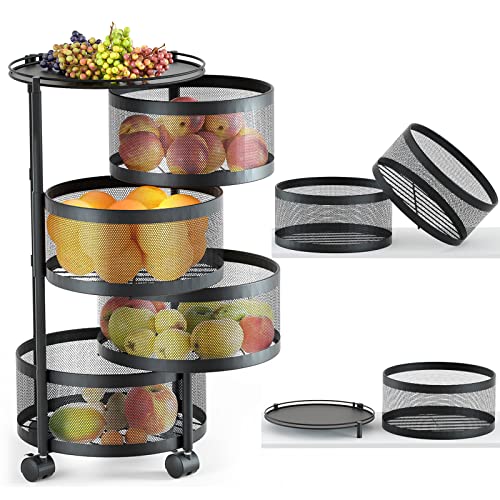
- 5-tier rotating and rolling carts: Models like the SNTD 5-tier rotating rack and Delamu 5-tier rolling cart hold bulk produce for large households, with rotating or slide-out tiers that let you access items in the back without moving other stored goods. Many have wood or metal tops that double as extra prep space for chopping vegetables or staging ingredients. The main trade-off is height: most 5-tier models are 40+ inches tall, so they may not fit under upper cabinets, and require assembly out of the box.
Rotating tiers make accessing stored produce easy without moving other items.
Slide-out tiers let you access items in the back without moving the whole cart.
- Slim 4-tier rolling racks: Models like the HOYRR and CHLORYARD 4-tier racks have ultra-slim footprints (as narrow as 9 inches) that fit in tight gaps between the fridge and counter, or in narrow pantry aisles. Their stackable tiers maximize vertical space, and wheels let you roll the rack to different areas of the kitchen as needed. They have lower capacity than 5-tier models, so they are best for moderate produce storage, not bulk buys.
Narrow footprint fits between kitchen counters and appliances for tight spaces.
Ultra-slim design fits in narrow pantry gaps and between appliances.
 Rotating tiers make accessing stored produce easy without moving other items.
 Slide-out tiers let you access items in the back without moving the whole cart.
 Narrow footprint fits between kitchen counters and appliances for tight spaces.
 Ultra-slim design fits in narrow pantry gaps and between appliances.
Wash metal and plastic storage bins monthly with a professional kitchen cleaning brush to remove residue and prevent mold growth from trapped produce particles.
Compact Fridge and Pantry Organizers for Small Produce
For cut produce, small items, or produce that requires refrigeration, these compact organizers make the most of underused fridge and pantry space:
- Airtight reusable containers: The SOOPLEU 4-piece set features airtight seals that lock in moisture for cut vegetables, avocados, tomatoes, and citrus, extending their shelf life by 3–5 days compared to storing them loose or in disposable bags. Their compact size fits easily in fridge shelves and doors, and the colorful design lets you sort produce by type for quick identification. The main trade-off is limited capacity for large produce, and the lightweight plastic may crack if dropped.
Compact design fits easily in most refrigerator shelves and doors.
- Stackable clear pantry bins: The 2-pack Spacemart stackable organizers use transparent plastic to let you see contents at a glance, so you never forget about produce hiding in the back of the pantry. Their stackable design lets you use the full height of pantry shelves, holding 2–3 times more produce than loose shelving. The main trade-off is that clear plastic shows dirt and scratches easily, requiring frequent cleaning to keep them looking tidy.
Transparent design lets you see contents at a glance for fast meal prep.
 Compact design fits easily in most refrigerator shelves and doors.
 Transparent design lets you see contents at a glance for fast meal prep.
Opt for durable, BPA-free reusable produce containers, and clean them easily with a kitchen cleaning brush set to remove sticky residue from cut produce or spilled juices.
Pairing separate storage bins for ethylene producers and sensitive produce with kitchen cabinet safety latches helps keep small children from accessing stored cleaning supplies while you organize your pantry.
Common Vegetable Storage Mistakes That Waste Money and Produce
Even with the best storage products, these common errors can lead to premature spoilage:
- Storing all produce together: Ethylene gas from apples, bananas, and onions speeds the ripening and rotting of sensitive produce. Fix: use separate bins or drawers for ethylene producers and sensitive items.
- Using sealed plastic bags for root vegetables: Traps moisture, leading to rot and sprouting. Fix: store in ventilated bins, or leave plastic bags loosely tied with small holes poked for airflow.
- Storing tomatoes, cucumbers, and peppers in the fridge: Cold temperatures damage their cell structure, leading to mealy texture and flavor loss. Fix: store these at room temperature on the counter, away from direct sunlight.
- Overcrowding storage containers: Blocks airflow, creating moisture pockets that cause mold. Fix: leave 1–2 inches of space between items in bins for proper air circulation.
For renters or small kitchens with limited counter space, opt for no-drill hanging produce baskets alongside child proof cabinet locks no drilling to customize storage without damaging walls or cabinet surfaces.
Frequently Asked Questions
What is the best way to store vegetables long-term?
For root vegetables (onions, garlic, potatoes), store in a cool, dark, well-ventilated space like a pantry or basement, in ventilated bins or metal canisters. For leafy greens and cut produce, store in airtight containers in the refrigerator with a dry paper towel to absorb excess moisture. Always separate ethylene-producing fruits from sensitive vegetables to avoid premature spoilage. Per USDA guidance, most root vegetables will stay fresh for 2–4 weeks when stored correctly, while leafy greens last 7–10 days.
How do rotating racks benefit kitchen storage?
Rotating racks eliminate the need to dig through stacked items to access produce in the back of a cart or pantry. Their 360-degree movement lets you grab what you need in seconds, which is especially helpful for busy households or people with mobility issues. Multi-tier rotating racks also maximize vertical space, holding 2–3 times more produce than a single countertop basket without taking up extra floor space. Many models also have wheels, so you can roll the rack to your prep area when cooking, then tuck it back in a corner when not in use.
Are countertop fruit baskets space-efficient?
Yes, tiered countertop baskets use vertical space instead of spreading produce across the counter, freeing up room for meal prep. Look for models with detachable tiers for easy cleaning, and built-in hangers for bananas or herbs that need airflow. For ultra-small kitchens, hanging wire baskets that mount under upper cabinets eliminate counter footprint entirely, making them a far more space-efficient option than traditional fruit bowls.
Why use reusable containers for fridge storage?
Reusable airtight containers lock in moisture and block out fridge odors that can alter the taste of produce, extending the shelf life of cut vegetables, avocados, and citrus by 3–5 days compared to storing them loose or in disposable plastic bags. They also reduce single-use plastic waste, and most are dishwasher-safe for easy cleanup. For best results, line containers with a dry paper towel to absorb excess moisture from leafy greens or washed produce.
How do wire baskets aid pantry organization?
Wire baskets promote airflow around produce, preventing moisture buildup that causes mold and rot. Their open design lets you see contents at a glance, so you don’t forget about produce hiding in the back of the pantry. Stackable wire baskets maximize vertical pantry shelf space, letting you store 2–3 times more produce than loose shelving. They’re also easy to wipe down and move when cleaning the pantry.
Can sliding baskets improve kitchen organization?
Yes, slide-out baskets eliminate the need to rummage through deep cabinet or pantry shelves to find produce stored in the back. They’re especially useful for lower cabinets or deep pantry shelves that are hard to access, letting you pull the entire basket out to see all its contents at once. Many slide-out produce baskets also have dividers to separate different types of produce, keeping items organized and reducing spoilage from overcrowding.
Conclusion
Effective vegetable storage starts with small, intentional changes: separate ethylene-producing fruits from sensitive produce, prioritize airflow for root vegetables, and choose storage solutions that fit your kitchen’s unique layout and your household’s needs. Whether you opt for ventilated countertop canisters for a small apartment or a 5-tier rolling cart for a family that buys in bulk, the right system will cut down on food waste, save you money on groceries, and make meal prep faster and less frustrating. Ready to build a more organized, efficient kitchen? Explore our full range of child-safe kitchen organization tools, including kitchen safety locks for kids and easy-clean storage bins, to create a functional, clutter-free space for your whole family.

Hi, I’m Daniel Brooks—a food lover and kitchen gear enthusiast. I enjoy testing cookware, utensils, and gadgets to see what really works in everyday cooking. At PlugChef.com, I share honest reviews, comparisons, and simple guides to help you choose the best tools for a safer, smarter, and more enjoyable kitchen.
Related posts:
 Best Coffee Makers With Grinders: Top Picks for Fresh Brews
 Best Commercial Cotton Candy Machine: Elevate Your Party Experience Effortlessly
 Best Coffee Makers That Grind And Brew: Top 10 Expert Picks
 Cyber Monday Deals Kitchen Appliances: Must-Have Cord Organizers for Tidy Spaces
 Best Indoor Grill for Korean BBQ: Elevate Your Home Cooking Experience
 Best Indoor Griddle for Smash Burgers: Top Picks for Perfect Patties