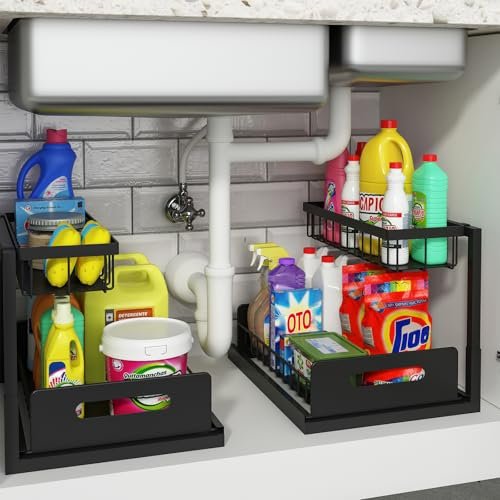
The under-sink cabinet is the most cluttered, hard-to-access spot in most homes: stacks of cleaning supplies, expired products, and leak-damaged items get shoved to the back, forcing you to dig through the entire cabinet to find what you need. Static shelves don’t work for these awkward spaces, as U-shaped pipe layouts block full depth, and mixed item sizes (tall detergent bottles, small sponges, boxes of dishwasher pods) don’t stack neatly. Pull-out organizers eliminate this dead zone, making every inch of space usable and keeping items accessible without rummaging. This guide covers the best pull-out organizer types, how to choose the right one for your space, complementary storage hacks, and answers to common questions to turn your chaotic under-sink cabinet into a functional, tidy zone in 2026.
Why Under-Sink Cabinets Need Specialized Storage
Under-sink cabinets have unique challenges that generic storage solutions can’t solve. The P-trap, water supply lines, and (in many homes) garbage disposal units block full shelf depth, leaving only a narrow strip of usable space at the front of the cabinet. Frequent small leaks from sink plumbing or damaged cleaning supply bottles can warp wood shelves and ruin stored items if they’re left sitting directly on the cabinet floor. In practice, most under-sink clutter stems from items pushed to the back of the cabinet that are never retrieved until they expire or leak, causing unnecessary waste and mess.
Guidance from the University of Minnesota Extension emphasizes prioritizing vertical and pull-out storage in these tight, awkward spaces to make the most of limited clearance without major cabinet modifications. The National Kitchen + Bath Association also recommends choosing moisture-resistant storage materials for under-sink cabinets to prevent warping and mold growth from common kitchen leaks.
Top Pull-Out Organizer Types for Under-Sink Cabinets
Pull-out organizers come in a range of styles to fit different cabinet sizes, pipe layouts, and storage needs. Use the comparison table below to find the best fit for your space, then read detailed breakdowns of each type below.
| Organizer Type | Best For | Average Weight Capacity | Installation Required | Key Pros | Key Cons |
|---|---|---|---|---|---|
| Slide-Out Metal Shelving | Heavy bulk items (detergent, pet food) | 20-50 lbs | Minor drilling for side mounts | Extremely durable, moisture-resistant, easy to clean | Higher cost, may not fit very narrow cabinets |
| Adjustable Height Pull-Out Drawers | Mixed item sizes (tall bottles + small supplies) | 15-30 lbs | Minor drilling or snap-fit | Customizable tiers, spill containment lips, fits around plumbing | Slightly lower weight capacity, higher price point |
| L-Shaped Corner Pull-Out | Dead corner cabinet spaces | 15-25 lbs | Minor drilling or professional install | Maximizes unused corner space, often includes hanging hooks | Highest cost, requires precise measurements |
| Stackable Pull-Out Bins | Renters, small items (sponges, pods) | 10-20 lbs | No tools required | No drilling, portable, easy to clean | Lower weight capacity, may slide without non-slip feet |
Slide-Out Metal Shelving Units
The most durable option for heavy-duty storage, these units mount to the interior side walls or bottom of your cabinet with ball-bearing slides that let you pull the entire shelf out smoothly. Most hold 20-50 lbs, enough for large detergent bottles, cases of water bottles, or bulk cleaning supplies. They’re typically made of powder-coated steel, which resists moisture, rust, and stains, making them easy to wipe down after spills. They’re ideal for households with large cleaning supply inventories, or under-sink cabinets that also store pet care items like bulky bags of pet food or grooming supplies. A common mistake is skipping the pipe clearance check before purchasing, leading to a shelf that hits your plumbing when pulled out. If you have small children, pair these with child proof drawer locks no screws to secure the slides and prevent accidental tipping.
 Two-tier sliding shelf with sturdy construction, fits standard under-sink plumbing.
 Retractable steel design with 13.9" height for compact under-sink spaces.
Adjustable Height Pull-Out Drawers
These units feature movable shelf tiers that let you customize the height of each compartment, so you can store a 1-gallon bleach bottle next to small spray bottles without wasting vertical space. Many have built-in spill containment lips around the edges to catch leaks from damaged cleaning supply bottles, protecting your cabinet floor from water damage. They’re ideal for families that switch cleaning products seasonally, or for under-sink cabinets that store both kitchen and bathroom supplies. Look for models with lockable ball-bearing slides if you have young kids; this prevents drawers from being pulled all the way out and tipping over, a common safety hazard with lower-quality units.
 Sliding metal drawers with 14.2" height clearance for standard P-traps.
 Adjustable height sliding drawers fit around varying plumbing configurations.
L-Shaped Corner Pull-Out Organizers
For L-shaped kitchen layouts or cabinets with deep, awkward corner spaces, these organizers are designed to fit around corner plumbing and pivot outward when pulled, making previously inaccessible back corner items easy to reach. Most include side hooks for hanging sponges, scrub brushes, or small cleaning caddies, adding extra storage without taking up extra floor space. They’re perfect for small apartments with limited storage, or households that use their under-sink cabinet for both cleaning supplies and kitchen linens. These units often require more precise measurements due to their angled design, so bring a photo of your cabinet’s pipe layout when shopping to ensure a proper fit. For households with young children, pair these with child safety locks for cabinets to keep hazardous cleaning supplies out of reach.
 L-shaped design fits corner under-sink spaces, includes 4 hanging hooks.
 Narrow L-shaped design with 4 included hooks for hanging cleaning tools.
 Updated L-shaped design with reinforced slides for heavy items.
Stackable Pull-Out Bins and Caddies
The most budget-friendly, no-install option for under-sink storage, these bins sit directly on the cabinet floor and have built-in handles for easy pulling. Most are made of durable, moisture-resistant plastic, and many are stackable to add vertical storage without taking up extra floor space. They’re perfect for storing small, frequently used items like sponges, dishwasher pods, aluminum foil, or plastic wrap, and are ideal for renters who can’t drill into cabinet walls. Look for bins with non-slip rubber feet to prevent them from sliding around when you open and close the cabinet door. For quick access to cleaning tools, pair these with a kitchen cleaning brush set stored in one of the top bins.
 Compact 12.8" height design fits narrow under-sink cabinets.
 Transparent stackable drawers with movable dividers for customizable storage.
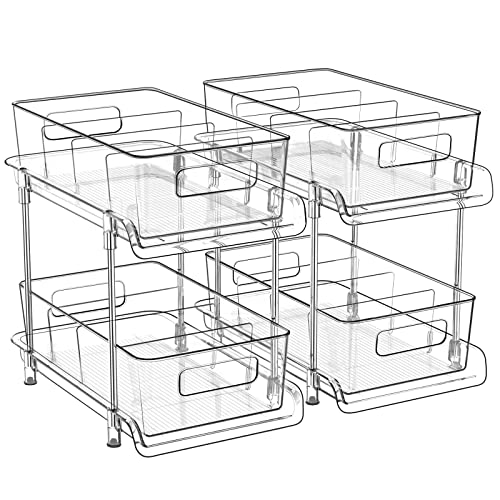 Clear 2-tier design with movable dividers for small cabinet spaces.
Pre-Installation: Measure Your Under-Sink Space Correctly
The #1 mistake people make when buying under-sink organizers is skipping proper measurements, leading to returns and wasted money. Follow these steps to get exact measurements before shopping:
- Interior cabinet width: Measure the distance between the two inner side walls of your cabinet, left to right. Most standard under-sink cabinets are 24-30" wide, but older homes may have narrower or wider spaces.
- Interior cabinet depth: Measure from the back wall of the cabinet to the front edge of the cabinet door, to ensure the organizer doesn’t protrude too far and hit the door when closed.
- Pipe clearance: Measure the height from the cabinet floor to the bottom of the sink’s P-trap and water supply lines, to make sure the organizer (or its adjustable tiers) doesn’t hit the plumbing when pulled out. Use a piece of cardboard to trace the shape of your pipes, then bring the template with you when shopping to test fit.
- Door clearance: Confirm the organizer doesn’t extend so far forward that it hits the cabinet door when closed. If you have a garbage disposal unit, measure the clearance around the disposal canister, as many organizers need to be adjusted to fit around it. If you’re buying a sliding shelf, add 0.5" to your width measurement to account for the slide mechanism, which takes up a small amount of side space.
Maximize Space with Complementary Under-Sink Storage Hacks
Pull-out organizers are the foundation of under-sink storage, but pairing them with small, low-cost accessories can significantly boost your usable storage without extra cost.
Over-the-Door Caddies and Pockets
These hang over the inside of your cabinet door, giving you extra storage for small items like sponges, scrub brushes, small cleaning bottles, or makeup remover pads (for bathroom under-sink cabinets). They’re no-install, come in clear or water-resistant fabric options, and are perfect for storing items you use multiple times a day so you don’t have to pull out the main organizer to grab them. Pair these with a bathroom and kitchen cleaning brush stored in the top pocket for quick spill cleanup around the sink.
Sink Splash Guards and Leak Trays
A waterproof tray placed under your pull-out organizer catches leaks from sink plumbing or damaged cleaning supply bottles, protecting your cabinet floor from water damage, warping, and mold growth. Many leak trays have raised edges to contain small spills, and some even have built-in drain holes to direct water away from stored items. Empty the tray monthly to prevent standing water from causing mold, and wipe down the cabinet floor after any large leaks.
Wall-Mounted Hooks and Rails
Adhesive or screw-mounted hooks attached to the inside of your cabinet side wall let you hang spray bottles, hanging cleaning caddies, or even small rolls of paper towels, freeing up shelf space for larger items. For households with kids, pair these with kitchen safety locks for kids to secure hanging items that contain hazardous chemicals out of reach.
Frequently Asked Questions
What are the key benefits of under-sink pull-out organizers?
Pull-out organizers eliminate the need to dig to the back of your cabinet to find items, saving time and reducing clutter. They make the most of vertical space around odd pipe layouts, protect stored items from leak damage by keeping them off the cabinet floor, and make deep cleaning your cabinet far easier since you can pull the entire organizer out to wipe down surfaces. Many models also include spill containment features to contain small leaks from cleaning supply bottles.
How do I choose the right under-sink pull-out organizer for my space?
Start by measuring your cabinet’s interior width, depth, and pipe clearance, as outlined in our pre-installation guide above. Then consider your storage needs: if you store mostly large, heavy items like detergent bottles, opt for a heavy-duty metal slide-out shelf. If you have a mix of tall and small items, choose an adjustable height drawer set. Renters should opt for no-drill stackable bins to avoid damaging cabinet finishes. Always check product dimensions against your measurements before purchasing, and read reviews to confirm the organizer works with standard plumbing configurations.
Can pull-out organizers fit all under-sink cabinet sizes?
Most standard pull-out organizers are designed to fit 24-30" wide under-sink cabinets, the most common size in modern homes. For narrower cabinets (less than 18" wide), look for slim-profile L-shaped organizers or narrow stackable bins. For extra-wide cabinets, you can install two side-by-side slide-out shelves for maximum storage. Always measure your cabinet before buying, as custom sizes are available for older homes with non-standard cabinet dimensions.
How do I install a pull-out under-sink organizer?
Installation varies by product type: slide-out metal shelves usually require minor drilling to mount the slide tracks to the cabinet side walls, and most take 15-30 minutes to install with a screwdriver. No-drill stackable bins and adhesive-mounted caddies require no tools at all. For L-shaped corner organizers, check if your cabinet has pre-drilled mounting holes to simplify installation, or opt for a snap-fit model if you don’t want to drill. Always follow the manufacturer’s instructions, and test the slide mechanism before loading the organizer with heavy items.
Are under-sink organizers suitable for bathroom cabinets?
Yes, under-sink organizers work perfectly for bathroom cabinets, as long as you choose moisture-resistant materials like powder-coated steel or BPA-free plastic to resist humidity and water damage. They’re ideal for organizing toiletries, cleaning supplies, extra towels, and hair care products, and help prevent the mold and clutter that often builds up in cramped bathroom under-sink spaces. Look for organizers with smooth, easy-to-clean surfaces to wipe down after splashes from the sink.
Do pull-out organizers work with garbage disposal units?
Yes, most pull-out organizers are compatible with garbage disposal units, as long as you choose an adjustable height model that can be raised to clear the disposal canister. Many adjustable tier organizers let you remove the bottom tier entirely to make room for a disposal, so you can still use the upper tiers for storage. When measuring your space, be sure to account for the height of your disposal unit to avoid clearance issues.
What materials are best for under-sink organizers to resist water damage?
Powder-coated steel, rust-proof aluminum, and BPA-free, food-grade plastic are the best materials for under-sink organizers, as they resist warping, rust, and mold growth from sink humidity and occasional leaks. Avoid untreated wood or porous plastic, as these can absorb water and develop mold over time. All materials should be easy to wipe down with a damp cloth for quick cleaning.
Conclusion
The under-sink cabinet doesn’t have to be a chaotic, hard-to-access catch-all for expired cleaning supplies and leaked bottles. Pull-out organizers are the most effective, low-effort solution to maximize this often-wasted space, eliminating the need to dig to the back of the cabinet and protecting your stored items from water damage. By choosing the right organizer type for your cabinet size, pipe layout, and storage needs, and pairing it with complementary accessories like over-the-door caddies and leak trays, you can create a fully functional, clutter-free space that works for both your kitchen and bathroom. Start by measuring your cabinet space this weekend, then pick a pull-out organizer that matches your needs to transform your under-sink area in under an hour.

Hi, I’m Daniel Brooks—a food lover and kitchen gear enthusiast. I enjoy testing cookware, utensils, and gadgets to see what really works in everyday cooking. At PlugChef.com, I share honest reviews, comparisons, and simple guides to help you choose the best tools for a safer, smarter, and more enjoyable kitchen.
Related posts:
 Air Popper Popcorn Maker for Kids: Fun and Healthy Snack Time
 Best Desk Coffee Mug Warmer: Top Picks for Perfectly Hot Beverages
 Kitchen Cabinets With Black Stainless Steel Appliances: Transform Your Space with Style
 Best Meat Grinders for Dog Food: Top Choices for Healthy Meals
 Best Rated Espresso Machine: Unleash Your Inner Barista with Top Picks
 Old Fashioned Style Kitchen Appliances: Embrace Retro Charm in Your Kitchen