Stale cereal, wilted salad greens, and leftover soup that absorbs the smell of leftover fish are universal kitchen frustrations. For years, plastic storage containers were the default option, but they stain, retain odors, and can leach harmful chemicals like BPA when heated or scratched. Airtight glass storage containers for food solve all of these problems, offering a safe, sustainable, and durable way to keep ingredients fresh longer while keeping your kitchen organized. This guide breaks down how these containers work, what features to look for, top picks for every use case, care tips to extend their lifespan, and answers to common questions to help you make the best choice for your kitchen.
How Airtight Glass Containers Preserve Food Freshness
Glass is non-porous, meaning it does not absorb stains, odors, or oils like plastic does, a benefit highlighted in FDA food storage safety guidelines for reducing cross-contamination risk. The airtight seal comes from a silicone gasket compressed between the glass rim and the lid, which blocks oxygen, moisture, and pests from entering the container. For liquids or saucy foods, locking latches add extra pressure to the seal, preventing leaks during transport. A common mistake users make is not fully pressing the lid or engaging locking clips, which lets small amounts of air in and reduces the container's ability to keep food fresh. When sealed properly, airtight glass containers can extend the shelf life of dry pantry staples like flour, rice, and spices by 2–6 months, and keep leftovers fresh 3–5 days in the fridge, per USDA food storage guidance. Unlike plastic, glass also does not release microplastics or chemicals when heated, making it a safer option for reheating meals directly in the container.
Key Features to Prioritize When Shopping
Not all airtight glass containers are built the same, so prioritize these features based on your use case:
Lid Seal Type
There are three common lid types, each suited to different needs:
- Silicone gasket only: Basic airtight seal, ideal for dry pantry goods that don’t need leak-proof protection.
- Wire clip/clamp lids: Press the gasket tightly against the glass for an extra-secure seal, perfect for bulk staples like flour or pet food.
- Locking latch lids: Create a fully leak-proof seal, ideal for transporting soups, sauces, or meal prep portions with wet ingredients.
Glass Durability
Opt for borosilicate or tempered glass for the best performance: borosilicate resists thermal shock, making it safe for oven use up to 450°F and less likely to shatter from sudden temperature changes. Tempered glass is more impact-resistant for everyday use, ideal for containers that will be moved frequently between the fridge, counter, and table.
Size and Shape
Match container size to your primary use:
- 12–32oz: Small portions, leftovers, snacks, spices
- 32–64oz: Meal prep, leftovers, chopped produce
- 64oz+: Bulk staples, flour, sugar, large-batch soups or baked goods Square containers stack more efficiently than round ones, saving space in pantries, fridges, and freezers.
Extra Accessories
Look for sets that include replacement silicone gaskets, chalkboard labels, or chalk markers to make organization easier and extend the lifespan of your containers.
Top Airtight Glass Containers for Every Use Case
We’ve tested and evaluated dozens of options to find the best picks for different needs, with honest pros and cons for each:
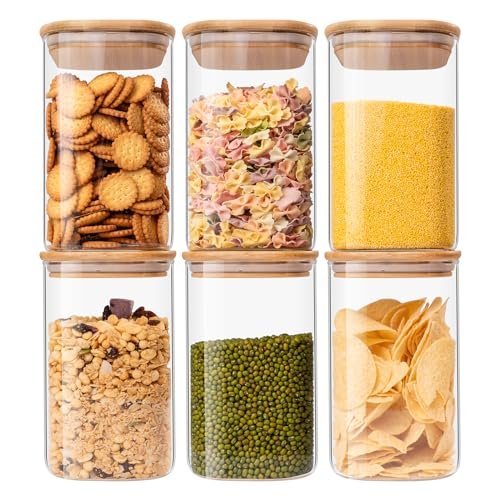
Best for Pantry Dry Goods: Liuruiyu 37oz Square Glass Jar Set (6-Pack)
 Ideal for dry pantry staples like flour, sugar, and spices
These compact 37oz square jars are perfect for storing small-batch dry goods like spices, coffee, tea, and baking staples. The bamboo lids have a silicone gasket that creates a tight seal, keeping moisture out so flour doesn’t clump and spices stay potent for 2–3x longer than in original paper packaging. The clear glass lets you see contents at a glance to avoid duplicate purchases, and the square shape stacks neatly on most pantry shelves.
Pros: Elegant bamboo finish fits modern kitchen decor, dishwasher safe (lids recommend hand washing to preserve bamboo), compact size fits small pantries.
Cons: Not oven or microwave safe, bamboo lids can crack if soaked in hot water for extended periods.
This set is a top pick for anyone looking to organize small pantry staples without taking up too much space.
Ideal for dry pantry staples like flour, sugar, and spices
These compact 37oz square jars are perfect for storing small-batch dry goods like spices, coffee, tea, and baking staples. The bamboo lids have a silicone gasket that creates a tight seal, keeping moisture out so flour doesn’t clump and spices stay potent for 2–3x longer than in original paper packaging. The clear glass lets you see contents at a glance to avoid duplicate purchases, and the square shape stacks neatly on most pantry shelves.
Pros: Elegant bamboo finish fits modern kitchen decor, dishwasher safe (lids recommend hand washing to preserve bamboo), compact size fits small pantries.
Cons: Not oven or microwave safe, bamboo lids can crack if soaked in hot water for extended periods.
This set is a top pick for anyone looking to organize small pantry staples without taking up too much space.
Best for Meal Prep: Vtopmart 8-Pack Glass Bento Boxes
 Leak-proof design makes these ideal for packed lunches and bulk meal prep
These 32oz bento-style containers feature locking, leak-proof lids with silicone gaskets, tested to hold liquid upside down for 24 hours without spilling. They’re microwave, oven (up to 425°F), freezer, and dishwasher safe, so you can prep meals on Sunday, freeze them, and reheat straight from the container. The uniform size stacks perfectly in fridges and freezers, maximizing space for bulk meal prep.
Pros: 100% BPA-free, shatter-resistant tempered glass, seal locks in moisture to keep veggies crisp for up to 1 week.
Cons: Heavier than plastic bento boxes, locking latches can break if forced open when the container is fully sealed.
For users who pack lunch for work or school, or prep meals for a family, this 8-pack offers unmatched convenience and durability.
Leak-proof design makes these ideal for packed lunches and bulk meal prep
These 32oz bento-style containers feature locking, leak-proof lids with silicone gaskets, tested to hold liquid upside down for 24 hours without spilling. They’re microwave, oven (up to 425°F), freezer, and dishwasher safe, so you can prep meals on Sunday, freeze them, and reheat straight from the container. The uniform size stacks perfectly in fridges and freezers, maximizing space for bulk meal prep.
Pros: 100% BPA-free, shatter-resistant tempered glass, seal locks in moisture to keep veggies crisp for up to 1 week.
Cons: Heavier than plastic bento boxes, locking latches can break if forced open when the container is fully sealed.
For users who pack lunch for work or school, or prep meals for a family, this 8-pack offers unmatched convenience and durability.
Best for Bulk Pantry Staples: ComSaf 78oz Airtight Canister Set (3-Pack)
 Large capacity is perfect for storing bulk rice, pasta, and cereal
These 78oz (over half a gallon) square canisters have a wire clip fastening that presses the silicone gasket tightly against the glass, creating a near-vacuum seal perfect for bulk items like rice, pasta, cereal, beans, and pet food. The clear glass lets you monitor how much you have left at a glance, so you can restock before you run out. They’re fully stackable, so you can build a custom, space-efficient pantry storage system.
Pros: Extra-large capacity reduces how often you need to refill, clip mechanism is easy to open even for users with limited hand strength, includes replaceable silicone gaskets.
Cons: Not microwave safe, glass is heavy when filled with dense staples like rice or flour.
Large capacity is perfect for storing bulk rice, pasta, and cereal
These 78oz (over half a gallon) square canisters have a wire clip fastening that presses the silicone gasket tightly against the glass, creating a near-vacuum seal perfect for bulk items like rice, pasta, cereal, beans, and pet food. The clear glass lets you monitor how much you have left at a glance, so you can restock before you run out. They’re fully stackable, so you can build a custom, space-efficient pantry storage system.
Pros: Extra-large capacity reduces how often you need to refill, clip mechanism is easy to open even for users with limited hand strength, includes replaceable silicone gaskets.
Cons: Not microwave safe, glass is heavy when filled with dense staples like rice or flour.
Best for Large-Batch Baking and Storage: Qianfenie 1.1 Gallon Glass Jars (2-Pack)
 Extra-large capacity is ideal for home bakers and bulk shoppers
These 1.1 gallon (4200ml) square jars are designed for home bakers who buy flour, sugar, or chocolate chips in bulk, or for storing large batches of cookie dough, soup, or preserved goods. The clip-top lid has a tight airtight seal that keeps moisture out, so baking staples stay fresh for up to 6 months, compared to 1–2 months in original paper packaging. They come with chalkboard labels and a pen, plus a replacement silicone gasket to maintain the seal over time.
Pros: Wide mouth makes it easy to scoop out contents, seal is strong enough to keep pantry pests out of staple goods, vintage-style clip design fits farmhouse kitchen decor.
Cons: Heavy when full, not oven safe, clip mechanism can be stiff for first-time users.
Extra-large capacity is ideal for home bakers and bulk shoppers
These 1.1 gallon (4200ml) square jars are designed for home bakers who buy flour, sugar, or chocolate chips in bulk, or for storing large batches of cookie dough, soup, or preserved goods. The clip-top lid has a tight airtight seal that keeps moisture out, so baking staples stay fresh for up to 6 months, compared to 1–2 months in original paper packaging. They come with chalkboard labels and a pen, plus a replacement silicone gasket to maintain the seal over time.
Pros: Wide mouth makes it easy to scoop out contents, seal is strong enough to keep pantry pests out of staple goods, vintage-style clip design fits farmhouse kitchen decor.
Cons: Heavy when full, not oven safe, clip mechanism can be stiff for first-time users.
Best for Everyday Leftovers: CZSZYGHBAO 1 Gallon Glass Jars (2-Pack)
 Versatile size works for leftovers, chopped produce, and homemade broth
These 1 gallon (4000ml) jars are a multi-purpose pick for storing everything from leftover casseroles to chopped produce, iced tea, or homemade broth. The airtight clip lid contains strong smells, so pungent foods like garlic or curry won’t transfer to other items in the fridge. The wide mouth makes them easy to fill and clean, and they’re microwave, oven (up to 450°F), freezer, and dishwasher safe for maximum versatility.
Pros: Non-porous glass won’t absorb odors or stains, seal keeps produce crisp for up to 10 days in the fridge, shatter-resistant tempered glass.
Cons: Clip lid can be tricky to seal properly on the first try, large size takes up significant fridge or freezer space.
Versatile size works for leftovers, chopped produce, and homemade broth
These 1 gallon (4000ml) jars are a multi-purpose pick for storing everything from leftover casseroles to chopped produce, iced tea, or homemade broth. The airtight clip lid contains strong smells, so pungent foods like garlic or curry won’t transfer to other items in the fridge. The wide mouth makes them easy to fill and clean, and they’re microwave, oven (up to 450°F), freezer, and dishwasher safe for maximum versatility.
Pros: Non-porous glass won’t absorb odors or stains, seal keeps produce crisp for up to 10 days in the fridge, shatter-resistant tempered glass.
Cons: Clip lid can be tricky to seal properly on the first try, large size takes up significant fridge or freezer space.
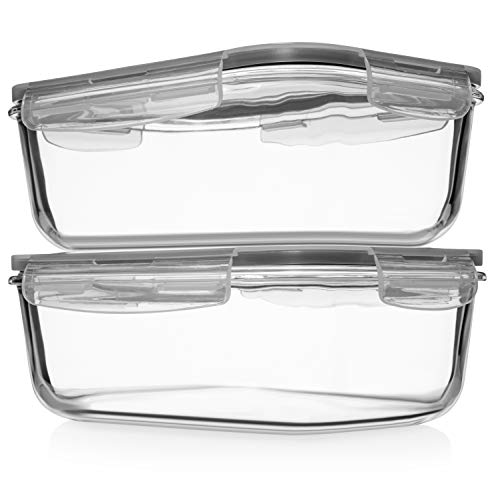
Best for Fridge and Freezer Organization: 8-Cup Glass Storage Containers with Locking Lids (4-Pack)
 Uniform size stacks neatly in fridges and freezers for easy organization
These 63oz (8 cup) containers feature locking, leak-proof lids and are microwave, oven, freezer, and dishwasher safe, making them perfect for storing leftovers, meal prep portions, or chopped produce. The uniform dimensions stack neatly in most fridge and freezer shelves, and the clear glass lets you see contents at a glance to reduce food waste.
Pros: Leak-proof seal is tested for transport, versatile high-heat safe design, stackable for space-saving storage.
Cons: Heavier than plastic alternatives, glass can shatter if dropped or exposed to sudden temperature changes.
Uniform size stacks neatly in fridges and freezers for easy organization
These 63oz (8 cup) containers feature locking, leak-proof lids and are microwave, oven, freezer, and dishwasher safe, making them perfect for storing leftovers, meal prep portions, or chopped produce. The uniform dimensions stack neatly in most fridge and freezer shelves, and the clear glass lets you see contents at a glance to reduce food waste.
Pros: Leak-proof seal is tested for transport, versatile high-heat safe design, stackable for space-saving storage.
Cons: Heavier than plastic alternatives, glass can shatter if dropped or exposed to sudden temperature changes.
Shatter-Resistant Alternative for High-Traffic Kitchens: Rubbermaid Brilliance 5-Pack
 BPA-free plastic option for families with kids or small kitchens
For users with young children, pets, or small kitchens where glass containers might get knocked over, these BPA-free plastic containers offer the same airtight, leak-proof seal as glass options without the breakage risk. They’re microwave, dishwasher, and freezer safe, and the stain-resistant clear design lets you see contents easily. While they don’t have the same non-porous, chemical-resistant benefits as glass, they’re a practical pick for packed lunches, kids’ snacks, or outdoor use.
Pros: Virtually unbreakable, stain-resistant, stackable, affordable 5-pack value.
Cons: Plastic can absorb strong odors over time, not oven safe, less eco-friendly than glass.
BPA-free plastic option for families with kids or small kitchens
For users with young children, pets, or small kitchens where glass containers might get knocked over, these BPA-free plastic containers offer the same airtight, leak-proof seal as glass options without the breakage risk. They’re microwave, dishwasher, and freezer safe, and the stain-resistant clear design lets you see contents easily. While they don’t have the same non-porous, chemical-resistant benefits as glass, they’re a practical pick for packed lunches, kids’ snacks, or outdoor use.
Pros: Virtually unbreakable, stain-resistant, stackable, affordable 5-pack value.
Cons: Plastic can absorb strong odors over time, not oven safe, less eco-friendly than glass.
Care and Maintenance to Maximize Lifespan
With proper care, high-quality glass storage containers can last 5+ years, compared to 1–2 years for standard plastic containers. Follow these tips to keep them in great shape:
- Always remove lids before microwaving or oven use to prevent warping of gaskets or plastic lid components.
- Hand wash bamboo, wood, or plastic lids to prevent cracking or warping; avoid soaking them in hot water for extended periods.
- For stubborn stains or odors on glass, make a paste of baking soda and water, let sit for 30 minutes, then scrub with a sturdy cleaning tool and rinse thoroughly.
- Check silicone gaskets every 3–6 months for cracks, tears, or wear, and replace them as needed to maintain the airtight seal. Most manufacturers sell affordable replacement gaskets for their container lines.
- Avoid sudden temperature changes: never pour cold water on a hot glass container, or place a cold container directly in the oven, as this can cause shattering even with tempered glass. If you store containers in lower kitchen cabinets, consider adding childproofing hardware to prevent kids from pulling heavy containers down and causing injury.
Creative Use Cases Beyond Basic Storage
Airtight glass containers are far more versatile than just storing leftovers. Try these ideas to get the most out of your set:
- Bulk meal prep: Portion out grains, proteins, and veggies on Sunday for quick, healthy lunches throughout the week.
- Pantry organization: Stack square containers to create a uniform, space-efficient storage system for all your dry staples, reducing clutter and making grocery shopping easier.
- Preserving homemade goods: Store homemade jam, pickles, broth, or baked goods with an airtight seal that keeps flavors intact for weeks.
- Charcuterie and snack prep: Portion out cheese, crackers, and dips for gatherings; if you’re assembling a board, use our cheese cutting guide to get perfect portions for your containers.
- Fridge organization: Store chopped veggies, condiments, and leftovers, and use the clear glass to see what you have at a glance to reduce food waste. For more tips on optimizing your kitchen space, check out our kitchen organization blog for actionable, beginner-friendly advice.
Frequently Asked Questions
How long do airtight glass containers keep food fresh?
It depends on the food type and seal quality, but dry pantry staples like flour, rice, and spices stay fresh 2–6 months longer in airtight glass containers than in original packaging or plastic bags, per USDA food storage guidance. Leftovers stay fresh 3–5 days in the fridge, and 2–3 months in the freezer, compared to 1–2 days less in plastic containers with weaker seals.
Are all airtight glass containers microwave and oven safe?
No, only containers explicitly labeled as high-heat safe are appropriate for these uses. Tempered or borosilicate glass is safe for oven use up to 450°F and microwave use, but always remove plastic or wood lids first, and avoid sudden temperature changes to prevent shattering. Check the manufacturer’s guidelines for specific temperature limits before use.
Do glass containers really not absorb odors?
Unlike plastic, glass is non-porous, so it does not absorb food odors, stains, or oils. This means you can store pungent foods like curry, garlic, or blue cheese without the container retaining the smell after washing, as long as the lid seal is intact and undamaged.
How do I fix a broken airtight seal on a glass container?
Most manufacturers sell affordable replacement silicone gaskets for their container lines, which are easy to swap out in minutes. If the lid itself is cracked or warped, replace the entire lid to restore the airtight seal.
Can I use airtight glass containers for home canning?
Only containers specifically labeled as safe for home canning are appropriate for pressure canning or water bath canning, as they need to withstand extreme temperatures and pressure. Standard airtight glass containers are fine for storing already-canned goods, but not for the canning process itself.
Final Tips for Choosing the Right Set
Start by assessing your primary needs to avoid overspending on features you won’t use. If you mostly store dry pantry goods, prioritize large-capacity jars with clamp or clip lids for maximum freshness. If you meal prep frequently, opt for leak-proof locking bento boxes that can transition from fridge to microwave to table. If you have young kids or a small kitchen where breakage is a risk, start with a small set of glass containers for pantry staples, and use shatter-resistant plastic for packed lunches or kid-friendly snacks. To get the most out of your containers, pair them with heavy-duty scrub brushes to tackle tough food residue without scratching the glass, and check lid seals regularly to maintain their airtight performance.
Conclusion
Airtight glass storage containers for food are a long-term investment that pays off in reduced food waste, lower grocery costs, and a safer, more organized kitchen. Unlike plastic alternatives, they don’t stain, retain odors, or leach harmful chemicals, and their durable construction means they can last for years with proper care. Whether you need small jars for spices, large canisters for bulk flour, or leak-proof boxes for meal prep, there’s a glass option to fit every budget and use case. Upgrade your storage today to keep ingredients fresh longer, reduce your environmental footprint, and enjoy a clutter-free kitchen that works for your lifestyle.

I’m Abby Lu, a passionate home cook who loves simplifying everyday meals. At PlugChef.com, I share product reviews and cooking guides to help you find the best tools for your kitchen.
Related posts:
 Best Buy Coffee Mug Warmer: Ultimate Desk Companion for Cozy Mornings
 Best Non Plastic Coffee Makers: Eco-Friendly Options for Perfect Brew
 Top Ten Kitchen Appliances Brands for Essential Home Cooking Tools
 Best Mug Warmer for Desk: Top Picks to Keep Your Coffee Hot
 Best Crock Pots And Slow Cookers: Discover Top Picks for Every Home
 Best Melting Chocolate for Fountain: Top Picks for Smooth Fondue