Curious toddlers can turn everyday household items into hidden hazards in seconds, from rummaging through cleaning supplies in lower cabinets to pulling open refrigerator doors and risking trapped fingers or access to choking hazards. As of 2026, the CDC reports that unintentional home injuries are a leading cause of emergency room visits for children under 5, making proactive childproofing a non-negotiable for most families. Safety 1st appliance locks deliver a low-effort, damage-free solution to secure high-risk zones, with options tailored to every handle type, home layout, and budget. This guide breaks down how these locks work, which model fits your needs, and pro tips for long-lasting, reliable security.
Why Appliance-Specific Childproofing Is Non-Negotiable in 2026
General cabinet locks often fail to fit the wider, irregular handles of major household appliances, leaving high-risk zones unsecured. Refrigerator and freezer doors pose risks of trapped small fingers, access to spoiled food, and choking hazards from small food items. Oven and microwave handles give children access to hot surfaces, sharp utensils, and toxic cleaning supplies. Trash cans, toilet seats, and lower cabinets often store sharp objects, medications, and chemical cleaners that can cause severe harm if accessed unsupervised.
Safety 1st appliance locks are engineered specifically for these use cases, with adjustable and rigid designs that grip standard and irregular handles securely. They also work for pet safety, preventing dogs from rummaging through trash or cats from knocking over breakables in open cabinets. All models meet or exceed CPSC safety standards for child restraint devices, making them a compliant choice for comprehensive home safety plans.
Core Features That Make Safety 1st Appliance Locks Stand Out
Safety 1st locks are designed for three non-negotiable priorities: security, ease of use, and non-permanent installation. Most models use heavy-duty 3M adhesive backing that bonds to most smooth surfaces without drilling, screwing, or damaging paint, cabinets, or appliance finishes — a critical feature for renters who cannot make permanent modifications to their space. All locks use dual-action locking mechanisms that require adult-level dexterity (such as pressing two buttons simultaneously or sliding a hidden tab) that toddlers cannot manipulate, even after repeated exposure.
Two core lock types cover nearly every use case:
- Rigid plastic locks: Low-profile, compact options for standard straight appliance and cabinet handles, ideal for low-visibility areas where you don’t want a bulky lock on display.
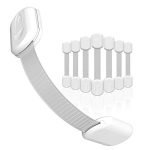
- Adjustable strap locks: Versatile options that fit handles from 2 to 10 inches wide, perfect for irregular, curved, or wide handles like French-door refrigerator handles, wide cabinet drawers, and toilet seats.
All 2026 Safety 1st models are BPA-free and phthalate-free, with no small parts that pose choking hazards for young children.
Step-by-Step Installation for Long-Lasting Security
Proper installation is the difference between a lock that holds for years and one that fails after a few weeks. Follow these steps for maximum security:
- Clean the installation surface with rubbing alcohol and a lint-free cloth to remove grease, dust, fingerprints, or old adhesive residue. Let the surface dry completely — this is the most commonly skipped step, and it increases adhesive grip by up to 40% per 3M’s official testing guidelines.
- Measure the handle or latch point to confirm the lock fits. Rigid plastic locks require a handle gap of 0.5 to 1.5 inches, while strap locks adjust to fit most handle sizes.
- Peel the adhesive backing, press the lock firmly against the surface for 30 seconds, and avoid using the locked appliance or cabinet for 1 hour to let the adhesive cure fully.
- Test the lock by pulling it with 10 lbs of force (roughly the strength of a 2-year-old tugging) to confirm it holds. If it shifts, reapply with extra pressure.
Common Installation Mistakes to Avoid
- Skipping surface cleaning: Grease from kitchens or moisture from bathrooms weakens adhesive bonds, leading to locks falling off after a few weeks.
- Using on textured surfaces: Unsealed wood, porous tile, or heavily textured plastic can cause adhesive to fail. For these surfaces, use the optional mounting screws included with some Safety 1st models, or opt for a suction-cup alternative for temporary use.
- Over-tightening strap locks: Pulling the strap too tight can warp cabinet doors or appliance handles over time; leave a 0.25-inch gap for normal operation.
- Ignoring weight limits: Rigid plastic locks are rated for up to 25 lbs of pulling force, so do not use them on heavy double-door refrigerators — opt for heavy-duty strap locks instead, which are tested for up to 50 lbs of force.
Top Safety 1st Appliance Lock Options, Organized by Use Case
Rigid Plastic Appliance Locks (Best for Standard Handles)
These low-profile locks are nearly invisible when installed, making them ideal for kitchens where you want to maintain a sleek aesthetic.
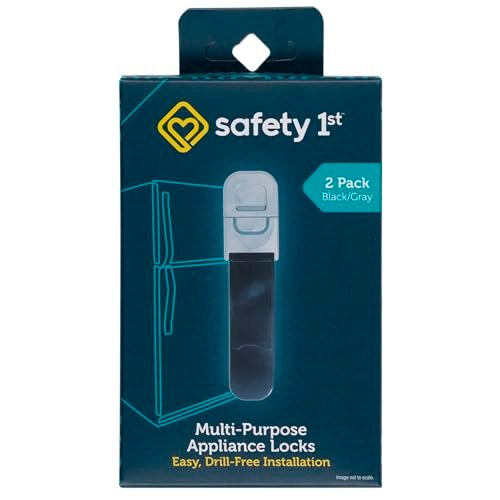
 Ideal for securing small appliances and upper cabinets, this 2-pack fits standard handles under 1.5 inches wide.
- Safety 1st Multi-Purpose Plastic Appliance Lock (2-Count): Perfect for first-time childproofing or small spaces, this pack secures two high-risk zones (e.g., your refrigerator and oven). The compact 4x4x1 inch design won’t obstruct handle movement, and the neutral gray/black finish blends with most kitchen and appliance decor. It is not suitable for handles thicker than 1.5 inches or curved vintage handles.
 The 6-count pack is a cost-effective option for securing multiple fridge handles, oven doors, and drawers across your home.
- Safety 1st Multi-Purpose Appliance Lock (6-Count): The best value for whole-home childproofing, this pack includes six locks to secure cabinets, drawers, and small appliances like microwaves. The lightweight 0.35 lb construction won’t weigh down delicate cabinet handles, and the adhesive is rated to hold for up to 2 years with proper surface prep.
Adjustable Strap Locks (Best for Irregular Shapes & Multi-Use)
These versatile locks fit nearly any handle shape or size, making them the most flexible option for mixed home layouts.
 Adjustable from 4 to 10 inches, these straps fit irregular handles, wide fridge doors, and even toilet seats.
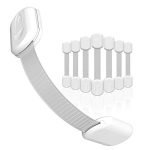
- Safety 1st OutSmart All-Purpose 4-Pack Strap Locks: The most versatile option in the lineup, these BPA-free straps adjust to fit handles from 2 to 10 inches wide. The dual-action buckle requires two distinct motions to open, which most toddlers cannot master, while adults can open them one-handed when carrying groceries. The low-profile white finish blends with most home decor, and the 4-pack is enough to secure all high-risk zones in a 2-bedroom home.
 The slim, low-profile design sits nearly flush against cabinet and appliance surfaces for a discreet look.
- Safety 1st OutSmart Multi-Use Lock (Single): A slim, low-profile option for narrow cabinet drawers and small appliances like toaster ovens or coffee makers. The 2.87-inch height sits nearly flush against surfaces, so it won’t catch on clothing or obstruct handle movement.
Heavy-Duty Multi-Pack Locks for Whole-Home Coverage
 The hidden design mounts inside the cabinet frame, so the lock is completely out of children’s line of sight.
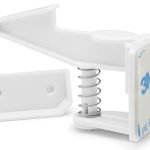
- Safety 1st Cabinet & Drawer Latch 14-Pack: Designed for comprehensive childproofing, this pack includes 14 hidden latches that mount inside cabinet frames, so they are completely out of children’s line of sight. Tested to withstand 50 lbs of pulling force, they are ideal for families with strong, determined toddlers. The neutral gray finish blends with most cabinet interiors, and the no-tool installation takes under 1 minute per latch.
Compatible Third-Party Appliance Locks (Supplementary Options)
If Safety 1st locks are out of stock, these third-party options follow the same no-drill adhesive standard, though they may not meet Safety 1st’s exact pull-test specifications:
 This no-drill fridge lock works for both standard and side-by-side refrigerator doors, and is removable without residue for renters.
- HomeBrella 2-Pack Child Proof Fridge Lock: Designed specifically for French-door and side-by-side refrigerators, this heavy-duty adhesive lock holds tight even with frequent opening and closing.
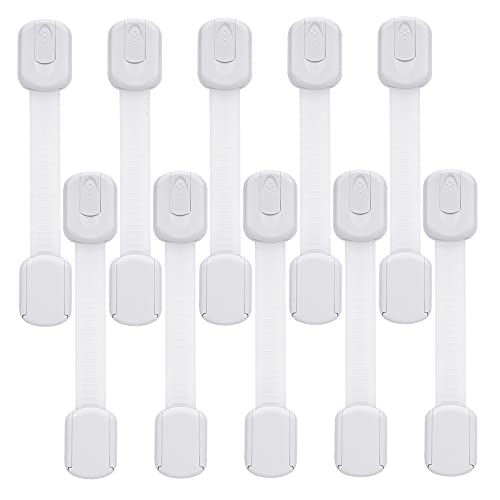 The adjustable strap design fits a wide range of handle sizes, from narrow cabinet knobs to wide oven handles.
- Goodv 10-Pack Adjustable Strap Locks: The most budget-friendly bulk option, these 3M-adhesive straps fit a wide range of handle sizes and are removable without residue, making them ideal for renters or temporary childproofing setups.
 The dual-action locking mechanism requires two separate motions to open, making it nearly impossible for toddlers to figure out.
- Munchkin Xtraguard Double-Locking Latches (2-Count): Feature a dual-action locking mechanism that requires two separate motions to open, adding an extra layer of security for high-risk zones like oven doors and medicine cabinets.
 These magnetic locks open with a hidden adult key, so you don’t have to fumble with buckles when your hands are full.
- Skyla Homes 2-Pack Magnetic Cabinet Locks: Open with a hidden magnetic key, so you don’t have to fumble with buckles when your hands are full of groceries or a baby.
 The low-profile design blends seamlessly with white kitchen cabinets and bathroom fixtures.
- Jool Baby 4-Pack Strap Locks: A low-cost option for securing trash cans, toilet seats, and low cabinets, with a strong 3M adhesive bond that holds up to daily use.
Long-Term Maintenance & Safety Tips
- Inspect all locks every 3 months: Test the adhesive bond and locking mechanism to ensure they haven’t loosened from daily use or exposure to moisture.
- Clean with mild soap and water: Avoid harsh chemical cleaners, abrasive sponges, or oil-based cleaners that can degrade the plastic or adhesive over time.
- Replace damaged locks immediately: If the plastic cracks or the adhesive loses its grip, replace the lock right away rather than attempting to repair it, as a broken lock will not prevent child access.
- Rotate locks for high-traffic areas: For frequently used appliances like refrigerators, rotate between two sets of locks every 6 months to prevent adhesive wear from repeated opening and closing by adults.
Frequently Asked Questions
What types of appliances do Safety 1st locks secure?
Safety 1st locks work on virtually all household appliances and storage areas: refrigerators, freezers, ovens, microwaves, toaster ovens, trash cans, toilet seats, cabinets, drawers, and even laundry machines. Rigid plastic locks work best on standard straight handles, while adjustable strap locks fit irregular, curved, or wide handles.
How long does the adhesive last?
With proper surface prep and no exposure to extreme heat or moisture, Safety 1st adhesive locks hold for 12 to 24 months. For high-moisture areas like bathrooms or near dishwashers, opt for the heavy-duty strap locks with reinforced adhesive, which last up to 18 months.
Can I remove Safety 1st locks without damaging my appliances or cabinets?
Yes, all Safety 1st adhesive locks are designed for residue-free removal. To remove, slowly peel the lock back at a 45-degree angle while applying low heat from a hair dryer to soften the adhesive. Any remaining residue can be removed with rubbing alcohol and a lint-free cloth.
Do Safety 1st locks work on stainless steel appliances?
Yes, the heavy-duty 3M adhesive bonds well to stainless steel as long as the surface is clean and free of grease or fingerprints. For extra hold, press the lock firmly against the surface for 60 seconds during installation, and avoid using the locked appliance for 2 hours to let the adhesive cure fully.
Are Safety 1st locks safe for pets?
Yes, these locks work equally well for keeping dogs out of trash cans, cats off countertops, and pets away from cleaning supplies or toxic foods. For heavy chewers, opt for the rigid metal-reinforced strap locks, which are more resistant to damage from chewing.
How many locks do I need for a full home childproofing setup?
For a typical 3-bedroom home, plan for 2 to 3 rigid locks for major appliances (fridge, oven, microwave), 4 to 6 strap locks for cabinets and drawers in the kitchen and bathrooms, and 2 to 3 locks for trash cans and toilet seats. The 14-pack cabinet latch set is enough to secure all lower cabinets and drawers in a small to medium home.
Can I use Safety 1st locks on outdoor appliances?
No, the standard adhesive is not rated for outdoor use, as extreme temperatures and UV exposure will degrade the bond quickly. For outdoor appliances like grills or outdoor refrigerators, opt for a weatherproof childproof lock with stainless steel mounting hardware.
Conclusion
Safety 1st appliance locks deliver a high-impact, low-effort layer of home security that prevents access to high-risk zones for toddlers and curious pets, without requiring drilling, tools, or permanent modifications to your space. With options for every handle type, from rigid plastic locks for standard appliance handles to adjustable strap locks for irregular surfaces, there is a model to fit every budget and home layout. The no-residue adhesive design makes them ideal for renters, while the CPSC-certified construction ensures they hold up to repeated tampering from determined little explorers.
If you are just starting your childproofing journey, prioritize securing your refrigerator, oven, and cleaning supply cabinets first, as these are the highest-risk zones for young children. For renters, opt for adhesive-only lock options that leave no residue when it is time to move. No matter which option you choose, installing Safety 1st appliance locks takes less than 10 minutes and delivers instant peace of mind.
Ready to secure your home? Shop the full Safety 1st appliance lock range at major retailers to find the perfect fit for your space.

I’m Abby Lu, a passionate home cook who loves simplifying everyday meals. At PlugChef.com, I share product reviews and cooking guides to help you find the best tools for your kitchen.
Related posts:
 French Food Posters Vintage: Timeless Culinary Art for Kitchen Decor
 Buck Knife 112 Sheath: Top Durable Holsters for Your Pocket Knife
 Safety Locks for Cabinets: Top Baby-Proofing Solutions for Secure Homes
 Child Safety Locks for Cabinets: Easy, Secure Baby Proofing Solutions
 Child Safety Drawer Locks Adhesive for Secure, No-Drill Baby Proofing
 10 Best Child Proof Drawer Locks for Ultimate Safety and Easy Installation