
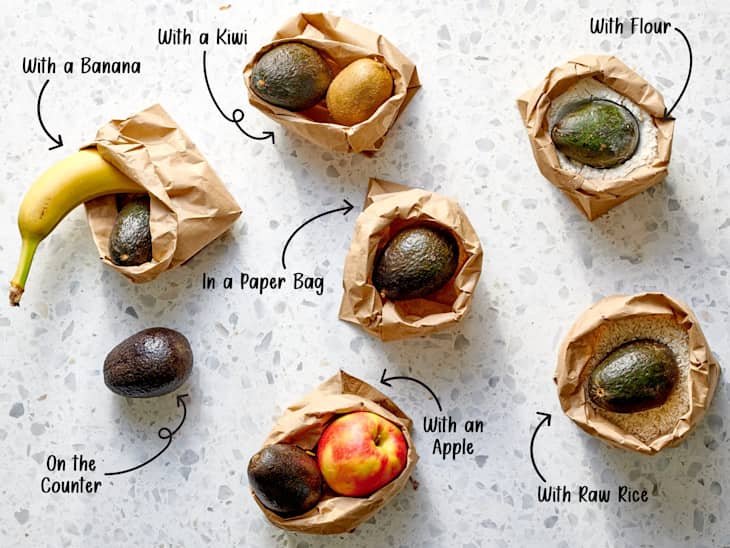
Crisp, rock-hard avocados can ruin plans for breakfast toast, salads, or guacamole. This practical guide shows proven overnight methods to get a creamy, ready-to-eat avocado by morning—what to do, what to avoid, and how to preserve texture and flavor. It focuses on safe, repeatable steps, realistic timing, and trade-offs so you can pick the right method for your purpose.

Unripe avocados often ripen overnight when exposed to ethylene.
Credit: www.themirror.com
Quick answer: best overnight options (short version)
- Best balance of speed and quality: paper-bag method with a ripe banana or apple — most avocados soften to usable ripeness in 12–24 hours.
- Slower but hands-off: place near ripe fruit on the counter (no bag) — 24–48 hours depending on starting firmness.
- Fast rescue (workable for mashing/cooking, not ideal for fresh slices): low-heat oven — typically 10–30 minutes depending on size and starting firmness; expect some flavor/texture change.
- Last resort: short microwave bursts to soften — alters flavor and can cook the flesh; use only if you’ll mash or spread immediately.
- Avoid refrigerating unripe avocados overnight — cold stalls natural ripening.
For produce safety and refrigeration guidance, consult the USDA’s consumer guidance on fresh fruit and vegetables: USDA.
How avocados ripen (simple science, practical implications)
Avocados are climacteric fruit: after harvest they generate ethylene gas, which signals enzymes to convert starches into sugars and to soften cell walls. You can speed ripening two ways:
- Increase ethylene exposure (e.g., trap ethylene from a banana/apple near the avocado).
- Keep the fruit warm (room temperatures accelerate enzyme activity).
Note: heat from an oven or microwave does not recreate enzymatic ripening—it softens tissues by heating water molecules, which can change taste and produce a cooked aroma. For technical background and extension recommendations on ethylene and ripening, see the University of California Cooperative Extension: UC ANR.
Choose the right starting avocado
Not every underripe avocado will be perfect after one night. Assess firmness first:
- Rock-hard: no give at all. May not reach ideal texture overnight; expect partial softening.
- Slight give (but firm): best candidate—likely ready in 12–24 hours with a paper bag + banana.
- Slightly yielding: already nearly ripe—check after a few hours and refrigerate when perfect.
How to test without cutting:
- Gently press near the stem end with thumb and forefinger. A ripe avocado yields to firm gentle pressure but isn’t mushy.
- Flick the small stem cap: if it comes off easily and the color underneath is green, it’s ripe; brown under the stem means overripeness.

Check color under the stem to confirm ripeness before slicing.
Credit: www.nottinghampost.com
Best overnight methods (ranked with steps, timing, and trade-offs)
1) Paper bag + ripe banana or apple (recommended)
Why: Traps ethylene while allowing moisture to escape—fast, reliable, and preserves flavor.
Steps:
- Place 1–3 avocados (don’t overcrowd) in a brown paper bag.
- Add one ripe banana or apple to boost ethylene.
- Fold the bag closed and leave at room temperature (ideally 65–75°F / 18–24°C).
- Check firmness after 12 hours. Many avocados become usable in 12–24 hours; firmer fruit may need another 12 hours.
Practical tips:
- Add a small paper towel if condensation forms.
- Avoid sealed plastic bags—moisture promotes mold.
- If you need one avocado ready morning-after, start the bag that evening.
When to use: best for sliced or fresh applications (toast, salads, guacamole) because it preserves flavor and texture.
2) Warm fruit bowl (no bag)
Why: If you lack a bag, placing fruit together increases ethylene concentration.
Steps:
- Put avocados beside ripe bananas/apples on the counter out of direct sunlight.
- Expect slower results than a bag—usually 24–48 hours depending on firmness.
When to use: when you want a no-containter approach and have more time.
3) Low-heat oven (rescue method)
Why: Quickly softens flesh for mashing or cooking; does not produce true ripeness.
Safe procedure:
- Preheat to 200°F (95°C) or below—low heat reduces cooking risk.
- Wrap whole avocados tightly in foil (one layer).
- Place on a baking sheet and heat 10–30 minutes depending on how firm they are.
- Let cool fully (10–20 minutes) before unwrapping and checking softness.
Trade-offs and cautions:
- Flavor: slight cooked aroma and muted freshness.
- Texture: can be less creamy; best used for spreads, dressings, or mashed toppings—not for pristine slices.
- Safety: discard if flesh smells off or is discolored after heating.
When to use: when you must have soft avocado within an hour or two and will mash or cook it.
4) Microwave (last resort)
Why: Fast softening but high risk of uneven heating and cooked flavor.
If you must:
- Halve and remove pit; wrap each half in a damp paper towel.
- Microwave on medium power in 20–30 second bursts, checking between bursts.
- Cool before handling.
Risks: alters flavor and texture, may create hot spots—use only for immediate mashing.
5) Other tactics and why they’re less recommended
- Burying in rice: traps ethylene but is messy and can draw moisture; paper bag is better.
- Sealed plastic: traps moisture leading to mold and spoilage—avoid.
Quick reference: expected ripening rough timeline
| Starting firmness | Paper bag + banana | Warm fruit bowl | Oven (rescue) |
|---|---|---|---|
| Slightly firm (best) | 12–24 hours | 24–36 hours | 10–15 min |
| Very firm (rock hard) | 24–48 hours | 48+ hours | 20–30 min |
| Nearly ripe | 6–12 hours | 12–24 hours | 5–10 min |
(Actual times vary by fruit size, temperature, and variety.)
Ripening cut or partially used avocados
If you’ve already cut an avocado and one half is still firm:
- Leave the pit in the unused half (it reduces exposed surface).
- Tightly cover the cut surface with plastic wrap or place cut-side down in an airtight container.
- Add a thin layer or small squeeze of lemon or lime juice to slow browning.
- Keep at room temperature to continue slow ripening for a short time; once it reaches desired softness, refrigerate.
If the cut surface is brown:
- Small surface browning can usually be trimmed away; if brown extends deep or there is an off-odor, discard.
For preserving prepared guacamole, see practical tips to preserve color and freshness on our guide to preserve guacamole color: https://seashell-kudu-262783.hostingersite.com/how-to-keep-guacamole-green/
Storing ripe avocados (times and temperatures)
- Whole ripe avocados: refrigerate immediately to slow ripening. Refrigeration around 40°F (4°C) slows enzyme activity—see USDA storage guidance: USDA. Typically keeps 3–5 days; monitor daily.
- Halves: press plastic wrap against flesh or place cut-side down in an airtight container with a squeeze of citrus. Consume within 1–2 days for best quality.
- Mashed/guacamole: press plastic onto the surface, store in an airtight container, and consume within 1–2 days.
Practical storage tip: keep ripe avocados apart from strongly scented foods and high-moisture containers to prevent odor transfer and condensation. For reusable storage options, check our roundup of reusable produce-savers: https://seashell-kudu-262783.hostingersite.com/reusable-produce-savers-to-reduce-food-waste/

Store ripe avocados in a cool spot or refrigerate to slow ripening.
Credit: www.irishstar.com
Troubleshooting: common problems and fixes
- Still rock-hard after 24 hours: put in a paper bag with a ripe banana and leave another 12–24 hours; if you need it now, use the low-heat oven method.
- Mushy or brown inside after oven/microwave: heat probably cooked or unevenly heated the flesh—discard if off-smelling.
- Surface browning on cut halves: trim 1/8–1/4 inch; if remaining flesh is bright green and smells fresh, it’s fine.
- Mold or sliminess: discard immediately—do not taste. Mold indicates spoilage and potential food-safety risk.
- Fruit flies attracted to bagged fruit: place bag in a bowl with a lid or add a small paper towel to absorb moisture; for persistent flies, set a simple fruit-fly trap: https://seashell-kudu-262783.hostingersite.com/cone-trap-for-fruit-flies/
A common mistake is expecting a rock-hard avocado to become perfect overnight without ethylene or warmth—start with the right candidate for consistent results.
FAQ — quick answers
Q: Can I speed ripening without changing taste?
A: The paper-bag + ripe banana approach speeds ripening while preserving flavor best. Heat-based methods will alter taste.
Q: Will ripening reduce nutrition?
A: Natural ripening preserves most nutrients. Heating may reduce some heat-sensitive compounds and change taste, but macronutrient content remains similar.
Q: How many avocados can I ripen together?
A: A single ripe banana can speed ripening for 2–4 avocados in one bag. Avoid overcrowding to prevent bruising.
Q: Is it safe to eat avocados ripened in the oven?
A: Yes, if there’s no off-odor or unusual discoloration. Expect a cooked flavor; best used for mashing into recipes.
Q: What’s the best routine to always have ripe avocados?
A: Buy avocados at staggered ripeness (some ripe, some firm). Refrigerate ripe fruit to pause ripening and keep firmer ones at room temperature or in a paper bag when needed.
Conclusion
For the best overnight results, use a brown paper bag with a ripe banana or apple—fast, inexpensive, and flavor-friendly. Use low-heat oven or microwave only as rescue methods when you’ll mash or cook the avocado. Store ripe fruit in the refrigerator to preserve texture, check for spoilage before use, and avoid sealed plastic when accelerating ripening. Try the paper-bag method tonight and enjoy creamy avocados by morning.
Want more avocado hacks and storage tricks? Try the paper-bag method tonight and bookmark this guide for the next time you need ripe avocados fast.

Hi, I’m Daniel Brooks—a food lover and kitchen gear enthusiast. I enjoy testing cookware, utensils, and gadgets to see what really works in everyday cooking. At PlugChef.com, I share honest reviews, comparisons, and simple guides to help you choose the best tools for a safer, smarter, and more enjoyable kitchen.
Related posts:
 How to Make a Fruit Basket for a Gift: Easy DIY Guide
 Do You Need a Basket? Essential Guide for Air Fryers
 What Blenders Do Tropical Smoothie Use: Expert Insights
Stainless Steel Vs White Kitchen Appliances: Ultimate Showdown
What Blenders Do Tropical Smoothie Use: Expert Insights
Stainless Steel Vs White Kitchen Appliances: Ultimate Showdown
 Kitchen Appliances for Wedding Registry: Must-Have Essentials
 Top 10 Best Non-Toxic Cooking Utensils – Safe & Durable Choices for Healthy Homes

