In 2026, food waste remains one of the most pressing household and commercial kitchen challenges, with the U.S. Department of Agriculture (USDA) noting that reducing avoidable food loss can cut average household grocery costs significantly while lowering methane emissions from landfills. For many people, the gap between knowing how to reduce food waste and actually implementing those habits daily comes down to a lack of accessible, at-a-glance guidance—this is where targeted food waste posters shine. Unlike lengthy digital guides or easy-to-misplace handwritten notes, these visual tools act as passive, consistent prompts that reinforce best practices without disrupting workflow, making them one of the lowest-effort, highest-impact investments for any kitchen. These low-effort visual tools work alongside other simple kitchen habits, like regular kitchen cleaning brush maintenance, to keep your space efficient and waste-free.
Why Visual Food Waste Posters Work Better Than Text Guides
In practice, busy home cooks and commercial kitchen staff rarely have time to reference lengthy digital guides mid-meal prep, but a wall-mounted poster provides instant, glanceable guidance without disrupting workflow. A common mistake many households make is tucking food storage tips in a kitchen drawer, where they’re forgotten within weeks; placing the same guidance on a fridge or pantry wall ensures it’s seen multiple times a day, reinforcing habit formation. Unlike digital reminders that get buried under notifications, physical posters act as passive, consistent prompts that require no charging, updates, or internet access to use. For commercial kitchens, they also serve as standardized training tools for new staff, ensuring everyone follows the same waste-reduction protocols without repeated verbal instruction.
Top Essential Food Waste Reduction Posters for Every Kitchen
The most effective food waste posters are tailored to your specific needs, whether you’re a home cook looking to cut grocery costs, a caregiver managing a special diet, or a commercial kitchen operator looking to reduce large-scale food loss.
Food Safety & Storage Posters to Extend Shelf Life
Improper temperature control and storage are the top causes of preventable food spoilage in both home and commercial kitchens, making these two posters non-negotiable for waste reduction.
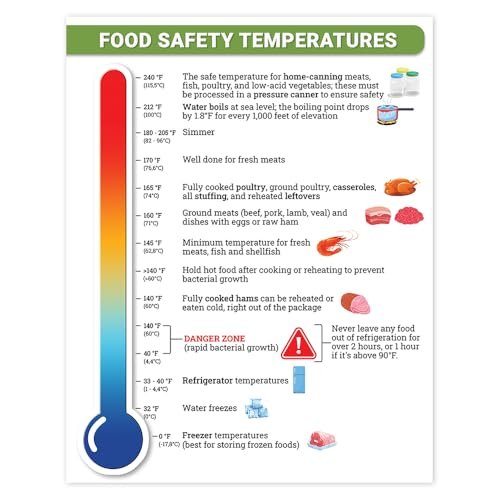
 Clear critical temperature thresholds for cooking, holding, and storing food to prevent spoilage and foodborne illness.
A food safety temperature poster eliminates guesswork for cooks of all skill levels, reducing the risk of overcooking meat (a common source of wasted protein) or under-chilling leftovers that spoil within days. The unframed 11×14 Food Safety Temperatures Poster is designed for high-visibility placement near stoves, prep stations, and refrigerators, with clearly marked critical thresholds: 40°F or below for cold storage, 140°F or above for hot holding, and exact internal temperatures for common proteins (poultry: 165°F, ground meats: 160°F, steaks/chops: 145°F). The compact size fits even small kitchen walls without cluttering space, and the unframed design lets you pair it with a wipeable cover for high-grease environments like restaurant kitchens. Regular cleaning with a professional kitchen cleaning brush will keep both the poster and your workspace sanitary. While the paper substrate can be vulnerable to splashes in very wet prep areas, laminating it at home extends its lifespan significantly for less than $1 in supplies.
Clear critical temperature thresholds for cooking, holding, and storing food to prevent spoilage and foodborne illness.
A food safety temperature poster eliminates guesswork for cooks of all skill levels, reducing the risk of overcooking meat (a common source of wasted protein) or under-chilling leftovers that spoil within days. The unframed 11×14 Food Safety Temperatures Poster is designed for high-visibility placement near stoves, prep stations, and refrigerators, with clearly marked critical thresholds: 40°F or below for cold storage, 140°F or above for hot holding, and exact internal temperatures for common proteins (poultry: 165°F, ground meats: 160°F, steaks/chops: 145°F). The compact size fits even small kitchen walls without cluttering space, and the unframed design lets you pair it with a wipeable cover for high-grease environments like restaurant kitchens. Regular cleaning with a professional kitchen cleaning brush will keep both the poster and your workspace sanitary. While the paper substrate can be vulnerable to splashes in very wet prep areas, laminating it at home extends its lifespan significantly for less than $1 in supplies.
| Pros | Cons |
|---|---|
| Clear, concise temperature scales for all common food items | Unframed design requires additional effort to mount or frame for high-wear areas |
| Compact 11×14 size fits tight kitchen spaces | Paper material may be damaged by repeated exposure to water or grease if not laminated |
| Lightweight and easy to reposition as needed | Limited to standard food safety temperature color scheme with no additional guidance |
If you’re looking for a durable, at-a-glance temperature reference for your kitchen, this unframed poster is available for purchase on Amazon.
 Visual guide to optimal produce storage conditions to extend shelf life and reduce spoilage.
Spoiled produce is one of the largest components of avoidable household food waste, per USDA guidance, making a dedicated produce storage guide one of the highest-impact posters you can hang in your kitchen. The 17×13 laminated How to Store Vegetables and Fruits poster breaks down storage rules for over 30 common produce items, including counter-ripening tips for bananas and tomatoes, fridge crisper drawer assignments for leafy greens, and ethylene gas segregation rules (keep apples and carrots separate to avoid premature spoilage). Unlike generic food storage guides, this chart specifies humidity levels for different produce types, a small detail that can extend the life of berries by 3-5 days and leafy greens by up to a week. The laminated finish repels kitchen splashes and stains, and can be wiped down with a kitchen cleaning brush with handle to remove any stuck-on debris without damaging the print. The 17×13 size is large enough to read from across the kitchen without taking up excessive wall space. It’s available in English only, so non-English speaking households may need to supplement it with translated notes, and it does not cover very rare produce items like dragon fruit or kohlrabi, but it covers 90% of the fruits and vegetables the average household purchases regularly.
Visual guide to optimal produce storage conditions to extend shelf life and reduce spoilage.
Spoiled produce is one of the largest components of avoidable household food waste, per USDA guidance, making a dedicated produce storage guide one of the highest-impact posters you can hang in your kitchen. The 17×13 laminated How to Store Vegetables and Fruits poster breaks down storage rules for over 30 common produce items, including counter-ripening tips for bananas and tomatoes, fridge crisper drawer assignments for leafy greens, and ethylene gas segregation rules (keep apples and carrots separate to avoid premature spoilage). Unlike generic food storage guides, this chart specifies humidity levels for different produce types, a small detail that can extend the life of berries by 3-5 days and leafy greens by up to a week. The laminated finish repels kitchen splashes and stains, and can be wiped down with a kitchen cleaning brush with handle to remove any stuck-on debris without damaging the print. The 17×13 size is large enough to read from across the kitchen without taking up excessive wall space. It’s available in English only, so non-English speaking households may need to supplement it with translated notes, and it does not cover very rare produce items like dragon fruit or kohlrabi, but it covers 90% of the fruits and vegetables the average household purchases regularly.
| Pros | Cons |
|---|---|
| Durable laminated finish resists spills and stains | Limited to English language instructions |
| Easy-to-read chart with storage rules for 30+ common produce items | Does not include guidance for uncommon or exotic produce |
| Space-efficient 17×13 size fits most kitchen walls | May not include niche storage tips for specialized produce like microgreens |
For households looking to cut produce waste with a simple, durable reference guide, this laminated storage chart is available on Amazon.
Special Diet & Nutrition Posters to Cut Waste from Unused Ingredients
Households following specialized diets often waste food by purchasing ingredients that don’t align with their health needs, only to let them expire unused. These posters eliminate that guesswork by providing at-a-glance guidance for grocery shopping and meal planning.
Diet-Specific Food Guides for Targeted Meal Planning
 At-a-glance guide to kidney-friendly foods for grocery shopping and meal planning to reduce unused ingredient waste.
The 12×18 Kidney Friendly Food List Poster is designed for individuals managing chronic kidney disease, with clear markings for low-potassium, low-sodium, and phosphorus-restricted foods, as well as a list of high-risk items to avoid. For caregivers and patients new to kidney diets, the visual format is far easier to reference mid-grocery trip than a lengthy digital list, reducing the risk of accidental purchases of incompatible ingredients that will go to waste. The compact size fits neatly on refrigerator doors or pantry walls, and the unframed design lets you mount it with adhesive strips without damaging surfaces. For households with young children managing special diets, pairing these posters with child proof drawer locks no screws ensures kids can’t access restricted ingredients unsupervised, reducing waste from accidental spills or improper storage. While it does not include full macronutrient breakdowns for each item, it focuses on the most critical metrics for kidney health, making it a practical tool for daily use without overwhelming users with unnecessary data.
At-a-glance guide to kidney-friendly foods for grocery shopping and meal planning to reduce unused ingredient waste.
The 12×18 Kidney Friendly Food List Poster is designed for individuals managing chronic kidney disease, with clear markings for low-potassium, low-sodium, and phosphorus-restricted foods, as well as a list of high-risk items to avoid. For caregivers and patients new to kidney diets, the visual format is far easier to reference mid-grocery trip than a lengthy digital list, reducing the risk of accidental purchases of incompatible ingredients that will go to waste. The compact size fits neatly on refrigerator doors or pantry walls, and the unframed design lets you mount it with adhesive strips without damaging surfaces. For households with young children managing special diets, pairing these posters with child proof drawer locks no screws ensures kids can’t access restricted ingredients unsupervised, reducing waste from accidental spills or improper storage. While it does not include full macronutrient breakdowns for each item, it focuses on the most critical metrics for kidney health, making it a practical tool for daily use without overwhelming users with unnecessary data.
| Pros | Cons |
|---|---|
| Clear markings for low-potassium, low-sodium, and restricted foods | Unframed design may require additional mounting supplies for high-traffic areas |
| Compact 12×18 size fits on fridge doors or pantry walls | Generic branding with no additional nutritional context beyond the food list |
| Supports diet compliance for kidney health patients | Does not include guidance for other special diets like diabetes or gluten-free |
If you or a family member are managing a kidney diet, this easy-to-reference food list poster is available for purchase on Amazon.
Nutrition Label Decoding Posters to Avoid Impulse Purchases
 Simple 3-step guide to reading nutrition labels to avoid unsuitable impulse purchases that go to waste.
Misunderstanding nutrition labels leads many households to buy processed foods that don’t align with their dietary needs, often resulting in half-eaten packages that end up in the trash. The 18×24 3 Steps to Understand and Read Food Labels poster breaks the label-reading process into three simple, actionable steps: first, check the serving size to adjust calorie and nutrient counts accurately; second, scan for added sugars and sodium levels to avoid overly processed items; third, review the ingredient list to identify fillers or allergens you may want to avoid. Laminated for durability, this poster is suitable for kitchens, classrooms, and health clinics, and its large size ensures it’s readable from a distance for group settings. It’s produced by Nutrition Education Store, a trusted provider of evidence-based nutrition materials, so you can trust the guidance aligns with current FDA labeling standards. While it doesn’t dive deep into advanced nutritional science, it covers the core information most consumers need to make informed purchases and avoid wasting money on unsuitable foods.
Simple 3-step guide to reading nutrition labels to avoid unsuitable impulse purchases that go to waste.
Misunderstanding nutrition labels leads many households to buy processed foods that don’t align with their dietary needs, often resulting in half-eaten packages that end up in the trash. The 18×24 3 Steps to Understand and Read Food Labels poster breaks the label-reading process into three simple, actionable steps: first, check the serving size to adjust calorie and nutrient counts accurately; second, scan for added sugars and sodium levels to avoid overly processed items; third, review the ingredient list to identify fillers or allergens you may want to avoid. Laminated for durability, this poster is suitable for kitchens, classrooms, and health clinics, and its large size ensures it’s readable from a distance for group settings. It’s produced by Nutrition Education Store, a trusted provider of evidence-based nutrition materials, so you can trust the guidance aligns with current FDA labeling standards. While it doesn’t dive deep into advanced nutritional science, it covers the core information most consumers need to make informed purchases and avoid wasting money on unsuitable foods.
| Pros | Cons |
|---|---|
| Laminated, durable design suitable for high-traffic areas | 18×24 size may be too large for small kitchen walls |
| Clear 3-step process accessible for all literacy levels | Focuses only on basic label reading with no advanced nutritional context |
| Produced by a trusted evidence-based nutrition education provider | Does not include interactive or digital components for digital-first learners |
For anyone looking to decode nutrition labels and avoid unsuitable food purchases, this laminated educational poster is available on Amazon.
General Nutrition Posters for Balanced Meal Planning
 Vegetable food group breakdown to support balanced meal planning and reduce excess ingredient purchases.
Unbalanced meal planning is a top cause of food waste, as households often buy ingredients for single recipes without a plan for using leftovers or integrating ingredients across multiple meals. The 12×18 BMCP0470 Healthy Eating Nutrition Chart uses a classic food pyramid format to break down vegetable food groups and their key nutritional benefits, printed on premium 100lb gloss paper for vibrant, long-lasting display. The 12×18 size strikes a balance between visibility and space efficiency, making it suitable for kitchens, classrooms, and wellness centers without overwhelming wall space.
Vegetable food group breakdown to support balanced meal planning and reduce excess ingredient purchases.
Unbalanced meal planning is a top cause of food waste, as households often buy ingredients for single recipes without a plan for using leftovers or integrating ingredients across multiple meals. The 12×18 BMCP0470 Healthy Eating Nutrition Chart uses a classic food pyramid format to break down vegetable food groups and their key nutritional benefits, printed on premium 100lb gloss paper for vibrant, long-lasting display. The 12×18 size strikes a balance between visibility and space efficiency, making it suitable for kitchens, classrooms, and wellness centers without overwhelming wall space.
 Colorful nutrient reference charts to help plan meals using overlapping ingredients.
For more detailed nutrient reference, the 6-piece 11×17 Healthy Food Chart Set highlights the vitamin and mineral content of common fruits and vegetables, helping you plan meals that use overlapping ingredients to reduce waste. Each vertical poster is lightweight and easy to hang, making it suitable for kitchens, classrooms, or office spaces. While the set is limited to fruit and vegetable nutrients and does not cover other food groups, it provides enough detail for most home cooks to plan balanced meals without overbuying.
Colorful nutrient reference charts to help plan meals using overlapping ingredients.
For more detailed nutrient reference, the 6-piece 11×17 Healthy Food Chart Set highlights the vitamin and mineral content of common fruits and vegetables, helping you plan meals that use overlapping ingredients to reduce waste. Each vertical poster is lightweight and easy to hang, making it suitable for kitchens, classrooms, or office spaces. While the set is limited to fruit and vegetable nutrients and does not cover other food groups, it provides enough detail for most home cooks to plan balanced meals without overbuying.
 Age-appropriate nutrition guides for teaching kids balanced eating habits to reduce household food waste.
For households with children, the 8-piece NewPath MyPlate Bulletin Board Chart Set uses full-color, age-appropriate illustrations to teach grades 1-4 students about portion control and food group variety, making it easier to plan meals that use a range of ingredients without overbuying. The laminated, double-sided design ensures long-lasting use, and the 12×18 size is readable from a distance for classroom or group settings. While the simplified content is not suitable for older students or adults, it is perfectly tailored to young learners’ cognitive levels to foster healthy habits early.
Age-appropriate nutrition guides for teaching kids balanced eating habits to reduce household food waste.
For households with children, the 8-piece NewPath MyPlate Bulletin Board Chart Set uses full-color, age-appropriate illustrations to teach grades 1-4 students about portion control and food group variety, making it easier to plan meals that use a range of ingredients without overbuying. The laminated, double-sided design ensures long-lasting use, and the 12×18 size is readable from a distance for classroom or group settings. While the simplified content is not suitable for older students or adults, it is perfectly tailored to young learners’ cognitive levels to foster healthy habits early.
 Vertical nutrition reference guide for kitchen or office wall display to support balanced meal planning.
If you prefer a compact vertical format for small spaces, the 16×24 Healthy Food Chart Poster provides a concise overview of vitamins and minerals in common fruits and vegetables, printed on durable premium paper for long-lasting display. Its lightweight design makes it easy to hang without nails, and the vertical orientation fits well in narrow kitchen or office wall spaces. It comes unframed, so you can customize the display to match your decor, though the limited style options may not suit all aesthetic preferences.
Vertical nutrition reference guide for kitchen or office wall display to support balanced meal planning.
If you prefer a compact vertical format for small spaces, the 16×24 Healthy Food Chart Poster provides a concise overview of vitamins and minerals in common fruits and vegetables, printed on durable premium paper for long-lasting display. Its lightweight design makes it easy to hang without nails, and the vertical orientation fits well in narrow kitchen or office wall spaces. It comes unframed, so you can customize the display to match your decor, though the limited style options may not suit all aesthetic preferences.
If you want a durable, visually appealing nutrition reference for your kitchen or classroom, this vegetable food pyramid poster is available on Amazon. For educators or households looking for a full set of nutrient reference posters, this 6-piece vitamin and mineral chart set is available on Amazon. For elementary educators and parents teaching kids balanced eating habits, this 8-piece MyPlate chart set is available on Amazon. If you prefer a vertical nutrition guide for small kitchen or office spaces, this 16×24 unframed poster is available on Amazon.
Food Waste Sorting & Composting Stickers for Proper Disposal
Even with perfect storage and meal planning, some food waste is inevitable, and improper disposal leads to unnecessary landfill contributions. A clearly labeled food waste sticker is a low-cost, high-impact tool for both home and commercial kitchens to ensure organic waste is sorted correctly for composting or anaerobic digestion.
 Clear bin labeling to reduce waste stream contamination and support proper composting disposal.
The 10×3 inch StickerTalk Food Waste Only Vinyl Sticker is made of weather-resistant vinyl that adheres firmly to plastic, metal, and glass bin surfaces without leaving residue, making it suitable for both indoor kitchen bins and outdoor waste collection areas. The high-contrast text is readable from a distance, even in low-light pantry or commercial kitchen storage areas, reducing contamination of recycling and compost streams. While the 10×3 size fits standard kitchen bins, it may be too small for large commercial waste totes, so you may need to purchase multiple stickers for larger containers. The simple design is intentionally minimal to avoid visual clutter, but it stands out clearly against most bin colors for fast recognition.
Clear bin labeling to reduce waste stream contamination and support proper composting disposal.
The 10×3 inch StickerTalk Food Waste Only Vinyl Sticker is made of weather-resistant vinyl that adheres firmly to plastic, metal, and glass bin surfaces without leaving residue, making it suitable for both indoor kitchen bins and outdoor waste collection areas. The high-contrast text is readable from a distance, even in low-light pantry or commercial kitchen storage areas, reducing contamination of recycling and compost streams. While the 10×3 size fits standard kitchen bins, it may be too small for large commercial waste totes, so you may need to purchase multiple stickers for larger containers. The simple design is intentionally minimal to avoid visual clutter, but it stands out clearly against most bin colors for fast recognition.
| Pros | Cons |
|---|---|
| Durable weather-resistant vinyl suitable for indoor and outdoor use | Limited to a single 10×3 size that may not fit all bin types |
| Adhesive leaves no residue when removed | Simple design may not stand out in very cluttered waste areas |
| High-contrast text readable from a distance | Does not include multilingual text for diverse workspaces |
To add clear, durable food waste labeling to your kitchen or commercial bins, this vinyl sticker is available on Amazon.
Comprehensive Food Safety Bulletin Posters for Commercial Compliance
For commercial kitchens, schools, and cafeterias, compliance with food safety regulations is not just about preventing illness—it also reduces waste from spoiled or contaminated food that must be discarded.
 Visual guide to core food safety practices to reduce spoilage and ensure regulatory compliance in commercial kitchens.
The 18×24 laminated Nutrition Education Store Food Safety Poster covers the 4 core bases of food safety: clean, separate, cook, and chill, with visual cues for each step to reinforce training for new staff. The laminated surface wipes clean easily after splashes or grease exposure, making it suitable for high-traffic kitchen environments, and the full-color layout improves retention of key guidelines for staff of all literacy levels. It’s produced by a trusted provider of food safety education materials, so the guidance aligns with current FDA Food Code standards for commercial food service. While the poster does not include interactive or digital components, it works well as a complement to in-person food safety training for new hires, reducing the risk of costly food waste from mishandling.
Visual guide to core food safety practices to reduce spoilage and ensure regulatory compliance in commercial kitchens.
The 18×24 laminated Nutrition Education Store Food Safety Poster covers the 4 core bases of food safety: clean, separate, cook, and chill, with visual cues for each step to reinforce training for new staff. The laminated surface wipes clean easily after splashes or grease exposure, making it suitable for high-traffic kitchen environments, and the full-color layout improves retention of key guidelines for staff of all literacy levels. It’s produced by a trusted provider of food safety education materials, so the guidance aligns with current FDA Food Code standards for commercial food service. While the poster does not include interactive or digital components, it works well as a complement to in-person food safety training for new hires, reducing the risk of costly food waste from mishandling.
| Pros | Cons |
|---|---|
| Laminated, wipeable surface suitable for high-grease commercial kitchens | May be too detailed for very young children without additional explanation |
| Covers all 4 core FDA food safety bases for regulatory compliance | Limited to poster format with no interactive or digital components |
| Full-color visual layout improves retention for staff of all literacy levels | 18×24 size may be too large for small prep areas |
For commercial kitchens or classrooms needing a compliant, easy-to-read food safety reference, this laminated poster is available on Amazon.
How to Choose the Right Food Waste Poster for Your Space
Not all food waste posters are created equal, and selecting the right one for your needs will maximize its impact on reducing food loss. When shopping, prioritize three key factors:
- Visibility: Choose a size that’s readable from the main prep or shopping area in your space. For home kitchens, 11×14 to 17×13 is ideal for most wall spaces; for commercial kitchens or classrooms, opt for 18×24 or larger to ensure readability from a distance.
- Durability: High-moisture or high-grease environments (like restaurant kitchens or households with young children) benefit from laminated or vinyl-coated posters that can be wiped clean, rather than unlaminated paper that will degrade quickly.
- Relevance: Pick posters that align with your specific needs: a produce storage guide for households that buy a lot of fresh fruits and vegetables, a diet-specific poster for households with medical dietary restrictions, and a food safety poster for any space where food is prepared for groups. A common mistake is buying decorative food posters with no actionable guidance; always prioritize posters with specific, data-backed steps over generic wall art, as only actionable guides drive behavior change that reduces waste.
Frequently Asked Questions
What temperatures ensure food safety and reduce spoilage?
The FDA food safety guidelines recommend keeping cold foods at 40°F (4°C) or below and hot foods at 140°F (60°C) or above to prevent bacterial growth that leads to spoilage and foodborne illness. A wall-mounted temperature poster eliminates guesswork for cooks of all skill levels, reducing the risk of overcooking meat (a common source of wasted protein) or under-chilling leftovers that spoil within days.
How can I store fruits and vegetables to extend their shelf life?
Storage rules vary widely by produce type: ethylene-producing fruits like apples, bananas, and tomatoes should be stored separately from ethylene-sensitive produce like leafy greens, carrots, and berries to avoid premature ripening and rot. Most root vegetables and squash store best in cool, dark, dry pantries, while most leafy greens and berries stay freshest in the crisper drawer with high humidity. A laminated produce storage poster eliminates the need to search for storage tips online mid-meal prep, making it easy to follow best practices every time you unpack groceries.
What foods are kidney-friendly and low in potassium?
Kidney-friendly low-potassium foods include most white breads, pasta, rice, apples, berries, grapes, cauliflower, and green beans, while high-potassium foods to limit include bananas, oranges, potatoes, tomatoes, and dairy products. A dedicated kidney-friendly food list poster helps patients and caregivers avoid accidental purchases of incompatible ingredients that would go to waste, while also supporting long-term kidney health.
How do I read nutrition labels to avoid unsuitable purchases?
Start by checking the serving size, as all nutrition facts on the label are based on a single serving, not the entire package. Next, scan for added sugars and sodium: the FDA recommends limiting added sugars to less than 10% of daily calories and sodium to less than 2,300mg per day. Finally, review the ingredient list, which is ordered by weight, to identify fillers, allergens, or additives you want to avoid. A 3-step nutrition label poster simplifies this process for shoppers of all literacy levels, reducing impulse buys of processed foods that may not align with your dietary needs and go to waste.
Why use food waste sorting stickers in kitchens?
Clear food waste bin stickers reduce contamination of recycling and compost streams by ensuring all household and commercial kitchen users sort waste correctly. This supports local composting programs that turn organic waste into fertilizer, reducing the volume of food waste that ends up in landfills where it produces methane, a potent greenhouse gas. For commercial kitchens, proper sorting also reduces waste hauling costs by diverting organic material from general waste bins.
What benefits do healthy eating posters provide for reducing food waste?
Balanced nutrition posters that outline food groups and portion sizes help households plan meals that use a wide range of ingredients across multiple recipes, reducing the risk of buying excess ingredients that go unused. For example, a poster that highlights the nutritional value of carrots may encourage you to use them in both a weeknight stir-fry and a weekend soup, rather than letting them wilt in the crisper drawer after a single use.
Conclusion
Posters on food waste are far more than decorative wall art—they are low-cost, low-effort tools that bridge the gap between knowing how to reduce food loss and actually implementing those habits in daily kitchen routines. From food safety temperature guides that prevent spoilage from improper storage, to produce storage charts that extend the life of fresh fruits and vegetables, to diet-specific guides that eliminate unnecessary ingredient purchases, these visual resources deliver consistent, actionable prompts that drive long-term behavior change. For commercial kitchens, they also support regulatory compliance and reduce costly waste from mishandled food. Hanging even one targeted poster in your kitchen can lead to measurable reductions in food waste within the first month, per USDA guidance, saving you hundreds of dollars annually while reducing your environmental footprint. Ready to build a more efficient, sustainable kitchen? Browse our full selection of kitchen tools and guides to find more simple ways to reduce waste and streamline your cooking routine.

Hi, I’m Daniel Brooks—a food lover and kitchen gear enthusiast. I enjoy testing cookware, utensils, and gadgets to see what really works in everyday cooking. At PlugChef.com, I share honest reviews, comparisons, and simple guides to help you choose the best tools for a safer, smarter, and more enjoyable kitchen.
Related posts:
 Vintage Food Ads Posters: Timeless Retro Kitchen Wall Decor Ideas
 Taylor Digital Food Thermometer: Accurate Instant Read for Perfect Cooking
 Chemical Splash Goggles Vs Safety Goggles: Which Offers Better Eye Protection?
 Kitchen Mama Auto 2.0 Electric Can Opener: Effortless Hands-Free Can Opening
 Buck Knife Sheath 110: Durable Leather Holsters for Ultimate Protection
 Kitchen Cabinet Safety Latches: Ultimate Childproofing Locks for Secure Homes