Meal prep is supposed to cut down on weekday cooking stress, reduce food waste, and help you stick to your nutrition goals—but soggy salads, mixed flavors, and messy portioning can turn a 30-minute Sunday prep session into a frustrating waste of time and money. Three compartment food storage containers solve all of these common pain points, and have become the ultimate meal prep staple for busy professionals, fitness enthusiasts, parents, and anyone looking to eat healthier without the daily hassle of cooking from scratch. In this 2026 guide, we break down the core benefits of these versatile containers, key features to look for when shopping, top picks for every use case, and practical tips to get the most out of your set.
Core Benefits That Make 3-Compartment Containers a Meal Prep Staple
Unlike single-compartment containers that let flavors mix and textures turn soggy, 3-compartment designs are built to solve the most common meal prep frustrations:
- Precise portion control without extra tools: Each built-in section holds a standard single serving of protein, vegetables, or whole grains, eliminating the need for measuring cups and helping you stick to dietary goals like weight management or macro tracking. The layout aligns with USDA dietary guidelines that recommend filling half your plate with vegetables, a quarter with lean protein, and a quarter with whole grains for balanced nutrition.
- Flavor and texture separation: Keep dressings away from crisp greens, saucy wings separate from fries, and wet ingredients like fruit from dry snacks like crackers to avoid sogginess by lunchtime. A common mistake new meal preppers make is overfilling compartments, which makes lids hard to seal and leads to spills during transport—fill each section no more than ¾ full for the best results.
- Reduce food waste and save money: Prepping bulk components (grilled chicken, roasted veggies, quinoa) and storing them in separate compartments lets you mix and match meals throughout the week instead of throwing away uneaten, pre-assembled dishes. For example, you can eat a full balanced meal one day, a chicken and veggie bowl the next, and a quinoa bowl the third without prepping entirely new dishes.
- All-in-one versatility: Nearly all 3-compartment containers are microwave, freezer, and dishwasher safe, so you can prep on Sunday, freeze for the week, reheat at work or home, and clean up without transferring food to multiple dishes.
- Space-saving stackability: Containers nest and stack neatly in fridges, pantries, and lunch bags, freeing up valuable kitchen storage. A 50-pack of 24oz containers takes up 30% less space than 50 single-compartment containers of the same volume.
Key Features to Prioritize When Buying 3-Compartment Containers in 2026
Not all 3-compartment containers are built equal, and the right pick depends on your primary use case. Focus on these core features to avoid buyer’s remorse:
Material: Plastic vs. Glass
The two most common materials each have distinct trade-offs:
| Feature | BPA-Free Plastic | Borosilicate Glass |
|---|---|---|
| Weight | Lightweight, ideal for transport | Heavier, better for home storage |
| Temperature Tolerance | Microwave, freezer, dishwasher safe (max 212°F/100°C) | Microwave, oven (up to 450°F/232°C), freezer, dishwasher safe |
| Durability | Shatterproof, can warp with high heat, may stain with acidic foods | Shatter-resistant (but can break if dropped), stain-resistant, no warping |
| Cost | $0.30–$0.50 per unit for bulk sets | $3–$6 per unit for multi-packs |
| Best For | Transport, kids' lunches, bulk weekly prep | Oven reheating, acidic foods, long-term storage |
All reputable brands sold in the U.S. meet FDA standards for food contact materials, which ban the use of BPA and other harmful phthalates in food storage products. For the latest guidance on safe food packaging, refer to the FDA’s official resource library here.
Lid Design: Leakproofing and Steam Vents
For commuters, students, or gym-goers who transport meals, prioritize containers with airtight lids that have silicone gaskets and locking latches. Test the seal by turning the container upside down with a small amount of water inside—no leaks means it’s transport-ready. Look for lids with small, easy-to-open steam vents that release pressure when microwaving to prevent splattering. Avoid lids with cheap plastic latches that break after a few months of regular use. Note that even the best leakproof lids are not designed to hold loose liquids like soup—use a separate small container for those items.
Capacity and Size
- 24oz (approx 700ml): Ideal for single meals, light appetites, kids’ lunches, or snack prep. Fits standard lunch bag compartments.
- 32oz (approx 950ml): The most popular size for adult meals, fits standard portion sizes for lunch and dinner, and works for most dietary plans.
- 36oz (approx 1L): Best for larger appetites, athletes, or meals with multiple components that need extra space.
Temperature Tolerance
All 3-compartment containers are freezer and dishwasher safe, but only glass models are oven-safe. Plastic models can warp if exposed to temperatures above 212°F (100°C) for extended periods, so avoid putting them in the oven or sous vide machines. For microwave use, always remove the lid or leave the steam vent open to prevent pressure buildup, which can cause the lid to blow off or the container to crack.
Top 3-Compartment Container Picks for Every Use Case (2026)
We’ve curated the most popular 2026 options for different needs, based on real-world performance and user reviews:
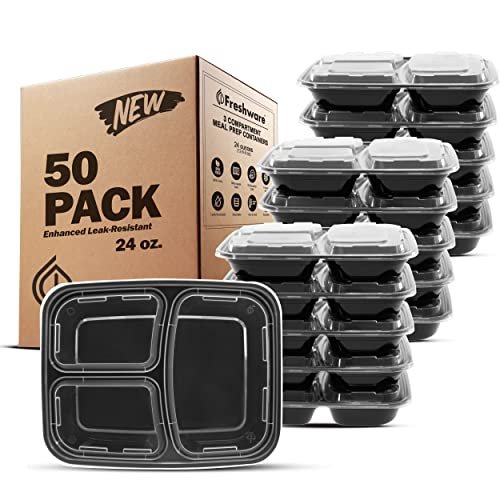
Best Budget Bulk Pick: Freshware 50-Pack 24oz BPA-Free Containers
Perfect for weekly meal preppers, families, or anyone looking to cut down on single-use plastic. The 24oz size is ideal for standard adult portions, and the stackable design saves fridge and pantry space. The BPA-free plastic is microwave, freezer, and dishwasher safe, and the three compartments make portioning quick and easy.
 Stackable 24oz Freshware containers, ideal for weekly meal prep batches
Pros: Extremely affordable per unit, BPA-free, stackable, microwave/freezer/dishwasher safe.
Cons: Lids are not fully leakproof, so not ideal for transport of saucy meals; plastic can stain with dark or acidic foods over time.
Stackable 24oz Freshware containers, ideal for weekly meal prep batches
Pros: Extremely affordable per unit, BPA-free, stackable, microwave/freezer/dishwasher safe.
Cons: Lids are not fully leakproof, so not ideal for transport of saucy meals; plastic can stain with dark or acidic foods over time.
Best Leakproof Transport Pick: Ezalia 20-Pack 32oz BPA-Free Containers
Designed for commuters, students, and gym-goers who need to transport meals without spills. The 32oz capacity fits larger portions, and the secure leakproof lid with silicone gasket keeps dressings, sauces, and gravies contained, even when tossed in a bag or backpack.
 Leakproof Ezalia containers designed for transport to work or school
Pros: Fully leakproof lid, BPA-free, larger 32oz capacity, microwave/freezer/dishwasher safe.
Cons: Slightly bulkier than smaller 24oz models, plastic is not oven-safe.
Leakproof Ezalia containers designed for transport to work or school
Pros: Fully leakproof lid, BPA-free, larger 32oz capacity, microwave/freezer/dishwasher safe.
Cons: Slightly bulkier than smaller 24oz models, plastic is not oven-safe.
Best Glass Pick: M MCIRCO 5-Pack 36oz Borosilicate Glass Containers
Ideal for health-conscious users, people who reheat meals in the oven, or anyone who stores acidic foods (tomato sauce, citrus dressings) that can stain plastic. The 36oz capacity offers extra space for larger portions, and the airtight lids keep food fresh for up to 5 days in the fridge.
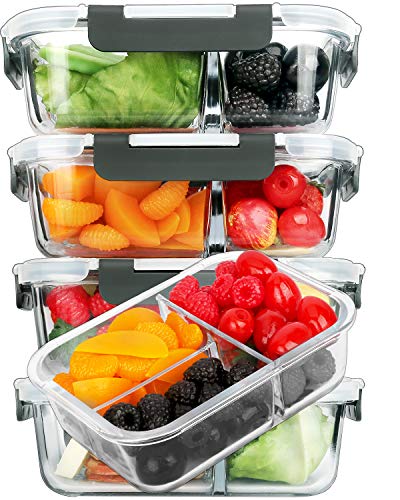 Borosilicate glass containers safe for oven, microwave, and freezer use
Pros: Oven-safe up to 450°F, stain-resistant, BPA-free, airtight lids, microwave/freezer/dishwasher safe.
Cons: Heavier than plastic, more expensive per unit, can break if dropped.
Borosilicate glass containers safe for oven, microwave, and freezer use
Pros: Oven-safe up to 450°F, stain-resistant, BPA-free, airtight lids, microwave/freezer/dishwasher safe.
Cons: Heavier than plastic, more expensive per unit, can break if dropped.
Best All-in-One On-The-Go Pick: Bentgo Classic Adult Bento Box
Perfect for people who want a single, stylish container for daily work or school lunches, no need to bring multiple dishes. The built-in utensil holder and included fork and knife make it a fully self-contained solution, and the three compartments keep your meal balanced and organized.
 All-in-one Bentgo Classic with built-in utensils for on-the-go meals
Pros: Includes built-in utensils, stackable, BPA-free, stylish design, leakproof lid with securing strap.
Cons: Smaller capacity than bulk sets, sealing strap may wear out after 1–2 years of regular use.
All-in-one Bentgo Classic with built-in utensils for on-the-go meals
Pros: Includes built-in utensils, stackable, BPA-free, stylish design, leakproof lid with securing strap.
Cons: Smaller capacity than bulk sets, sealing strap may wear out after 1–2 years of regular use.
Practical Tips for Getting the Most Out of Your 3-Compartment Containers
Maximize Freshness and Prevent Sogginess
- Layer wet ingredients (dressings, sauces, juicy fruits) in a small separate silicone cup placed in a compartment, rather than pouring them directly over dry ingredients like greens or crackers. This keeps textures crisp until you’re ready to eat.
- Let hot food cool completely before sealing the lid and placing it in the fridge or freezer—this prevents condensation from building up and making food soggy, and reduces the risk of warping plastic lids.
- Label containers with a dry-erase marker if you’re prepping multiple different meals for the week, so you don’t have to open each one to identify the contents. For more advanced meal prep strategies, browse our meal prep organization guides for time-saving hacks and portioning tricks tailored to different dietary needs.
Safe Cleaning and Maintenance
- Most containers are dishwasher safe, but for best results, place them on the top rack to avoid exposure to high heat that can warp plastic lids or crack glass over time.
- Stuck-on food or greasy residue on lids is easy to tackle with heavy-duty kitchen scrub brushes that won’t scratch plastic or glass surfaces. To scrub leakproof lid gaskets without damaging the seal, use a professional cleaning brush set with soft, non-abrasive bristles.
- Avoid using abrasive sponges or steel wool on plastic containers, as they can create scratches that harbor bacteria and cause staining.
Long-Term Storage and Organization
- Stack containers neatly in your fridge or pantry to save space—most 3-compartment containers are designed to nest inside each other when the lids are removed.
- If you have young children, store your container stacks in upper cabinets fitted with no-drill cabinet locks to keep small hands away from sharp edges or heavy stacks. For easy access during busy weekday mornings, store your prepped containers in labeled drawers secured with drawer safety latches to prevent kids from accessing heavy stacked sets.
Frequently Asked Questions
Are all 3-compartment containers microwave safe?
Most plastic and glass 3-compartment containers are microwave safe, but always check the manufacturer’s guidelines first. Never microwave a container with the lid fully sealed—leave the steam vent open or remove the lid entirely to release pressure and prevent splattering. Plastic containers should not be microwaved for more than 2–3 minutes at a time to avoid warping.
Can I freeze meals in 3-compartment containers?
Yes, nearly all 3-compartment containers are freezer safe for up to 3 months. Let hot food cool to room temperature before sealing and freezing to prevent ice crystals from forming and avoid warping plastic lids. When reheating frozen meals, defrost in the fridge overnight first for even heating, or add a splash of water to the compartment to prevent drying out.
Are 3-compartment containers leakproof?
Not all models are fully leakproof. Containers with silicone gaskets and locking latches are designed to hold saucy or liquid-heavy meals during transport, but even the best leakproof models are not intended to hold loose liquids like soup. Always test the seal with a small amount of water before transporting a saucy meal.
Are 3-compartment containers BPA-free?
All reputable brands sold in the U.S. market are required to meet FDA standards for BPA-free food contact materials. Look for products explicitly labeled "BPA-free" and made from food-grade polypropylene (plastic) or borosilicate glass to ensure safety for everyday use.
Can I put 3-compartment containers in the oven?
Only borosilicate glass models are oven-safe, typically up to 450°F (232°C). Plastic 3-compartment containers will warp or melt if exposed to oven heat, so never put them in the oven or sous vide machines.
How long do 3-compartment containers last?
With proper care, high-quality plastic 3-compartment containers last 1–2 years with regular daily use, while borosilicate glass models can last 5+ years if not chipped or broken. Avoid exposing plastic lids to high heat for extended periods, and replace containers if you notice cracks, deep stains, or warping that prevents the lid from sealing properly.
Are 3-compartment containers worth it for single people?
Absolutely. Smaller 21-pack sets of 24oz containers are perfect for single people who want to prep 1–2 weeks of meals at a time, reduce food waste, and avoid eating out during busy weekdays. The portion control feature also helps single users stick to dietary goals without overeating.
Final Thoughts: Are 3-Compartment Containers Right for You?
Three compartment food storage containers are more than just a trendy kitchen tool—they’re a practical, cost-effective solution that eliminates the most common meal prep headaches while supporting healthier eating habits and reducing single-use plastic waste. Whether you opt for an affordable bulk plastic set for weekly family meal prep, a leakproof model for daily work lunches, or a durable glass set for oven reheating and acidic food storage, the right 3-compartment set will streamline your routine and save you hours of time each week. Ready to upgrade your meal prep setup? Browse our full range of kitchen organization and safety tools to build a functional, family-friendly kitchen today.

Hi, I’m Daniel Brooks—a food lover and kitchen gear enthusiast. I enjoy testing cookware, utensils, and gadgets to see what really works in everyday cooking. At PlugChef.com, I share honest reviews, comparisons, and simple guides to help you choose the best tools for a safer, smarter, and more enjoyable kitchen.
Related posts:
 Appliance Play Food Kitchen Toys: Spark Imagination with Realistic Fun!
 Ge Cafe Kitchen Appliance Packages: Elevate Your Culinary Experience Today
 Kitchenaid Mixer Alternative Under $200: Top Affordable Picks for Your Kitchen
 Best Automatic Espresso Machine: Elevate Your Coffee Game Today!
 White Kitchen Appliances Vs Stainless Steel: Which is Best for You?
 Extension Cord for Kitchen Appliances: Maximize Efficiency and Safety Instantly